

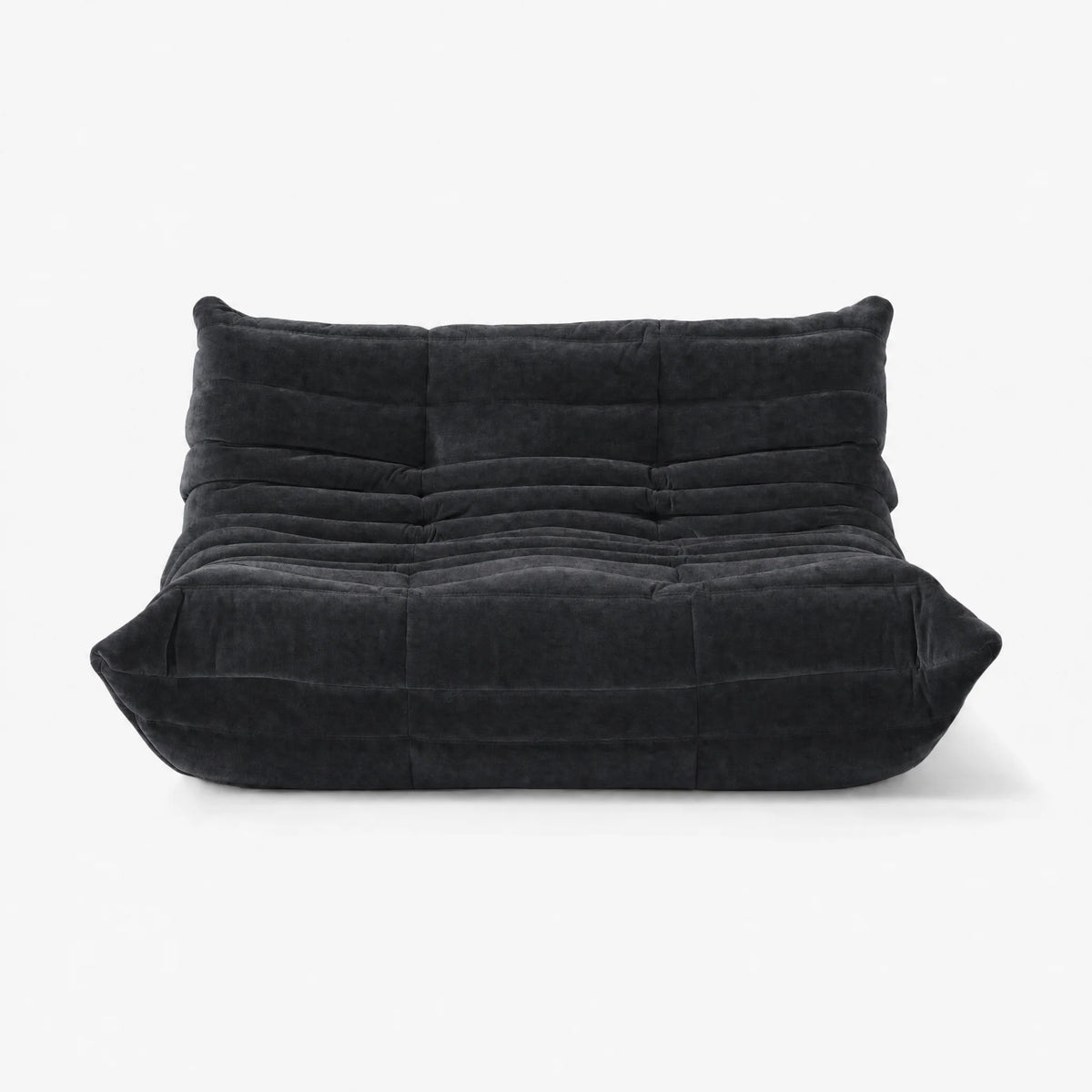
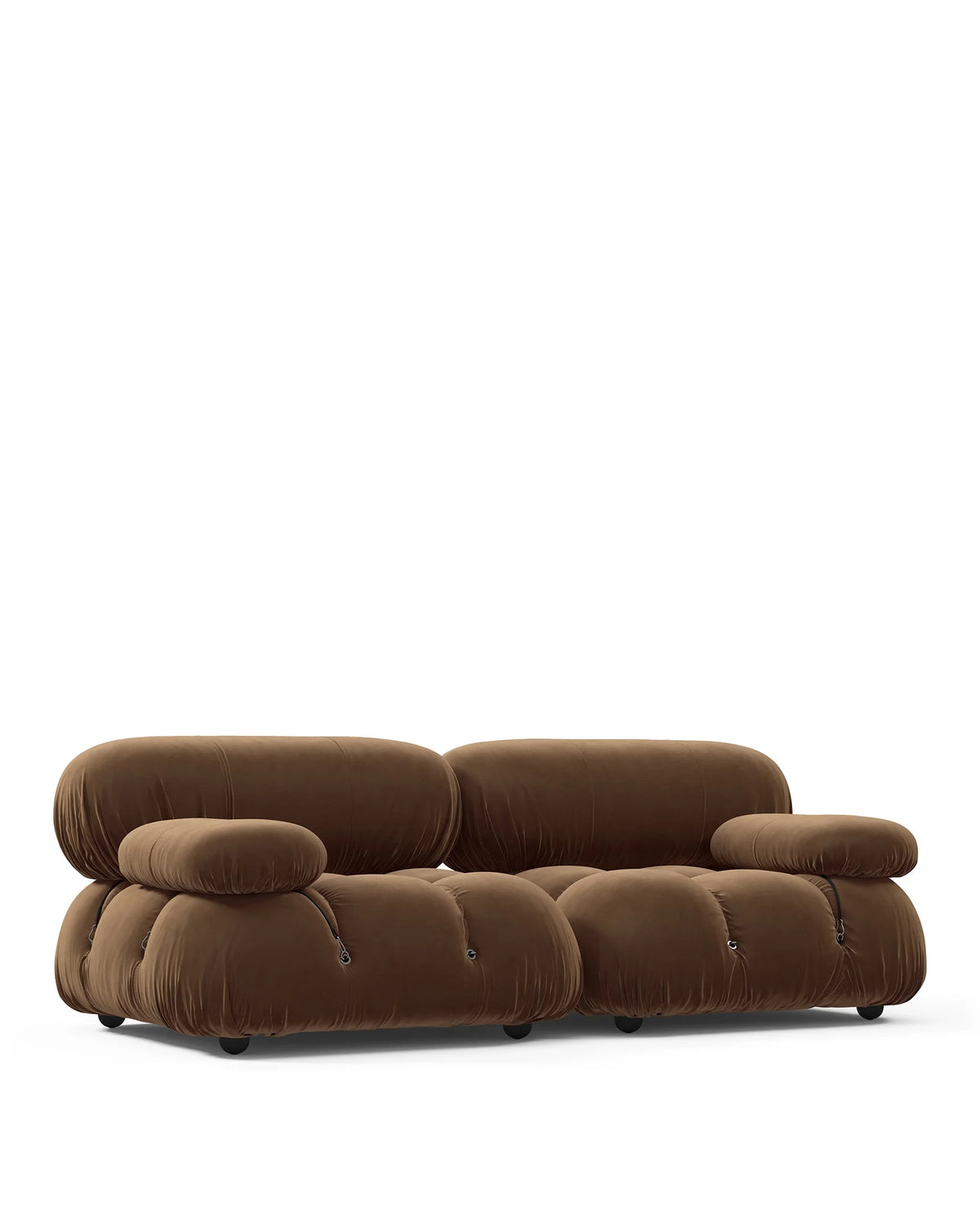
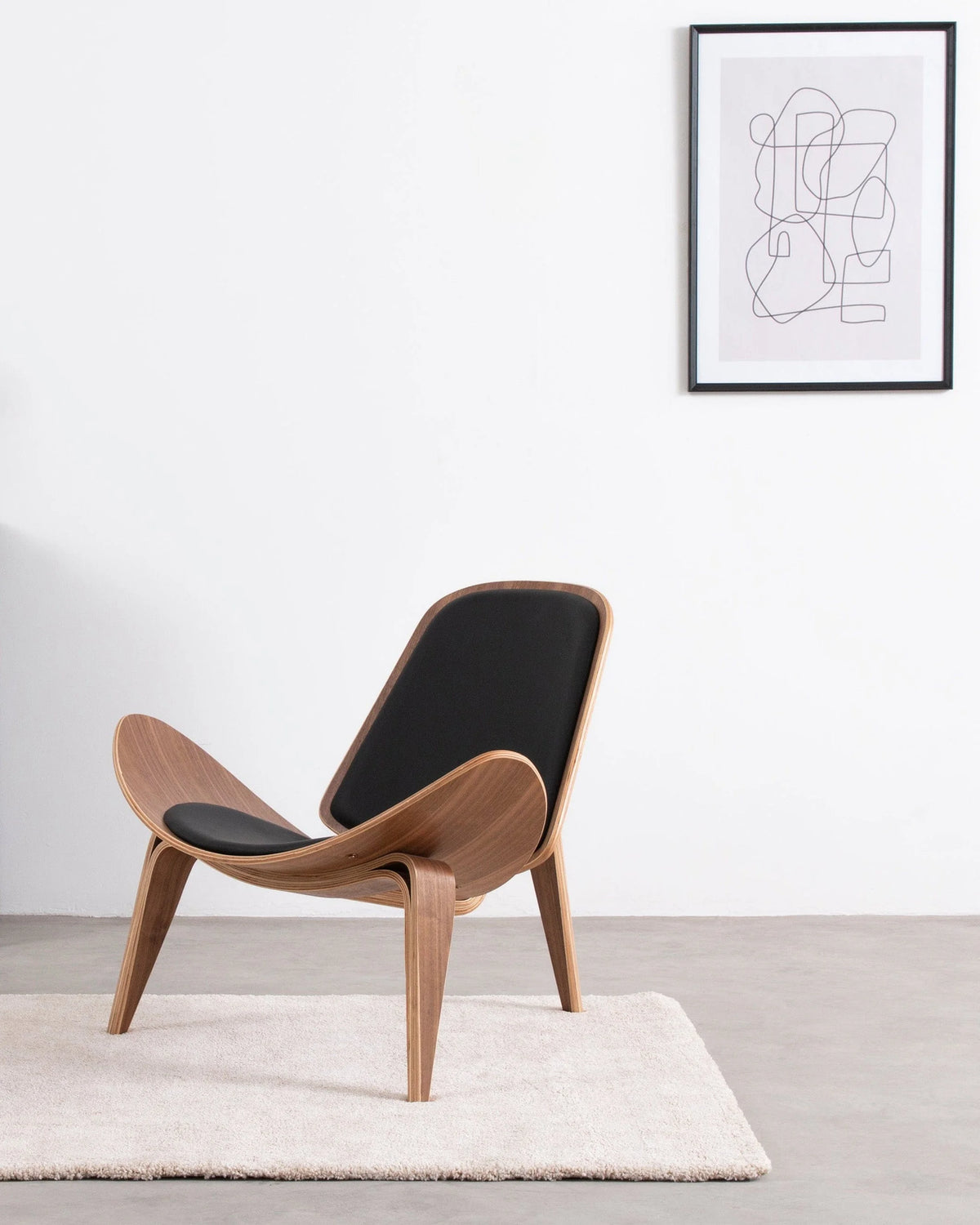
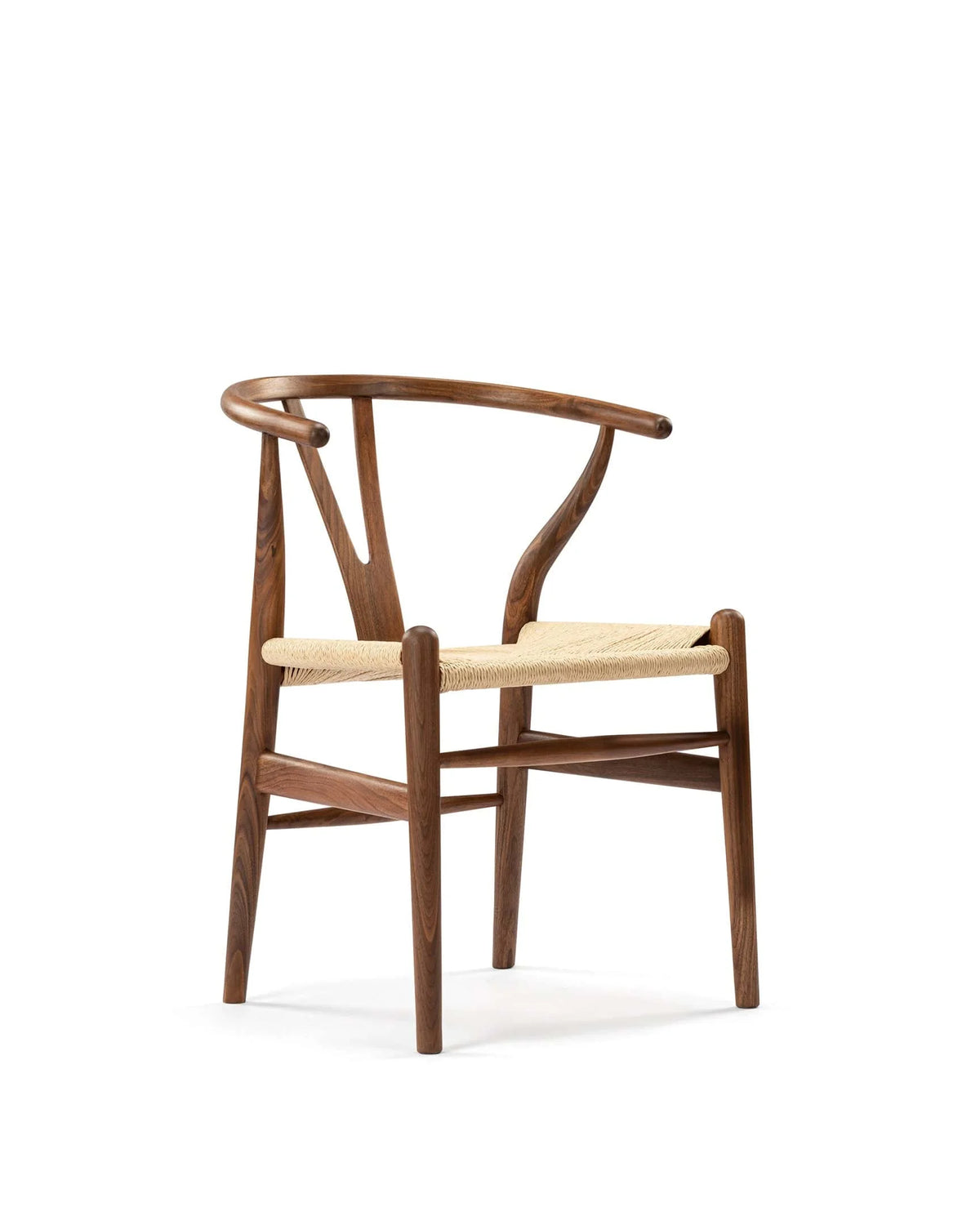


About Us
About Madorne
Good furniture should not feel disposable. And considered design should not require choosing between a five-figure licensed original and something made primarily to survive a product photograph. Madorne was created for the space in between — independently manufactured furniture informed by the proportions, materials and ideas that made 20th-century design endure.
Why Madorne Exists
Spend enough time sourcing physical products and you start noticing the difference between something designed around the photograph and something designed around the years that come after it.
A sofa can look exceptional under studio lighting and still use the wrong foam construction. A chair can have a familiar silhouette while getting the seat angle slightly wrong. Two veneers can look almost identical on a screen and behave very differently after years of use. And a beautifully finished sample means little if the same standard cannot be repeated consistently in production.
Those details became the starting point for Madorne.
Our objective is not simply to assemble a catalogue of recognizable shapes. We look for pieces whose proportions, materials, comfort and construction give them a reason to remain in a room after the trend surrounding them has disappeared.
Sometimes that means choosing a more demanding specification. Sometimes it means refining foam, hardware, veneer, upholstery execution or packaging even when the difference is barely visible in a product photograph.
Because many of the decisions that determine whether furniture remains good after several years happen long before it reaches a customer's home.
From the Founder
Madorne is led by Bastien Frey, founder of the brand and the person responsible for its product direction and sourcing strategy.
His background comes from more than seven years working through BAM PROD LLC in direct-to-consumer commerce — developing supplier relationships, evaluating products and specifications, managing quality issues, international logistics and the less visible operational details behind bringing physical products to customers.
Over time, that experience changed the way he looked at furniture. What began as an interest in interiors became an interest in why certain objects seem almost immune to time.
“I kept coming back to furniture designed fifty or seventy years ago that still felt more resolved than pieces introduced a few months earlier. Eventually I stopped looking at those objects simply as beautiful furniture. I wanted to understand why their proportions worked, why certain constructions endured and why some designs could remain relevant across generations.”
Our Design Philosophy
We are interested in furniture where very little feels arbitrary.
A curve can have an ergonomic or structural purpose. A material can be allowed to behave like itself. A proportion can be refined until the object feels natural rather than decorated.
Mid-century modern is an important part of the Madorne vocabulary, but not its limit. Our collection also draws from Scandinavian modernism, European post-war furniture, organic modernism and the softer, more sculptural forms that emerged in the 1960s and 1970s.
What connects them is not a date. It is the idea that furniture can be functional, comfortable and visually distinctive without becoming disposable when tastes change.
How We Evaluate a Piece
Proportion
Small deviations can completely change a form. Seat height, back angle, arm position, thickness and the relationship between volumes are considered as part of the whole.
Comfort
A photograph cannot tell you how a seat behaves. Foam construction, support, seating depth and ergonomics matter alongside appearance.
Material
Upholstery, leather, veneers, structural foams and hardware are considered for consistency, suitability and how they perform beyond the first day.
Execution
A good prototype is only useful if its upholstery, finishing, alignment and construction can be reproduced consistently in production.
Longevity
We ask a deliberately simple question: would we still want this piece in a room five or ten years from now?
Context
Where a piece draws clearly from design history, we want customers to understand that lineage rather than stripping the object of its context.
How a Piece Gets to You
- Design reference. Many Madorne pieces begin with a documented historical design language — sometimes a particular 20th-century form, sometimes a broader movement or manufacturing idea. Historical references are descriptive and do not imply affiliation with the original designers, estates or licensed manufacturers.
- Manufacturing. Pieces are produced through specialized manufacturing partners selected according to the processes required for each category, including upholstery, wood and veneer finishing, molded foam and precision hardware. Learn more on Our Manufacturing.
- Refinement and inspection. Relevant details including proportions, finish consistency, upholstery execution, hardware and structural components are reviewed throughout production rather than relying solely on a final inspection.
- Delivery. Furniture requires different logistics from a normal parcel. Packaging, handling and transportation are considered part of the product experience, with delivery methods appropriate to oversized and heavy pieces.
Built by Specialists, Not a Generic Factory

Furniture is not one manufacturing discipline. Upholstery, molded foam, woodworking, veneer finishing, stone fabrication and precision hardware each require different processes and different skills.
Madorne works with specialized manufacturing partners in Shenzhen and the surrounding furniture-manufacturing ecosystem, selected according to the capabilities required for each category rather than treating every piece as if it should come from the same production line.
Upholstery is a good example. Cutting and shaping can be standardized, but getting fabric or leather to sit correctly around complex geometry, maintaining consistent panel tension and producing clean seam lines still relies heavily on trained craftspeople.
The workshop that excels at a sculptural upholstered chair is not automatically the right workshop for a stone dining table.
Specialization matters.
Materials Chosen for Year Five, Not Day One

Furniture has two lives.
The first happens online.
The second begins when someone sits on it every morning, moves it to clean underneath, stretches out on it, has friends over and eventually stops treating it as something new.
We care much more about the second life.
Depending on the piece, Madorne specifications can include full-grain and corrected-grain leather, boucle, velvet, woven textiles, wood veneers, structural foams, stone, metal and purpose-selected hardware.
Materials are evaluated according to what they need to do — consistency, comfort, structural performance, finish and resistance to normal use — rather than solely according to how effectively they photograph on day one.
The detailed breakdown of our manufacturing approach is available on Our Manufacturing.
Our Approach to Sustainability
We are deliberately cautious with the word sustainable.
Furniture is a physical product. It requires materials, manufacturing, energy, packaging and transportation. We don't believe responsible production begins by pretending those impacts do not exist.
Our approach starts somewhere less glamorous: keeping furniture useful for longer.
A piece that remains structurally sound, aesthetically relevant and worth keeping has a different relationship with consumption than furniture designed around rapid replacement.
That is why longevity informs our thinking around construction, materials, quality control, packaging and preventable transport damage. Where appropriate, we also look for opportunities to reduce unnecessary packaging and avoid waste that adds no value to the finished product.
Environmental certifications and specific material claims are communicated when they can be documented for the relevant product or supply chain. We don't turn an isolated initiative into a blanket environmental claim for the entire catalogue.
Responsible manufacturing begins with being precise about what you can stand behind.
Read more on our Sustainability page.
The Furniture We Want to Keep
The furniture industry is very good at creating reasons to replace things: new colours, new silhouettes, new micro-trends.
Yet some homes contain a chair that has followed someone through three apartments. A dining table gathers marks that eventually become part of the object. A sofa becomes associated with a particular period of family life.
We cannot decide which Madorne pieces will eventually mean something to their owners. We can only try to give them the chance.
Buy deliberately. Keep it longer.What Direct-to-Consumer Actually Changes
“Direct-to-consumer” has become an easy phrase to put on a website. For us, it describes a practical decision about where the cost of furniture should go.
Traditional furniture distribution can involve several commercial layers between production and the final customer — importers, distributors, regional agents, showrooms and retailers, each with its own operating costs.
Madorne operates online without an international network of physical showrooms or traditional dealers.
This does not make manufacturing, inspection, packaging or transporting a large piece of furniture free. It means we have chosen to direct more of the economics of the product toward the piece itself and the process required to get it to its owner.
Quality control reduces problems; it cannot make physical products infallible. If something does go wrong, our Warranty explains what is covered, for how long, and how to make a claim.
Why Buy at Madorne
- Independently manufactured furniture with clear disclosure of its design context
- Product curation informed by 20th-century furniture and manufacturing history
- Specialized manufacturing partners selected by production capability
- Materials and specifications considered beyond their appearance on day one
- Multi-stage quality control throughout production
- Direct-to-consumer pricing without a traditional showroom and dealer network
- 5-year warranty on structural components
- A deliberately cautious approach to environmental claims
What Madorne Is — and Isn't
Madorne is not a licensed reproduction house, an authorized dealer for historical furniture manufacturers or a vintage furniture dealer.
We curate and offer newly manufactured, independently made furniture. Where a product or editorial page discusses a historical designer, object or movement, that reference describes design lineage and context. It does not imply authorization, endorsement, origin or affiliation unless explicitly stated otherwise.
We believe customers can appreciate both the importance of the original designers and the possibility of making contemporary furniture informed by the ideas they introduced.
The complete statement is available in our Legal Disclaimer & Non-Affiliation Statement.
A Company Built Since 2019. A Furniture Brand Built for What Comes Next.
Madorne is operated by BAM PROD LLC, founded in 2019.
The years before the Madorne name are part of what made the brand possible: experience with sourcing, suppliers, specifications, inspections, international freight, packaging, product issues and customer expectations.
Madorne is the furniture expression of what that experience taught us.
A beautiful product is the beginning. Making it consistently, delivering it properly, standing behind it and giving someone a reason to keep it is the harder part.
That's the part we're interested in.
Read More
- Why Madorne — how our direct pricing model works.
- Our Manufacturing — workshops, materials and quality control.
- Sustainability — the environmental principles we can stand behind.
- Warranty — what's covered and for how long.
- Legal Disclaimer & Non-Affiliation Statement — our complete position on historical design references.
Explore the collection by room and material, starting with living room furniture.