




How Curved Wood and Woven Cord Shaped Danish Chair Design

Written by Charlotte Bruno
Design Editor at Madorne
A wooden chair can look simple while solving several difficult problems: how to support the back, where to place the arms, how to connect a curved rail to upright legs, and how to make a seat without a thick upholstered cushion. Hans J. Wegner’s work offers a useful way to look at those relationships rather than treating Danish modern design as a particular brown wood stain.
This guide focuses on curved wood and woven seating: what the forms make visible, what a photograph cannot prove, and why a dining chair and a lounge chair should not be treated as interchangeable. Historical references describe original designs; the Madorne products illustrated here are independent contemporary pieces.
What the Wishbone Chair reveals about Danish chair design
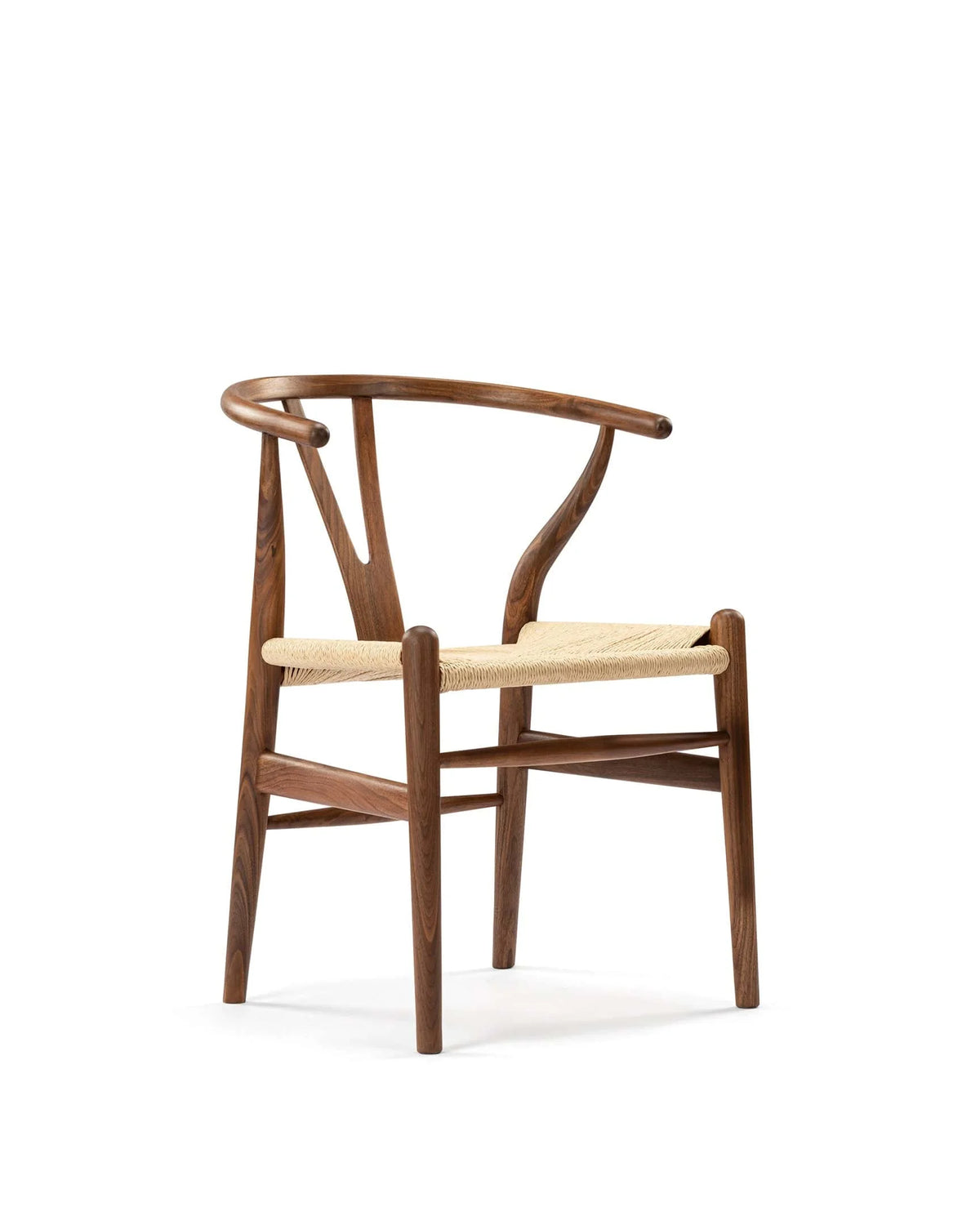
The original CH24 Wishbone Chair was designed by Hans J. Wegner for Carl Hansen & Søn in 1949 and entered production in 1950. Its characteristic Y-shaped back support sits beneath a curved rail that serves the back and arms. Carl Hansen’s CH24 description explains the relationship between this support, the bent top rail and the hand-woven paper-cord seat.
Look at that relationship before looking at color. The open back lets the outline remain visible through the chair. The rail gives the upper body a place to rest, while the separate woven seat introduces a different surface and texture below. A chair can therefore feel visually light without making every structural element exceptionally thin.
The Y-shaped support is not the curved rail itself
These are distinct parts, and confusing them makes the construction harder to read. Follow the top rail around the chair, then look at the central support below it and the connections to the rest of the frame. A clean-looking silhouette still depends on joints that must be properly made.
It is tempting to describe every recognizable outline as identical to the original. That goes too far. Dimensions, wood species, rail profile, joint construction, finish and seat material can differ between independently made pieces. Historical inspiration is not proof of equivalent manufacture.
Read curved wood through its shape and its specification
A rounded wooden part may be bent solid timber, carved or machined timber, or laminated construction. A photograph alone does not establish the method. Ask for the stated construction instead of assuming that a smooth curve has been steam-bent or that visible grain proves an entire frame is solid wood.
Then inspect the shape from several angles. Does the curve continue cleanly into the uprights? Are rail thickness and leg proportions consistent? How does the back appear from across a table, not just in a close front view? These observations help you understand the object, but they are not substitutes for structural testing or a documented specification.

The Wisp 49 dining chair uses this open-back visual language. Its listing gives an overall width of 22 inches, depth of 19.7 inches and height of 29.1 inches, with a seat height of 17.3 inches. Use those actual measurements for planning; do not borrow the dimensions of a historical reference.
Finish changes the reading of the same form
A pale finish can make grain and small surface transitions more visible; a darker finish may emphasize the outline. Neither is automatically more authentic or easier to maintain. Ask whether the selected finish is lacquered, oiled, painted or otherwise treated, and follow its specific care instructions.
Compare a sample against the dining table in the room’s daylight. A shared “walnut” label does not guarantee the same undertone or sheen. Coherence can come from a deliberate contrast as readily as from a close match.
Woven seating is a construction detail, not just a texture
The pattern visible on a woven seat is made by material passing around and across the frame. Look at the spacing, edges and transitions where the weave meets wood. A photograph may show the pattern clearly, but it does not tell you the complete fiber composition, treatment or approved cleaning method.
Paper cord is a specific material, not a generic name for every cord seat. Carl Hansen & Søn describes paper cord as twisted paper strips. Other woven furniture can use different fibers or constructions. Avoid translating “woven cord” into “paper cord” without a product specification.
Do not transfer one manufacturer’s maintenance to another seat
Carl Hansen publishes maintenance instructions for its treated paper cord. They are useful evidence that the material and its treatment matter, not a universal cleaning recipe for all woven chairs.
The Wisp 49 listing describes woven cord, so confirm its precise material and care method rather than assuming a paper-cord treatment. Do not repeatedly wet or scrub an unidentified weave. If there is a spill, remove the source and ask for the instructions appropriate to that seat.
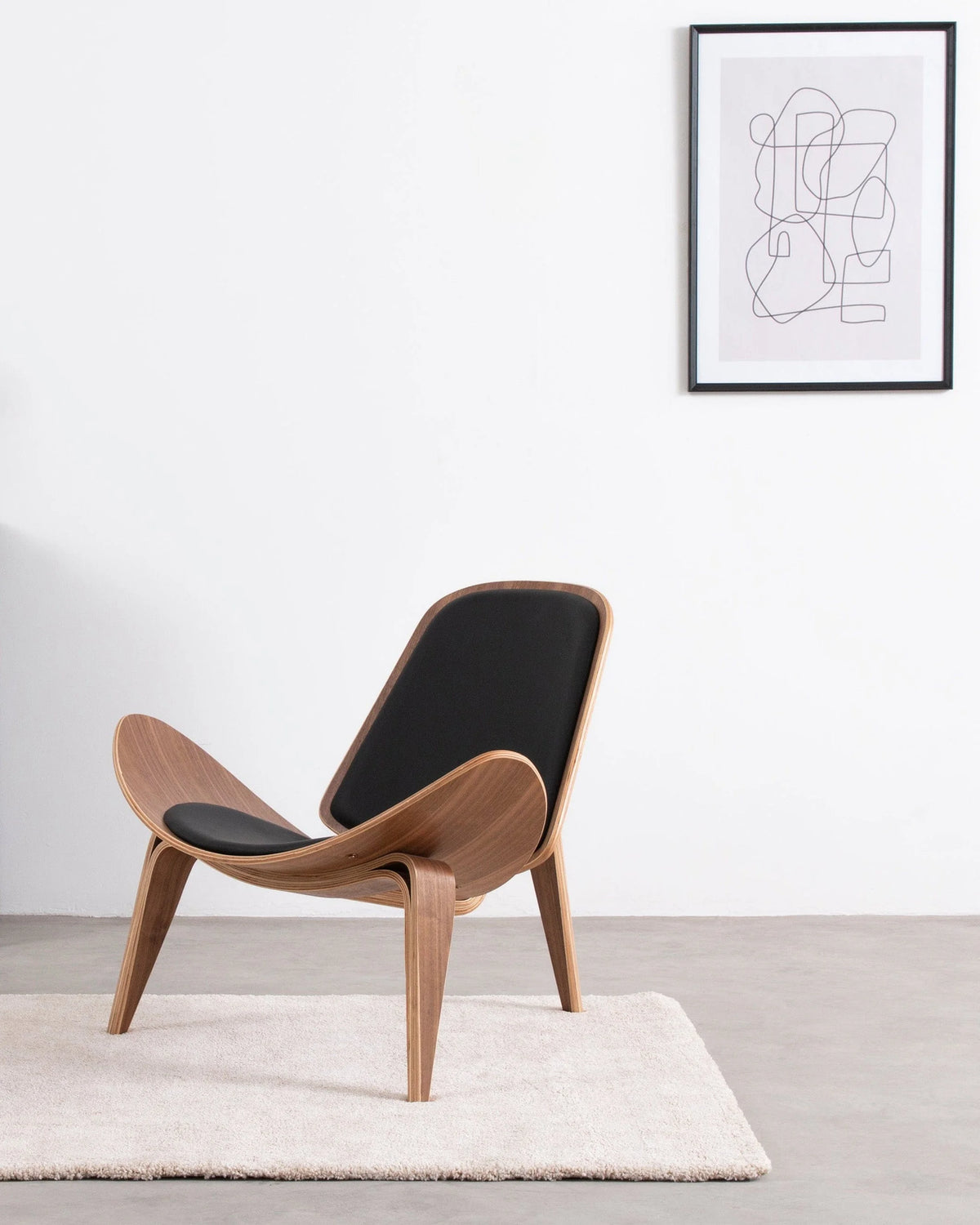
A dining chair and a lounge chair solve different problems
A dining chair supports sitting close to a table, moving in and out, and using the surface ahead. A lounge chair organizes the body differently and often asks for more room around the seat. Back angle, seat depth, width, arm position and overall footprint all matter; seat height alone cannot establish the intended use.

The Wisp 50 lounge chair explicitly lists a woven paper-cord seat and a solid ash frame. Its overall width is 26.7 inches and depth is 29.1 inches. Its broader footprint makes the distinction from the Wisp dining chair practical as well as visual.
Use the intended role to decide placement
At a dining table, check how the chair approaches the apron and how much space is left behind it when someone sits down. In a lounge area, consider the reachable side surface, reading light and route around the seat. A photograph showing a chair near a table is not evidence that the two work at dining height.
Our guide to planning a modern dining room applies those relationships to the room layout. It is a more useful next step than choosing a chair solely because its timber matches a living-room piece.
Bring the design language into a contemporary interior
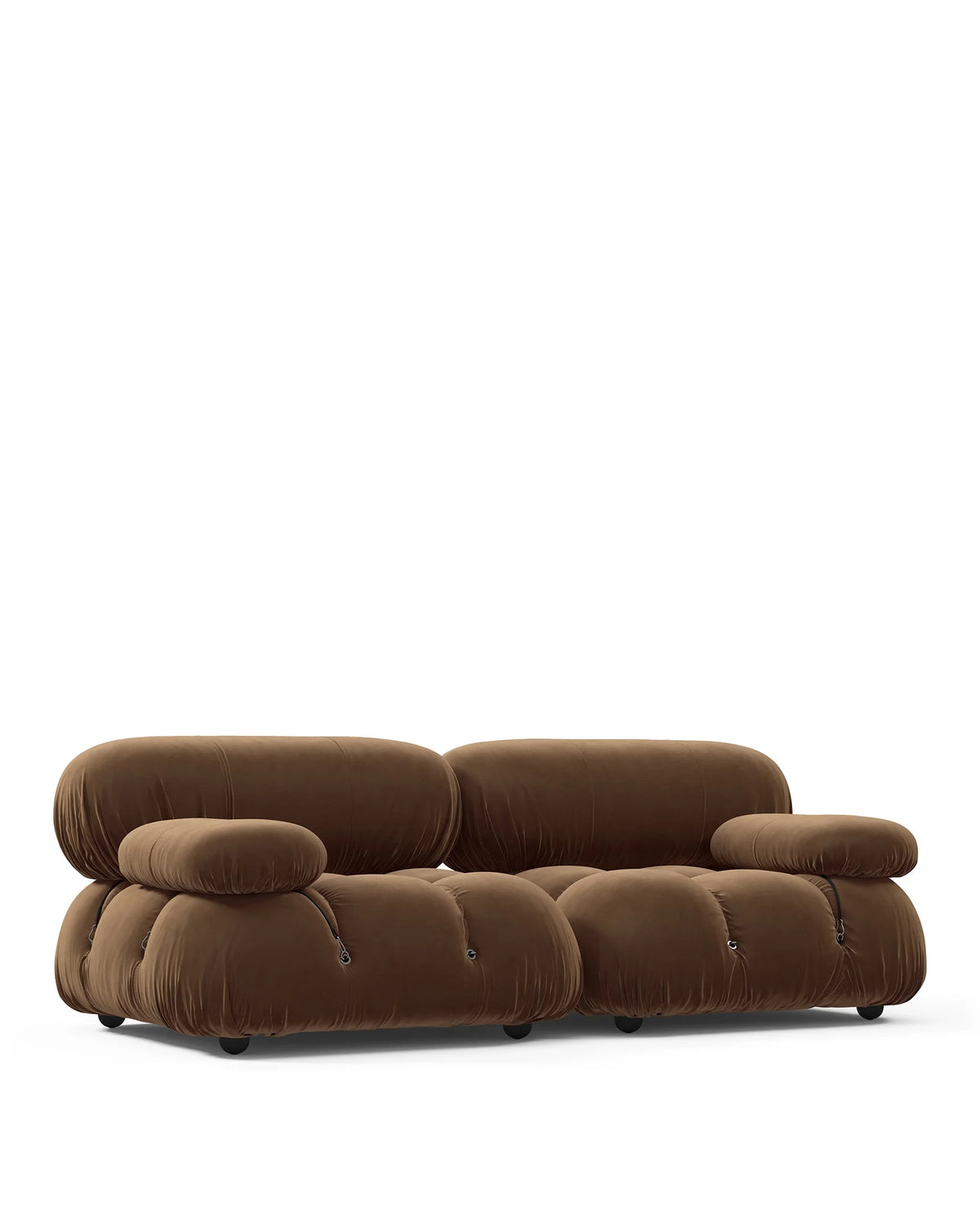
Curved wood and woven seating can work alongside a plain upholstered sofa, painted storage or a stone floor. The room does not need to reproduce a historical interior. Let the chair’s open structure provide contrast rather than surrounding it with every recognizable mid-century motif.
In an open-plan room, repeat one material relationship between the dining and lounge areas: for example, warm wood against a quiet fabric. The dining seats still need to be dining seats. A coordinated room does not require identical chair geometry in both zones.
When exploring seating inspired by Wegner’s design language, keep historical authorship and current product specification separate. Choose the current piece by its stated material, measurements and intended use, rather than treating inspiration as a promise of original construction.
Curved wood and woven chairs: common questions
Is every woven seat made from paper cord?
No. Woven construction describes a method or visible pattern, not a complete material composition. Read the listing and request clarification where it says only “cord.”
Does a Y-shaped back prove a chair is an original CH24?
No. An outline alone does not establish maker, provenance or licensing. The CH24 historical reference and an independently produced contemporary chair should be identified separately.
Can I use a woven lounge chair at a dining table?
Only if its intended use and actual geometry make that appropriate. Seat height is one measurement among several. A broad or reclined lounge seat is not automatically a dining chair.
What is worth checking beyond the front photograph?
Look at the back, side, underside and weave edges; read the material and finish specifications; then check the measured footprint in the room. These steps reveal more than a familiar silhouette alone.
Read more

Check real configurations, compatible connections and future module needs before relying on a modular sofa’s flexibility.

A finish-first guide to dusting, spills and maintenance, with clear advice on when to stop and ask for specialist help.