











How to Clean a Marble Coffee Table Without Damaging the Finish

Written by Charlotte Bruno
Design Editor at Madorne
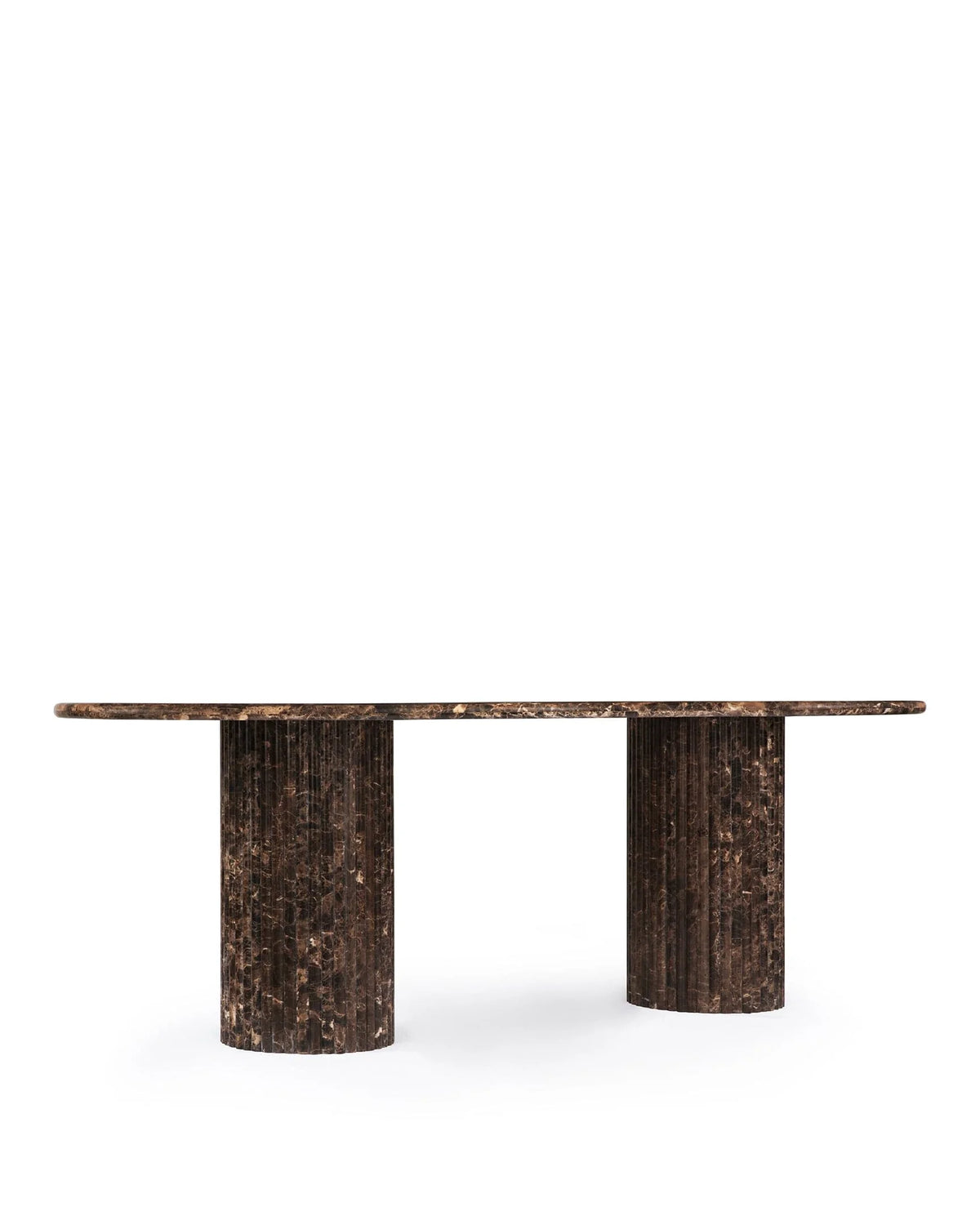
A marble coffee table needs a routine that protects its actual surface, not a kitchen-cleaning shortcut. Start by confirming the selected stone, finish and construction. Then keep everyday care simple: remove loose grit gently, protect the surface from drinks and heat, and use only a cleaning method approved for that table.
This guide concerns natural-marble surfaces. A stainless-steel variant, stone-effect concrete or another coated surface needs its own instructions, even if it shares the same rectangular silhouette.
Confirm which marble surface you own
Find the order’s selected finish and keep the care sheet with it. “Marble” does not tell you whether a surface is polished, honed, coated, sealed or part of a composite construction. Color names describe appearance, not a complete maintenance system.

The Plyn 01 coffee table offers stainless steel and natural-marble finishes. Its listing states that stone composition and core construction vary by selected finish. Do not assume the block is solid stone throughout, or that one treatment applies to every variant.
Ask for the missing finish information
If the listing does not explain the surface treatment, ask before cleaning or sealing. A photograph of veining cannot establish what products the surface tolerates. Save the response with the selected variant so future care is based on the furniture you actually bought.
Set up a gentle daily routine
Keep grit from being dragged across the top when books, bowls or trays move. Lift objects rather than sliding them, and check their undersides for rough edges. Use a clean soft cloth and the approved method for removing loose dust.
For wet cleaning, Daltile recommends neutral cleaners designed for natural stone, mixed and used according to their instructions. This is general stone-care guidance, not a replacement for the furniture supplier’s finish-specific directions. Confirm the method for your table and avoid unnecessary soaking, especially around seams.
A simple care station is more useful than several products
Keep suitable coasters, a clean approved cloth and the care instructions accessible. Label a dedicated cloth so it is not reused after cleaning with wood polish or another household product. You should not have to improvise from whatever bottle happens to be nearby after a spill.
Respond to spills without spreading them
The Natural Stone Institute’s care guidance recommends prompt blotting rather than spreading a spill. Follow the table’s approved cleanup instructions next. Avoid rubbing liquid into a wider patch or leaving a damp object on the surface while you search for a cleaner.
Record what spilled and when. A cup ring, oily mark and sudden dull area may need different assessment. If ordinary approved cleaning does not resolve the change, stop instead of trying stronger products in succession.
Do not turn the table into a chemistry experiment
Skip improvised vinegar, lemon juice, abrasive powders and unknown multi-surface sprays. The Natural Stone Institute warns that acidic products can etch calcareous stone and abrasives can scratch it. “Natural” ingredients are not automatically appropriate for marble.
Likewise, do not test the stone by dropping acid or water onto it. Identify the material through the specification rather than risking a mark to prove how it reacts.
Distinguish staining from a change in the finish
A new dark or colored patch is not the same visual problem as an area that has lost its previous sheen. Look at the surface from a low angle in ordinary daylight, without scrubbing, to describe what changed. Photographs from two angles can help the supplier or restorer understand the issue.
Natural Stone Institute guidance distinguishes etch marks from stains and advises professional assessment for refinishing affected areas. A dull patch should not automatically be treated with more detergent. Avoid home sanding, abrasive buffing or polish unless the exact method has been approved.

Natural veining is not a cleaning defect
Compare an area with your earlier photographs and the material specification. An irregular vein or tonal change may be part of the selected stone’s appearance; a new spill mark should not be dismissed as veining. Document the difference instead of trying to make the entire top visually uniform.
Sealing is a finish-specific decision
Do not assume the table needs resealing on a universal annual schedule. Ask whether the actual surface needs treatment, which product is suitable and how it should be applied. The Natural Stone Institute notes that an impregnating sealer does not make stone stain-proof.
Before treating a composite or veneered construction, clarify whether the treatment is compatible with its surface and seams. A method used on a countertop slab is not automatically appropriate for every furniture construction.
Protection does not replace ordinary habits
Keep coasters under drinks and use suitable protection for hot objects, following supplier guidance. Do not leave plant pots, wet trays or leaking vases directly on the surface. Consider the objects you place on the table each day, not just occasional spills.
Ask for help with an accurate record
Send the supplier the order reference, selected finish, photographs and a short account of the spill or change. Include every product already used. This makes it easier to advise on the actual surface and avoids accidentally repeating an unsuitable treatment.
When comparing coffee tables with marble surfaces, request the same finish and care information before purchase. Maintenance clarity is part of choosing a table for everyday life, not simply a problem to solve after it arrives.
Marble coffee table cleaning questions
Can I use vinegar to remove a ring?
Do not use an acidic household remedy on an unidentified marble finish. Follow the approved instructions and seek assessment if the surface appearance has changed.
Does a sealer prevent all damage?
No. A treatment is not a guarantee against staining or finish changes. Confirm what it does for the selected surface and keep using appropriate everyday protection.
Is every Plyn finish cleaned the same way?
No. Natural marble, steel and stone-effect concrete are different surfaces. Use the selected variant’s specification and care method.
When should I stop cleaning?
Stop if the mark persists after the approved method or if color, sheen or texture changes. Ask for help rather than escalating to abrasive or stronger treatments.
Read more

Compare straight, corner and conversation seating plans using current Pogo module dimensions. Check walking routes and distinguish a layout sketch from a set’s confirmed contents.

Map furniture contact points, compare rug orientation and test a full-size outline before ordering.