



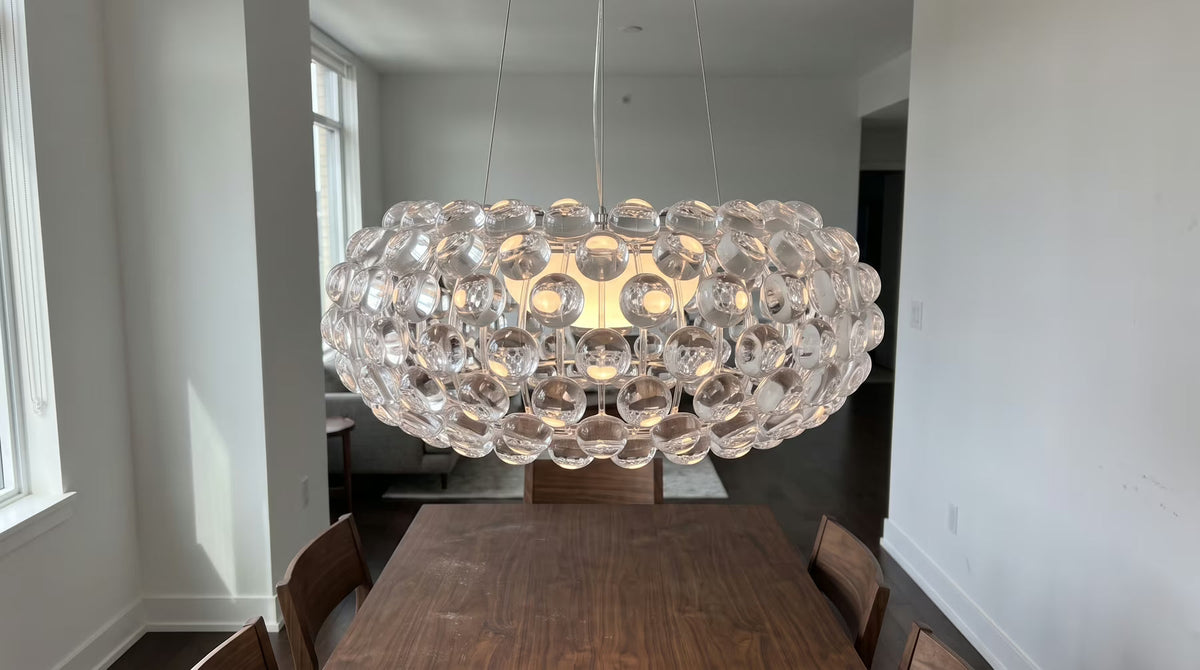
How to Size a Pendant Light Above a Dining Table

Written by Charlotte Bruno
Design Editor at Madorne
A pendant above a dining table needs to work in plan and in the seated view. Its width affects the composition over the tabletop; its drop affects sightlines and everyday use. Choosing from a room photograph alone can obscure both relationships.
Begin with the table in the position where it actually works. Then compare the fixture’s dimensions and test its visual volume. Electrical suitability and installation belong with the fixture instructions and an appropriately qualified installer, not a decorating ratio.
Measure the table before deciding the pendant scale
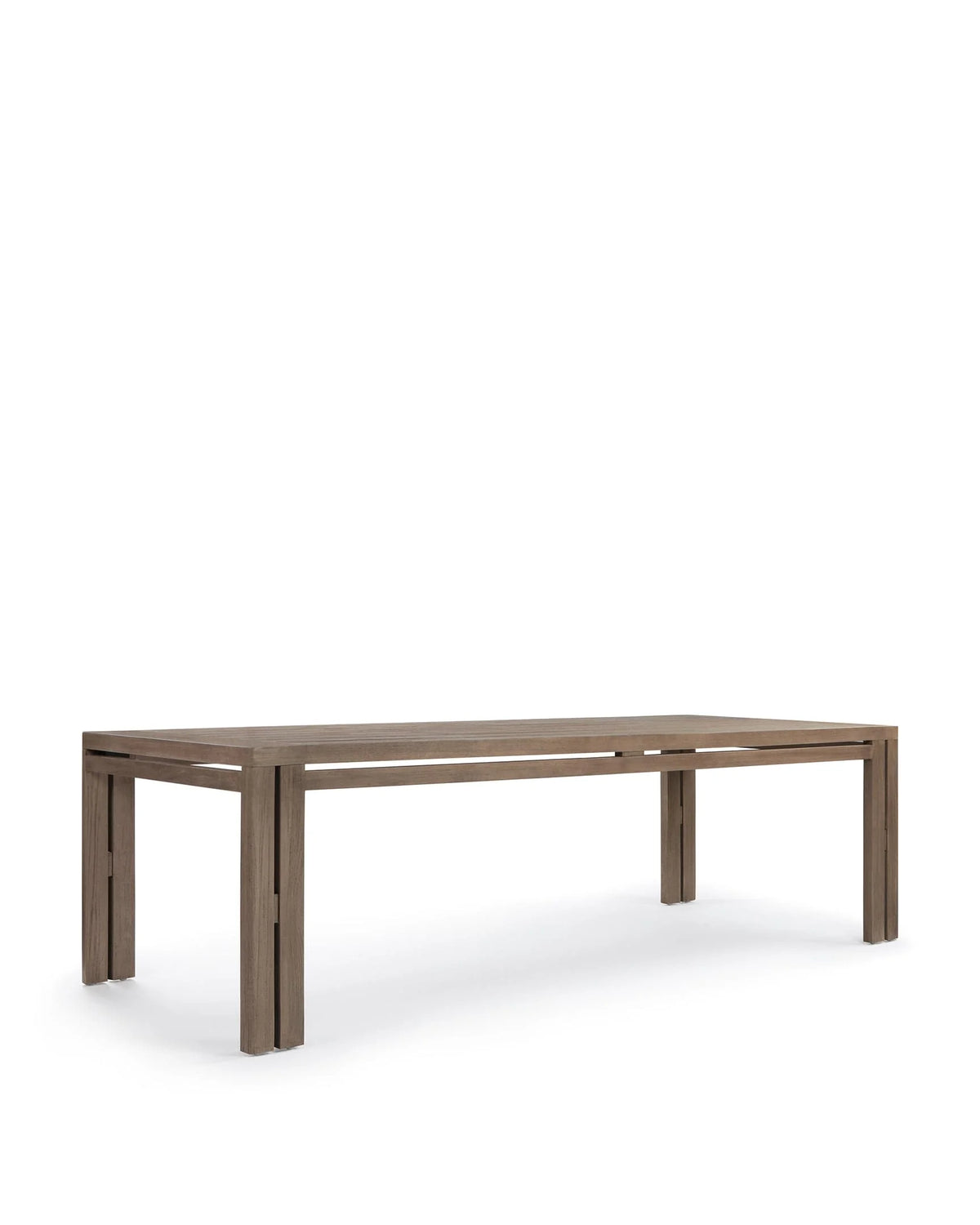
Record the table’s width, length and shape. Mark its center and the usable sitting positions. If the table extends, draw both sizes and decide which arrangement the light should serve most of the time.
Use the actual table, not the room’s overall width, for the first comparison. A fixture can suit a dining zone visually while looking too concentrated or too broad over the surface people use.
Look at footprint and volume separately
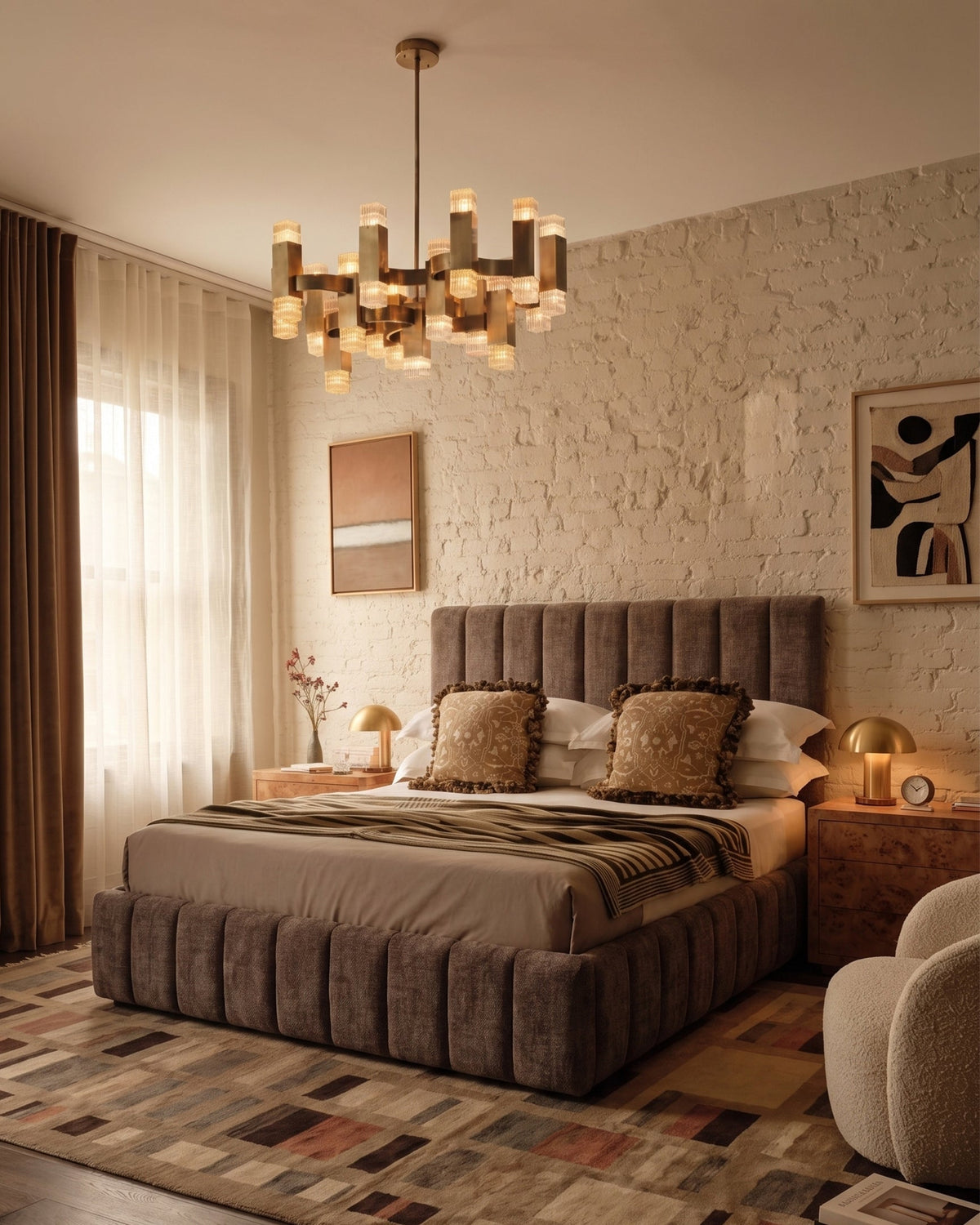
A thin linear fixture, a dense rounded shade and a transparent cluster can have different visual weight despite a similar width. The diameter alone does not describe how much of the room the light appears to occupy.

Compare the listed fixture width with the tabletop
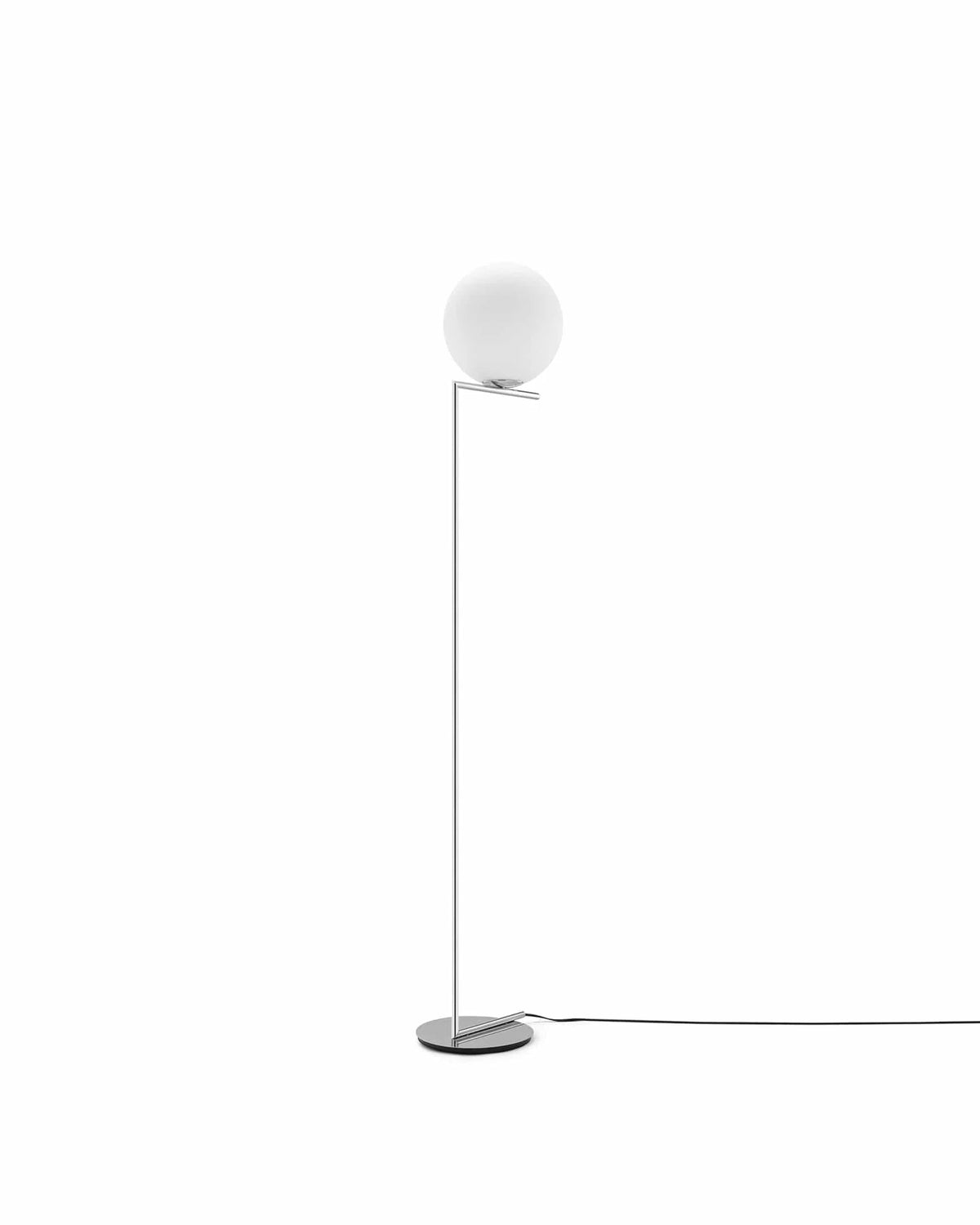
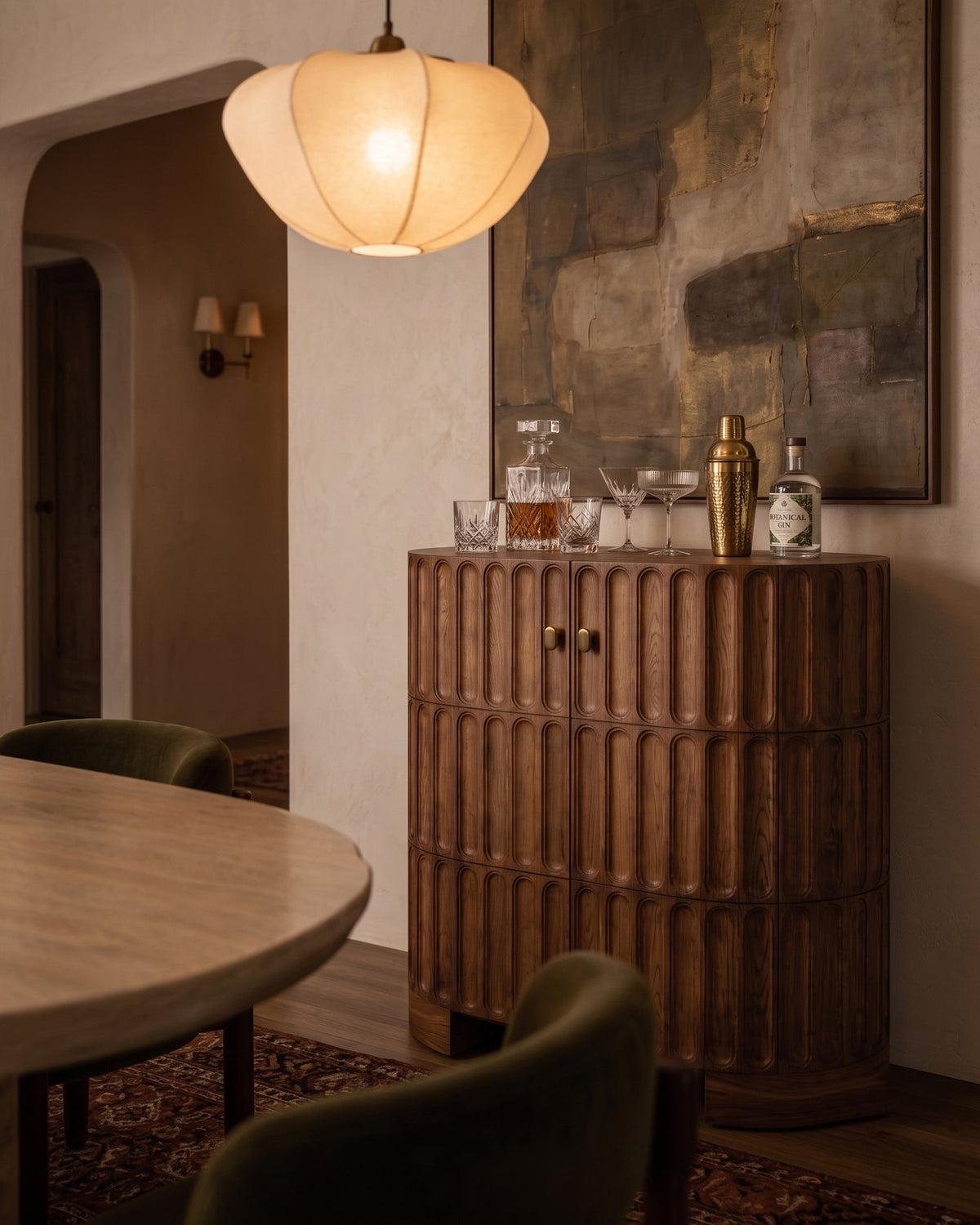
The Elia large lamp lists a diameter of 19.7 inches and a shade height of 7.9 inches. It is described with polished stainless steel and acrylic. Use those current dimensions rather than borrowing measurements from the historical design it references.
For a hypothetical 40-inch-wide table with the circular fixture centered above it, the width difference is 20.3 inches, or 10.15 inches on each side in a simple plan projection. This describes the drawing only; it is not a safety clearance or a universal sizing recommendation.
Do not turn a proportion into a purchasing guarantee
A “half the table width” rule may provide a visual starting point, but it cannot account for shade transparency, ceiling height, suspension, sightlines or the room’s other forms. Compare several silhouettes at the actual dimensions instead of treating a ratio as the answer.
Make a scale outline before buying
Use paper or a digital plan to compare the fixture’s diameter or length above the table outline. If testing in the room, use a safe lightweight visual template positioned without creating an overhead hazard. Do not improvise suspension from furniture or light fittings.
View the outline from the entrance and each regularly used seat. A size that looks balanced from the doorway may feel visually crowded when seen from across the table.
Test the fixture against chair backs and architecture
Look at the relationship to chair backs, windows and artwork. A visually busy cluster above strongly carved chairs can create several competing focal points. A quiet table and chairs may allow the fixture to lead more clearly.
Our dining room planning guide establishes the table and occupied routes first. Keep that layout rather than moving the table into a poor position merely to center it under an existing ceiling point.
Assess the drop from seated height
Shade height and installed drop are different measurements. The total position depends on suspension, mounting and the installation method permitted by the fixture. A cord length in a listing is not a guarantee of every possible installed height.
Ask for the permitted installation range and instructions. Then consider the view across the table and the way people approach it. Avoid imposing one hanging-height number across every fixture and ceiling.

Look for glare, not just obstruction
A transparent fixture may preserve views while exposing bright sources. A solid shade may conceal the source but occupy more visual space. Assess the light from seated positions and follow the supplied instructions for suitable lamps and components.
Do not infer light output, dimming capability or compatibility from appearance. Confirm those specifications before planning the room’s evening lighting around the fixture.
Decide whether one fixture serves the table
A single rounded fixture can make a clear central composition. A longer table may call for a different approach, but two fixtures should not be added solely because the table is rectangular. Their spacing, mounting and light distribution need a coordinated plan.
If considering multiple lights, draw their individual outlines and ask about installation and control requirements. Do not guess electrical connections or extend suspension beyond the approved method.
Consider the everyday table and its extended form
An extending table may not share the same center in every arrangement, particularly if one end remains fixed. Draw the actual movement before deciding where the fixture should align. An installer can help assess an appropriate arrangement without promising that a decorative ratio solves the problem.
Keep the final specification practical
Record fixture dimensions, material, mounting information, permitted suspension, intended light sources and any control requirements. Confirm suitability for the installation location. If a product description is ambiguous, ask for the relevant technical sheet.
When exploring ceiling lights, shortlist by scale and verified installation information together. A convincing dining light should fit the table composition and work for the people seated below it.
Dining pendant size questions
Is diameter enough to judge scale?
No. Height, transparency, shape and suspension affect visual volume too.
Should every pendant be half the table width?
No. A proportion can help make a drawing, but it is not a universal rule or a fit guarantee.
Can I use the listed cord length as the installed drop?
Not automatically. Ask for the permitted installation range and account for the complete mounting arrangement.
What should I settle first?
The table’s practical position and seating layout. Then compare fixture scale, sightlines and verified installation requirements.
Read more
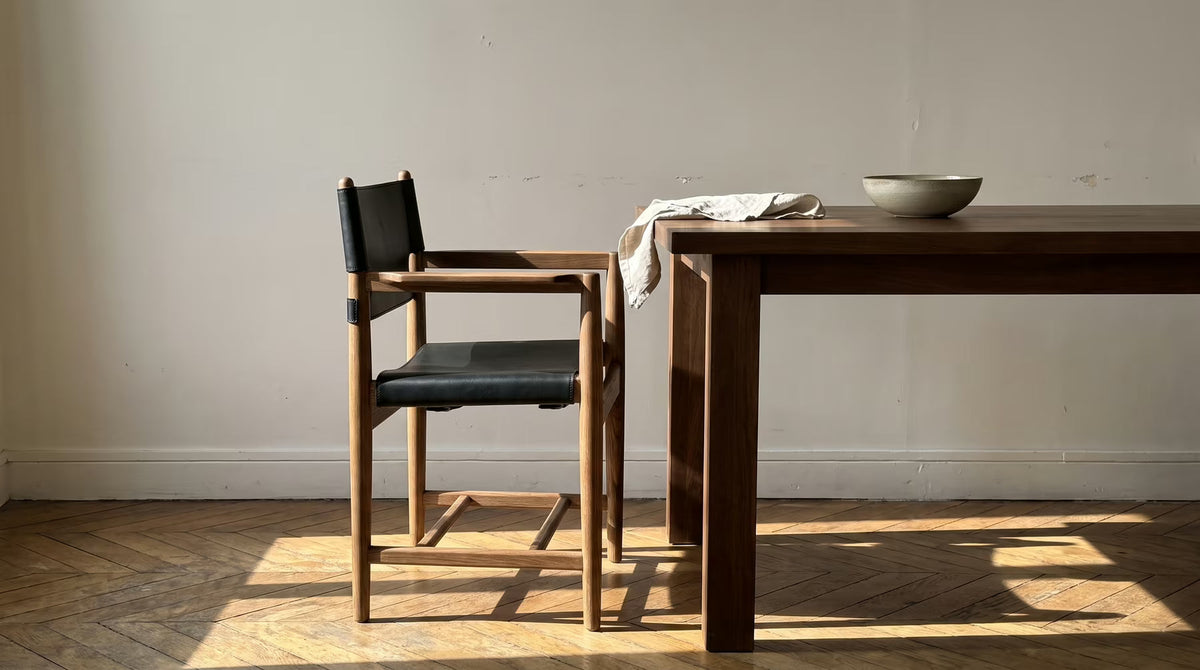
Compare the arm profile, table underside and leg opening, then check the actual tucked and occupied positions.
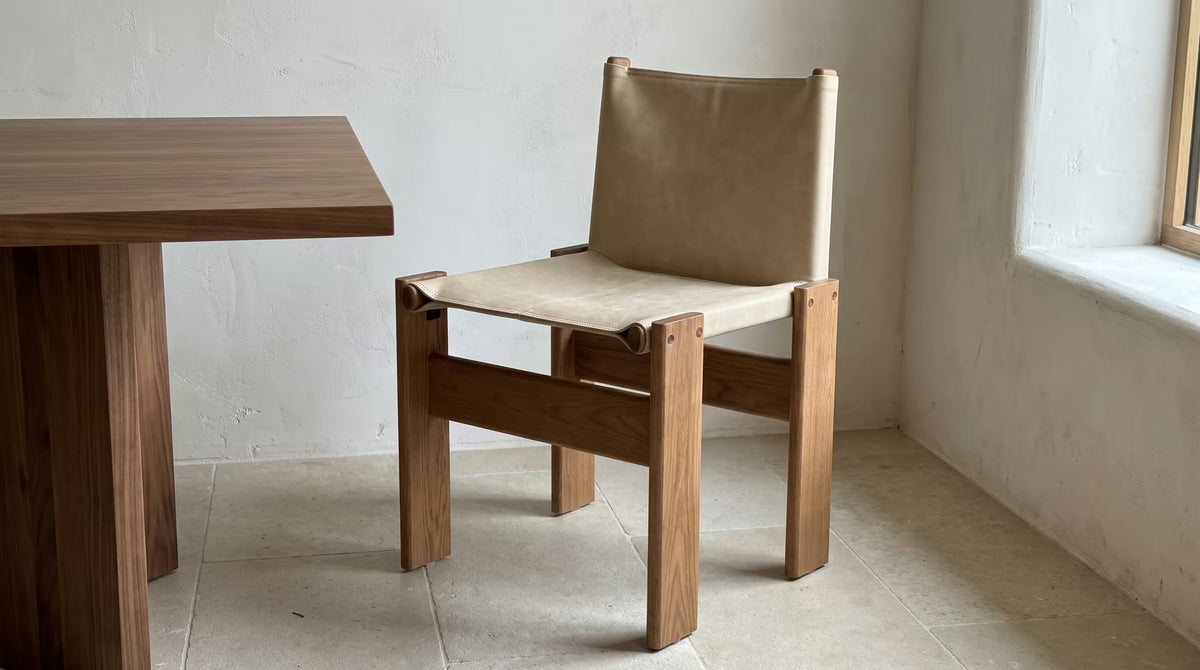
Separate wood species, stain and sheen, then compare samples in the room’s daylight and evening light.