



Sheepskin, Sherpa or Faux Shearling? How to Read Upholstery Labels

Written by Charlotte Bruno
Design Editor at Madorne
A pale, fluffy lounge chair can be described as sheepskin, sherpa, shearling or faux shearling. Those words do not necessarily describe the same material. Some identify an animal-derived covering; others describe a textured textile or a wool-like appearance. Before choosing a chair, separate what the surface looks like from what it is made of.
The useful comparison is not simply which name sounds softer. It is whether the selected upholstery has a disclosed composition, an appropriate care method and the texture you want at the scale of a whole chair. A sample and a clear specification tell you more than a lifestyle photograph alone.
Start with three questions about the upholstery label
Ask what creates the visible pile, what supports that pile and which finish the description refers to. The visible surface might be wool, another fiber or a blend. The backing can also matter to the covering’s construction. A product page that says only “sherpa” has not necessarily answered either composition question.
Then check the selected color. A chair offered in several fabrics can have one general description alongside a variant-specific material. Do not transfer the specification of an Almond pile finish to a leather or woven option just because both appear on the same page.
Sheepskin and wool textiles are not interchangeable
Natural sheepskin refers to an animal-derived skin with its wool. Wool can also be used in a textile without the original skin being present. That distinction matters if avoiding animal-derived materials is part of your decision.
A useful example of how specific material descriptions can be is UGG’s responsible-materials information: it distinguishes sheepskin from its wool-and-lyocell textile on a backing. That is an example of separate constructions, not evidence that any furniture fabric uses the same recipe. Look for the equivalent detail on the upholstery you are actually ordering.
Sherpa describes a texture, not a universal fiber recipe
Sherpa is commonly used to describe a fleece-like, piled textile. The name alone does not guarantee polyester, wool-free construction or a particular percentage of recycled content. For example, one Patagonia sherpa garment specifies a polyester-and-wool blend. Its composition shows why “sherpa” should not be treated as a precise fiber label; that garment specification does not establish the composition of a sofa.
“Long-hair sherpa” adds information about the intended appearance of the pile, but still leaves questions about the underlying fibers. If the composition is important to you, ask for the supplier’s fabric specification rather than assuming it from the name.

Read faux shearling and vegan sheepskin as separate claims
“Faux” indicates an imitation of the named natural covering. “Vegan sheepskin” signals that the selected covering is presented as an alternative to animal sheepskin. Neither phrase, by itself, provides a complete fiber breakdown, abrasion test or cleaning instruction.
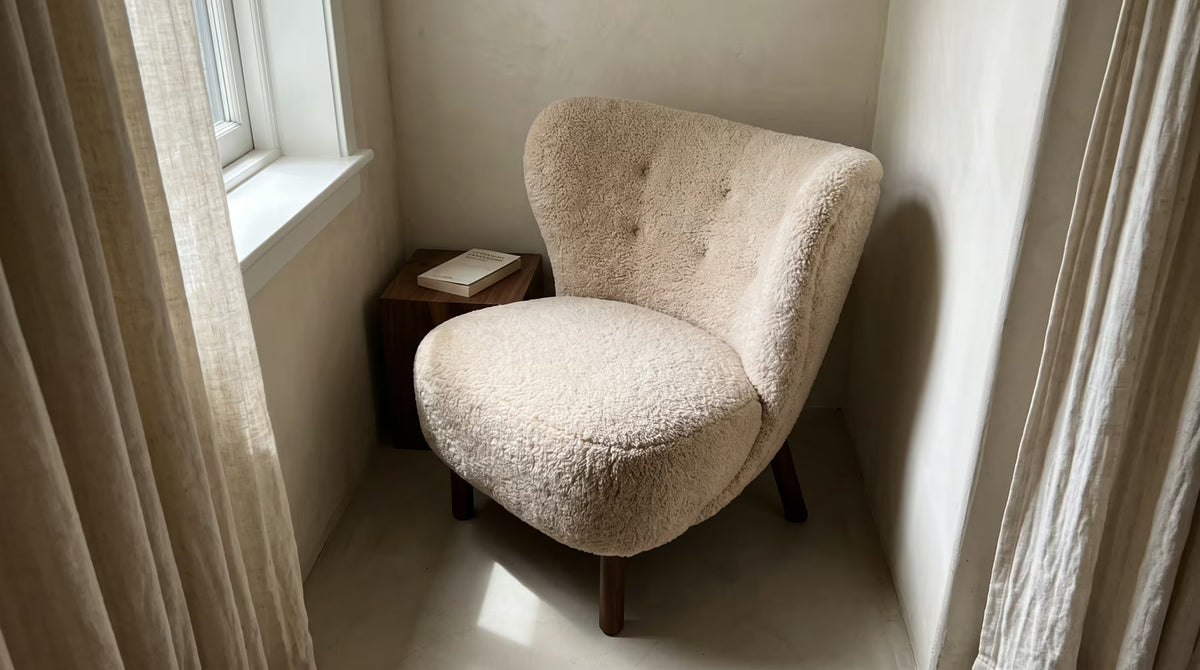
For example, the selected Almond finish of the Petral 38 lounge chair is described as premium vegan sheepskin. The current description does not disclose an exact fiber percentage. It would therefore be misleading to relabel it as natural sheepskin or invent a polyester composition. Ask for written confirmation if the complete composition is a purchase requirement.
Also distinguish the upholstery claim from claims about the whole chair. A description of the covering does not establish every component’s certification, sourcing or environmental impact. Those require their own evidence.

Compare pile at the scale of the chair
A small swatch helps with touch and color, but a full-chair photograph shows how the pile changes the outline. A longer surface can soften the edges of an already generous seat. A shorter texture can leave seams and contours more visible. Compare close-ups with wider views instead of choosing from one flattering crop.
Look at the seat, arms and back separately. Changes in the direction of the pile can alter the light reflected by the surface. That is a reason to inspect several angles, not to conclude that every lighter patch is a stain or defect. Ask how the sample and production upholstery should normally look after handling.
Set the swatch beside your existing sofa and wood finishes in daytime and evening light. If the wood also appears different between photographs, our guide to why walnut finishes can look different explains the separate effects of species, stain and lighting.
Get care and performance details before deciding
Do not assume that a fluffy covering is washable, stain-resistant or suitable for steam cleaning. Ask for the care instructions for the exact fabric, whether any covers are removable and whether removal also permits washing. Those are different questions.
If pets, frequent use or food around the chair are relevant, ask for actual performance information rather than broad promises of durability. A disclosed test applies to the tested fabric and conditions; it should not be inferred from the word “sherpa.” For a different textile comparison, see how to compare actual bouclé and velvet fabrics.
A short checklist for comparing plush lounge chairs
- Record the exact product, color and upholstery option.
- Separate appearance terms from a disclosed fiber composition.
- Confirm whether animal-derived materials are present if that matters to you.
- Compare a sample with full-chair and close-up images.
- Request finish-specific care and any available performance documentation.
With those answers, you can compare the textures in our lounge chair range on their actual specifications. The goal is not to find the most persuasive fabric name; it is to know what will arrive and how that particular covering fits your home.