




Bouclé vs Velvet Sofas: How to Compare the Actual Fabrics

Written by Charlotte Bruno
Design Editor at Madorne
The difference between a bouclé and a velvet sofa is easiest to see in their surfaces: bouclé presents a looped, textured yarn effect, while velvet presents a pile that changes appearance with direction and light. That difference matters visually and to the touch, but neither name alone tells you how long a sofa will last or how a spill should be cleaned.
Choose between the actual fabrics available on the sofa, not two broad reputations. Fiber composition, construction, finish, approved care and your household’s use all belong in the decision. A white bouclé and a pale velvet can each make a quiet room; a saturated bouclé and a dark velvet can each carry color. Texture is not a fixed decorating style.
Bouclé and velvet describe different surface structures
Bouclé’s characteristic looped yarns create small raised areas and shadows. The texture may be fine and closely packed or more pronounced. Those differences can change both the hand feel and how the sofa’s shape reads from across the room.
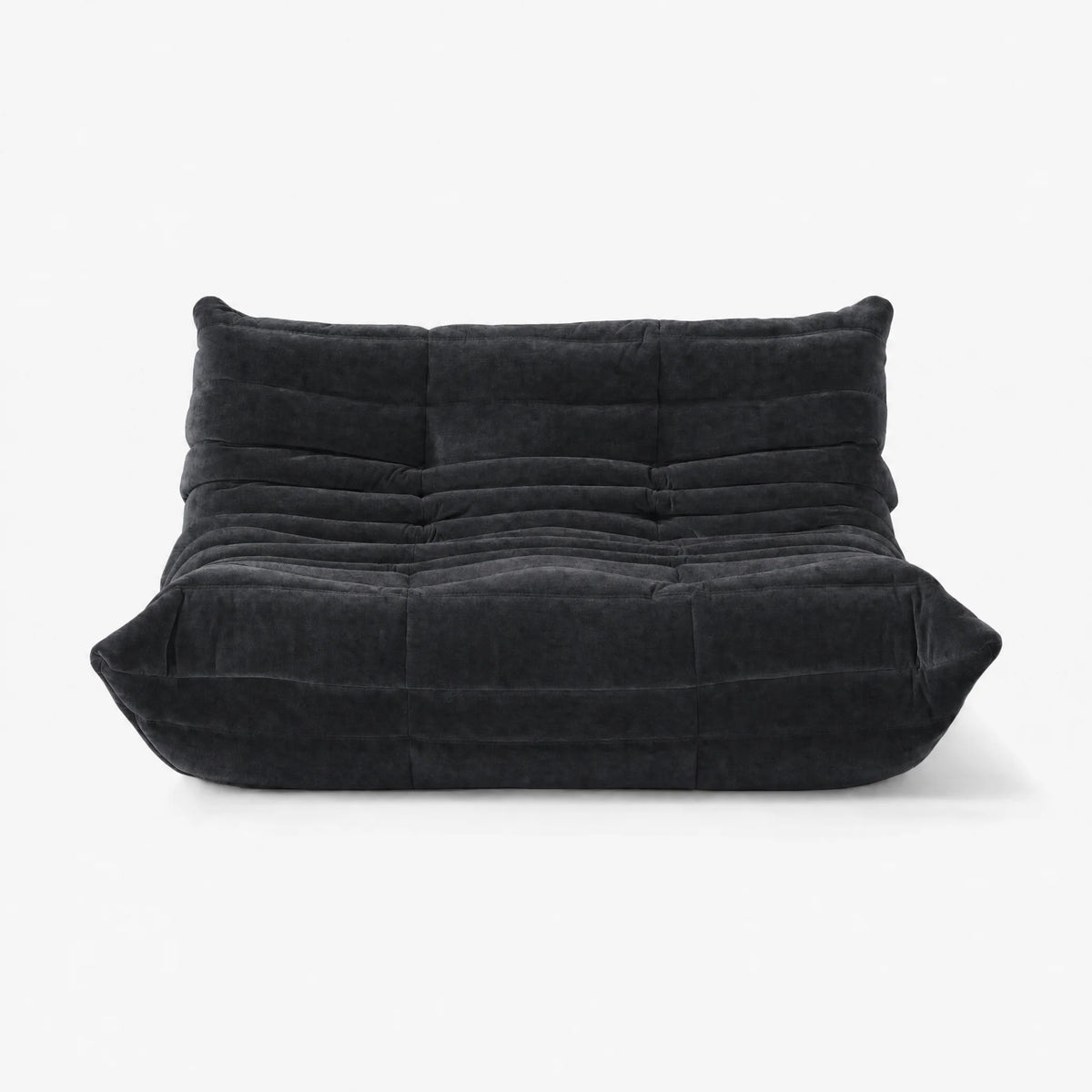
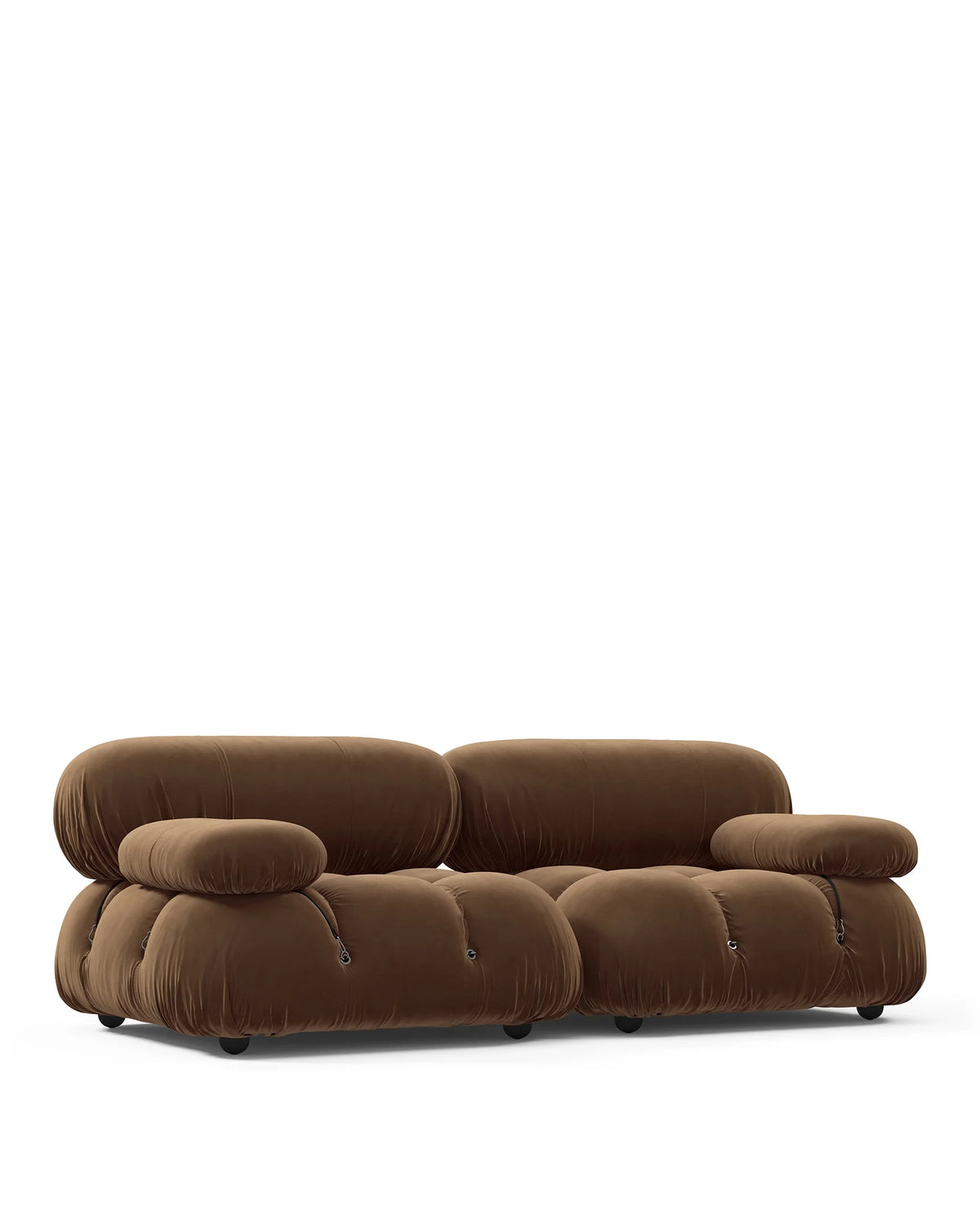
Velvet’s pile creates a different effect: changing the viewing angle or brushing direction can change apparent lightness and color. The degree of sheen varies between fabrics. Do not assume every velvet is highly glossy or every bouclé entirely matte.
Texture does not establish fiber composition
A texture name is not a complete list of fibers. Ask for the composition of the selected fabric rather than assuming bouclé means wool or velvet means silk. A descriptive term such as “plush” does not establish a percentage, care code or performance test.
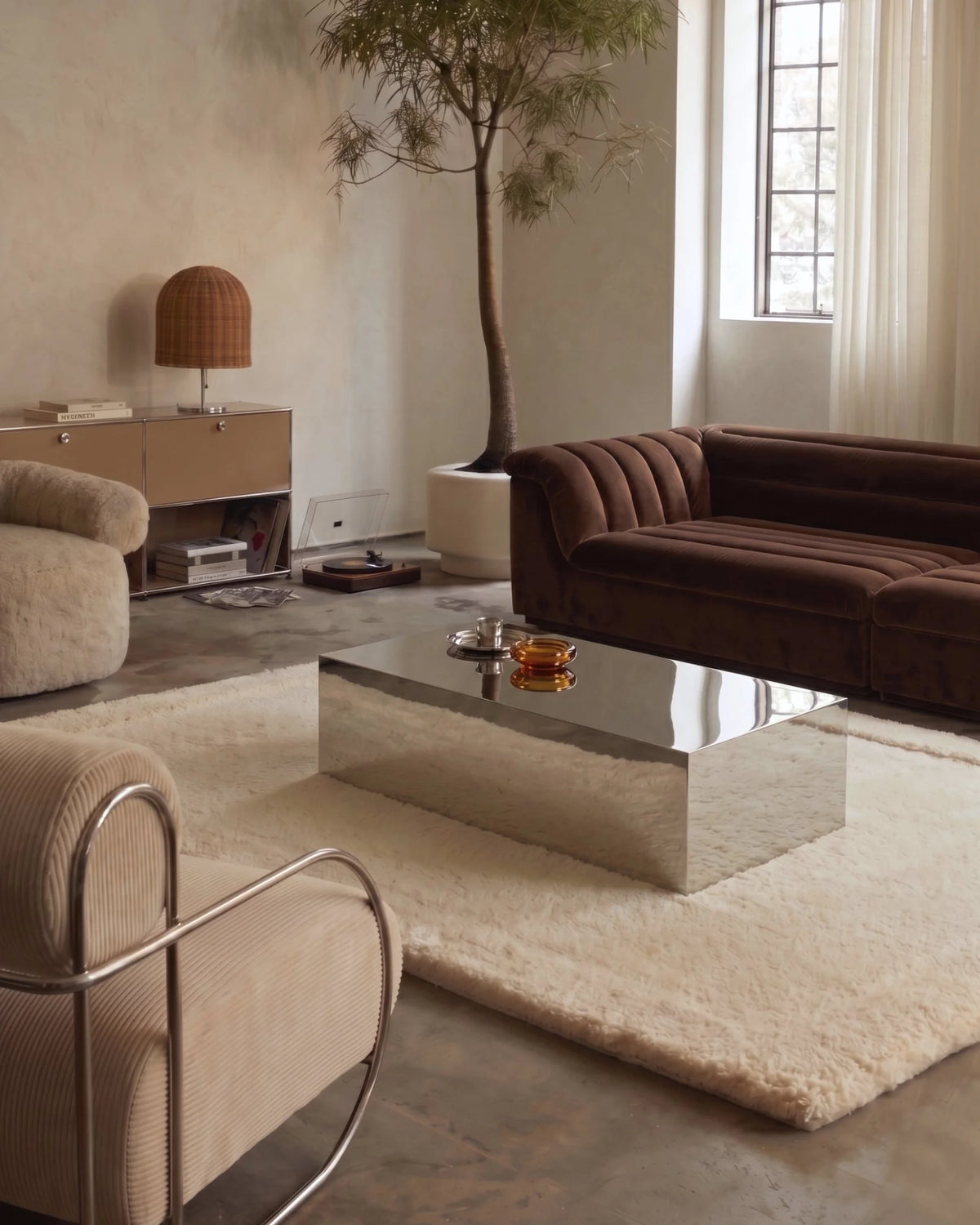
This distinction also prevents confusion with sherpa, chenille or other soft upholstery. A photograph of a shaggy cream surface should not be presented as evidence of a specific bouclé fabric simply because it looks cozy.

Compare both fabrics on the same sofa shape
When possible, hold the silhouette constant. A deep rounded sofa in bouclé and a narrow upright sofa in velvet may feel different primarily because of their geometry and cushions. That is not a fair test of fabric alone.
The Jolie 18 curved three-seater offers several upholstery options, including white bouclé and velvet colors. Compare the exact selected variants and ask whether their cushion construction or care differs. The catalog images illustrate appearance; they are not evidence of a side-by-side durability test.
Look at how texture follows curves and seams
On a curved back, raised yarn texture can soften the outline, while directional pile may emphasize changing planes through light and dark areas. Inspect seams, the transition around arms and the seat edge. A fabric can look appealing in a close-up yet create a very different impression over a large curved surface.
Use a real sample if available. Compare it first on a flat surface, then gently over a rounded cushion or similar shape. Do not damage or stain a sample to conduct an improvised “performance test.”
Separate abrasion results from everyday durability
If a supplier provides test results, ask which test was used and which exact fabric the result belongs to. Do not compare numbers without their method or assume a result applies to every color and upholstery option.
The Association for Contract Textiles cautions that high abrasion results are not an indicator of product lifespan. Its performance guidance also treats abrasion alongside other characteristics, including colorfastness and physical properties. A single rub-count number is therefore not a complete answer to “Will this work in my home?”
Ask about the wear you actually expect
Consider whether the sofa is used every evening, whether pets climb on it, and whether a seat edge meets a belt buckle or bag hardware. Ask about snagging, pilling, pile marking, dye transfer and cleaning for the exact fabric where those concerns matter. Do not invent a universal timetable for when loops will snag or pile will flatten.
Neither fabric category guarantees pet resistance. A looped surface may be a concern with claws, while pile may show pressure or brushing marks. The construction of the particular fabric and the household’s behavior matter more than a blanket “pet-friendly” label.

Read the cleaning instructions before choosing the color
Ask for the approved care method before ordering, especially for a sofa that will see food, children or pets. A pale fabric you love may still be appropriate, but you need to know what to do after a spill. “Easy-care” should be clarified rather than interpreted as permission for water, detergent or steam.
Use the exact instructions for that upholstery. Do not brush velvet, steam a pile mark, trim a pulled loop or machine-wash a removable cover unless the supplier recommends it. A zip on a cover does not prove the cover is washable or suitable for home removal.
Keep routine care gentle and finish-specific
Remove loose debris using the approved method and avoid dragging sharp objects over the surface. After a spill, stop the source and seek the appropriate instructions rather than layering several cleaning products. If texture, sheen or color changes during treatment, stop and ask for help.
Leather is not automatically a care-free substitute. If considering that alternative, read our finish-first leather furniture care guide. It explains why a material category cannot replace a care sheet.
Judge color and feel in your own room
Place samples near the planned sofa position and examine them in daylight and evening light. Turn the velvet sample to see how its direction affects appearance. Look at bouclé from both close up and across the room, where small shadows may blend into a quieter overall tone.
Compare the fabrics with the flooring, curtains and a wood sample rather than against a white phone screen alone. A cream surface can look warmer or cooler beside different woods; a velvet color may look much lighter when the pile catches the window.
Use one texture as the main visual statement
Bouclé and velvet can share a room. Let one cover the main sofa and introduce the other in a smaller object if that gives the room a clear hierarchy. There is no rule that velvet requires a formal room or bouclé requires neutral decor.
For the overall arrangement, our living room planning guide begins with circulation and furniture scale. A convincing texture combination still needs furniture that fits the room.
A practical bouclé-versus-velvet comparison
| Decision | Bouclé: what to examine | Velvet: what to examine |
|---|---|---|
| Visual effect | Loop size, density and shadows over the sofa’s curves. | Pile direction, sheen and changes in apparent color. |
| Touch | The actual sample’s texture against skin and clothing. | The actual sample’s hand feel in both directions. |
| Household use | Specific construction and guidance on snagging or pilling. | Specific construction and guidance on pressure or pile marks. |
| Maintenance | The selected fabric’s approved cleaning instructions. | The selected fabric’s approved cleaning instructions. |
| Evidence | Composition and available test results for the exact upholstery. | Composition and available test results for the exact upholstery. |
If the sample, care requirements and room appearance all suit your needs, either texture may be a good choice. When exploring sofas in velvet upholstery, narrow the selection by the exact fabric and sofa dimensions rather than relying on the texture’s reputation alone.
Bouclé and velvet sofa questions
Which fabric is more durable?
There is no dependable answer from the category names alone. Compare the specific fabric construction, composition, available testing and intended use. An abrasion result alone cannot predict lifespan.
Which is easier to clean?
The approved cleaning method for the selected upholstery is decisive. Neither a looped texture nor a smooth pile automatically permits spot cleaning, steam or washing.
Does velvet always look shiny?
No. Sheen varies, and pile direction can change the apparent color even on a relatively restrained fabric. Examine a sample in the room’s light.
Can the same curved sofa look different in each fabric?
Yes. Texture and directional light affect how its volumes read. That is why comparing variants on one shape is useful, while judging two entirely different sofas can be misleading.
Read more

Compare actual chaise footprints, access sides and sofa orientations before deciding where a reclining seat belongs.

Choose compatible dining chairs, protect walking routes and coordinate materials without relying on a matching set.