




Where Can a Chaise Fit Without Blocking a Walkway?

Written by Charlotte Bruno
Design Editor at Madorne
A chaise can create a useful place to stretch out, read or sit apart from the main sofa. It can also turn a clear route through a room into a narrow detour. The deciding factor is the complete arrangement: the furniture footprint, the way you get into it, and the space other people use around it.
Do not start from an assumed “standard chaise length.” The name covers different forms, from compact serpentine lounge seats to longer upholstered modules and chaise-ended sofas. Choose the actual geometry and intended use, then test its place in the room.
Identify which kind of chaise you are planning
A standalone chaise is a separate piece with its own footprint. A modular chaise is an element intended to work within a compatible seating system. A sofa with an integrated chaise needs to be planned as the whole sofa, not as a normal sofa plus an extension that occupies no extra space.
These differences affect access and flexibility. A separate piece may be moved independently; an integrated chaise determines part of the sofa’s overall orientation. A modular label does not guarantee that a chaise can be attached to any sofa or used in every position.
The name does not guarantee full-length support
Read the listed dimensions and product images together. A compact curved lounge seat may invite a relaxed posture without supporting every user’s full extended leg length. Overall depth and seat depth are different measurements, and neither alone proves the resting position will suit you.
If leg support is your main goal, ask about the usable surface and intended posture. Compare that with the way you want to sit rather than assuming that every product called a chaise will function like a daybed.
Mark the full footprint and the open side
Tape the overall width and depth onto the floor where you intend to place the piece. Include the back and any projecting base or arm. Mark the route from the doorway to the seat, then the route past it to any window, wardrobe or adjoining room.
Use an existing chair or a box to help visualize the height. An outline on the floor can underestimate how a raised back or curved form interrupts the room. Look from the doorway and from the main sofa, then test practical access.

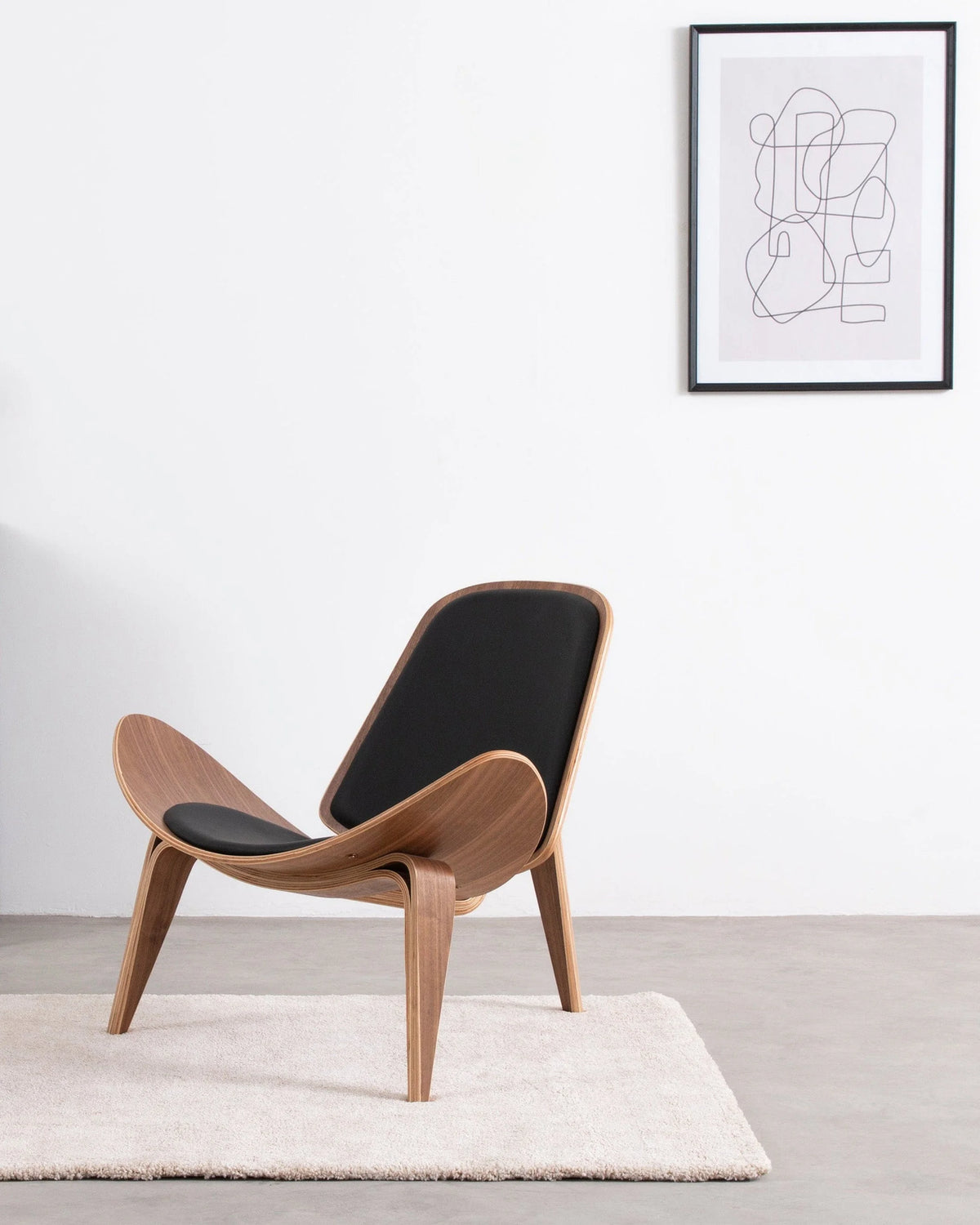
The Etera 70 serpentine chaise lists an overall width of 25.6 inches and depth of 40.5 inches, with a 15.5-inch seat height and 20-inch seat depth. Those current measurements are more useful than a generic rule that every chaise is about five feet long.
Keep a side surface out of the walking route
A reading seat often needs a place for a book or drink. Put that surface where it is reachable from the intended sitting position, not where it fills a visually empty corner. Check that the table edge does not narrow the access side or force someone to step around it.
Add the lamp footprint and cable route to the plan. A chaise that fits by itself may stop fitting once its supporting objects are included.
Test circulation with the chaise in use
Imagine the occupied furniture, including the way a person gets up, turns and walks away. A clear gap beside an empty seat may be less useful if someone has to enter from that side or place their feet there before standing.
If possible, use a temporary arrangement to simulate that movement. Do not adopt one clearance number as a promise for every user and room. Chair geometry, mobility needs and the route’s purpose all influence what is practical.
Distinguish a reading alcove from a through-route
An alcove can be a good location because the chaise does not compete with a main passage. But it still needs comfortable access, usable light and room to stand. A recess that barely contains the footprint may leave no workable open side.
In a through-route, treat the route as fixed first and place the furniture around it. Do not use a chaise to define a boundary across a doorway people regularly need.
Compare standalone and modular options without assuming compatibility
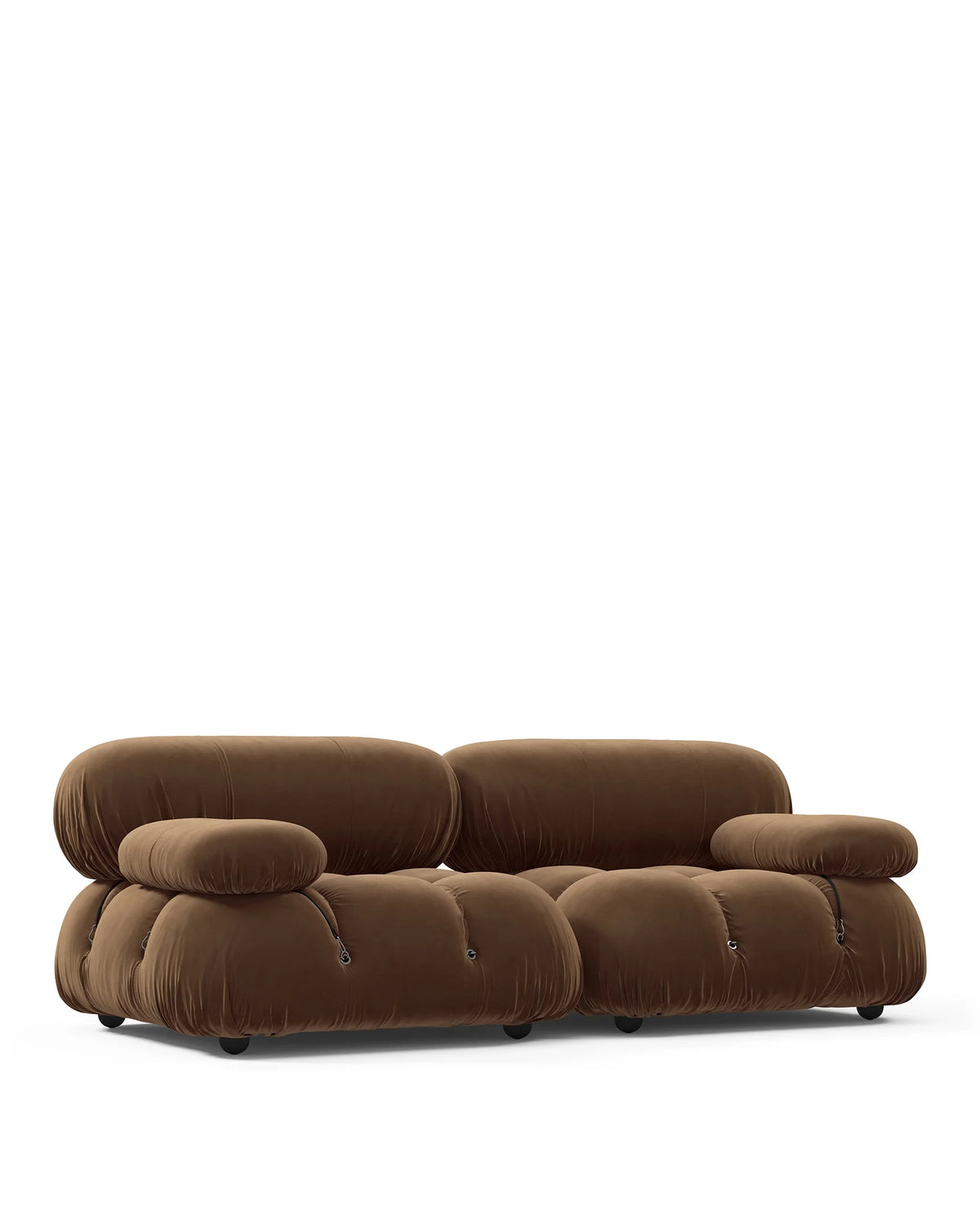
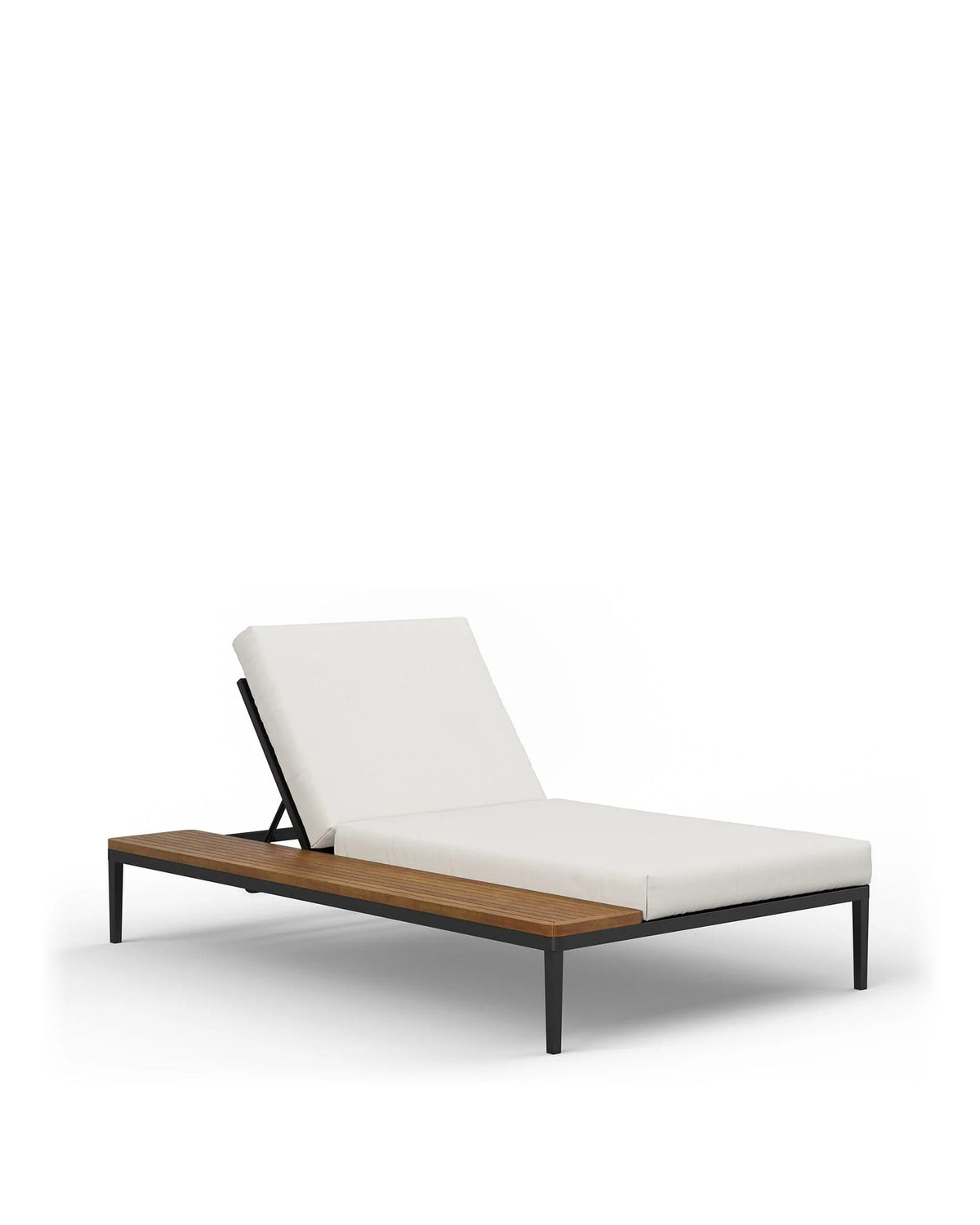
A longer armless element creates a different planning problem from a compact serpentine chair. It may be useful within a compatible modular arrangement or as permitted by its product instructions, but its role should be confirmed rather than inferred from its appearance.

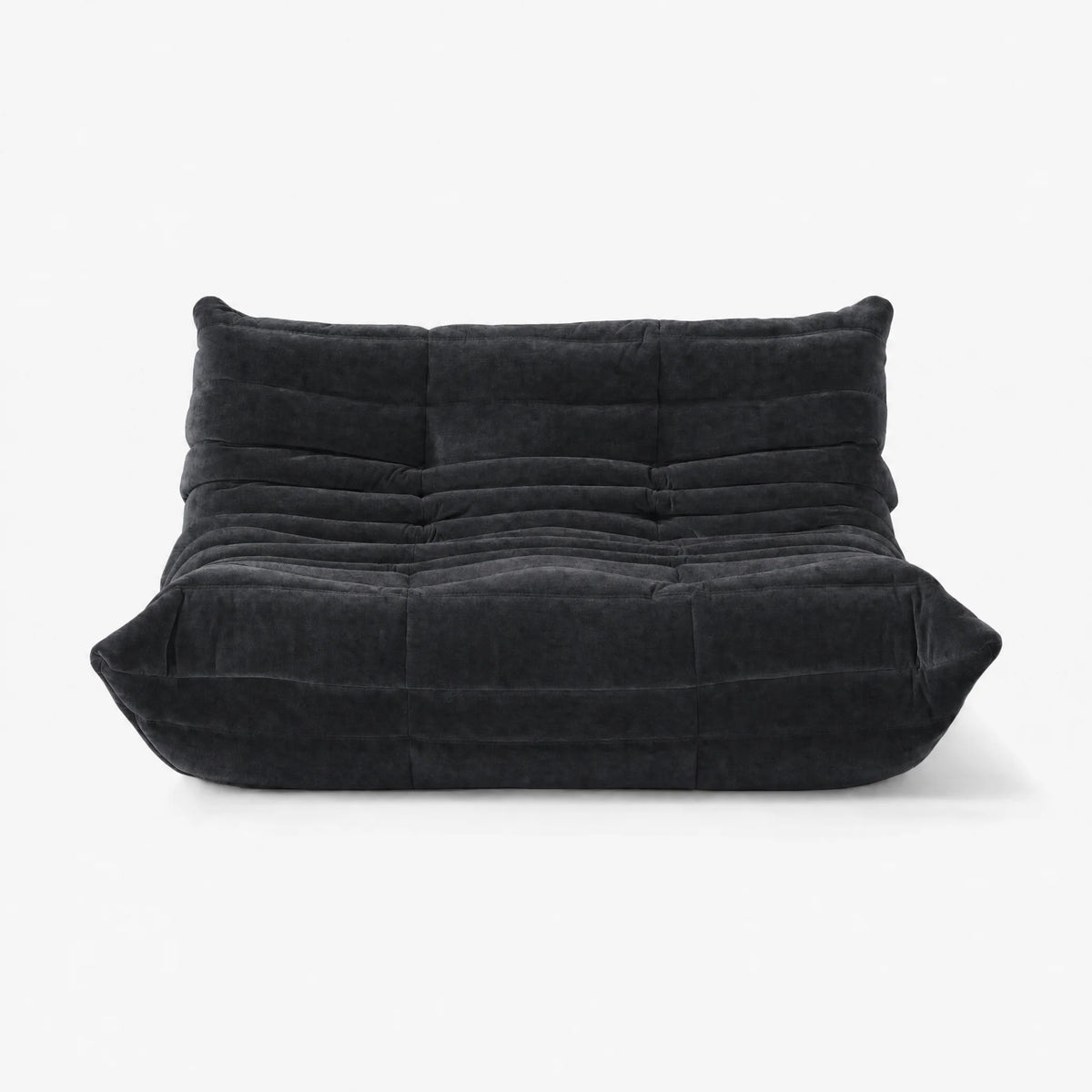
The Tuft 05 armless chaise lists a 43-inch overall width and 59-inch depth, with a 15-inch seat height. Its size is substantially different from the Etera’s. Check how it is intended to be positioned and connected before treating it as an extension to another sofa.
Plan the whole chaise-ended sofa
For an integrated chaise sofa, mark the full sofa footprint and every projection. Confirm the selected side against a dimensioned diagram. “Left” and “right” can be described from different viewpoints, so a photograph or seller’s explicit orientation key is more dependable than guessing.
If the product is described as reversible, ask what actually changes and how. Some arrangements can be changed by moving modules; others have a fixed side. Do not buy a fixed orientation on the assumption that it can be reversed later.
Use the room’s light and view without sacrificing access
A window can be a pleasant place to read, but the chaise should not block access to curtains, handles or required openings. Look at direct sunlight, glare and nearby heat sources, then follow the furniture and fixture suppliers’ placement guidance.
In a bedroom, test the route between the bed, wardrobe and door with the chaise present. Space at the foot of the bed is not automatically spare space. It may be the only practical way to reach the other side.
A chaise can join the seating group or remain its own zone
If conversation is important, orient the chaise so the person can participate without twisting awkwardly. If quiet reading is the purpose, a separate alcove may work better. Neither arrangement requires the extended surface to point toward a television.
Our living room layout guide starts with these daily uses. It helps decide whether another lounge seat adds a useful function or duplicates seating you already have.
Consider a chair and ottoman when flexibility matters
A lounge chair and a compatible ottoman create separate footprints that can sometimes be positioned more flexibly than one long piece. However, both need space, and moving the footrest out of the way does not make it safe to leave in a walking route.
Use the ottoman only for its stated purpose. A upholstered footrest is not automatically a stable side table or an additional seat. Check the manufacturer’s intended use before relying on either.
Our guide to planning a reading corner with a chair and ottoman treats the gap, approach and supporting table as part of the arrangement. Compare that complete plan with the chaise footprint, not the chair alone.
Make a final placement check before ordering
Review the actual selected variant, overall dimensions, usable seat surface and any fixed orientation. Confirm whether assembly or compatible connections are required. Finally, check delivery access separately: a piece that fits once installed may still need a difficult route through doors or stairs.
When exploring chaise and reclining lounge forms, shortlist the shapes that solve your specific room problem. A chaise should add a usable place to rest, not merely occupy a photogenic corner.
Chaise placement: common questions
Is a sectional chaise always more space-efficient?
No. It still adds depth to the sofa’s total footprint. Compare the complete arrangement and access route with the standalone alternative.
How much space should remain beside it?
Enough for the actual approach and route you need. Test getting in, standing up and passing with the furniture occupied; do not treat a universal number as a fit guarantee.
Can any modular chaise attach to my existing sofa?
No. Confirm the compatible system, connections and permitted configurations. “Modular” does not mean universal compatibility.
What is the first measurement to check?
Start with the full overall footprint, then check the usable seat and access. For an integrated chaise sofa, use the dimensions of the entire selected configuration.
Read more

Read sculptural seating through its outline, surface and hidden structure, with Paulin references and current product examples.

Compare texture, composition, care and evidence for the specific sofa fabrics rather than relying on broad durability claims.