




How Upholstery Became Sculpture in Modern Seating

Written by Charlotte Bruno
Design Editor at Madorne
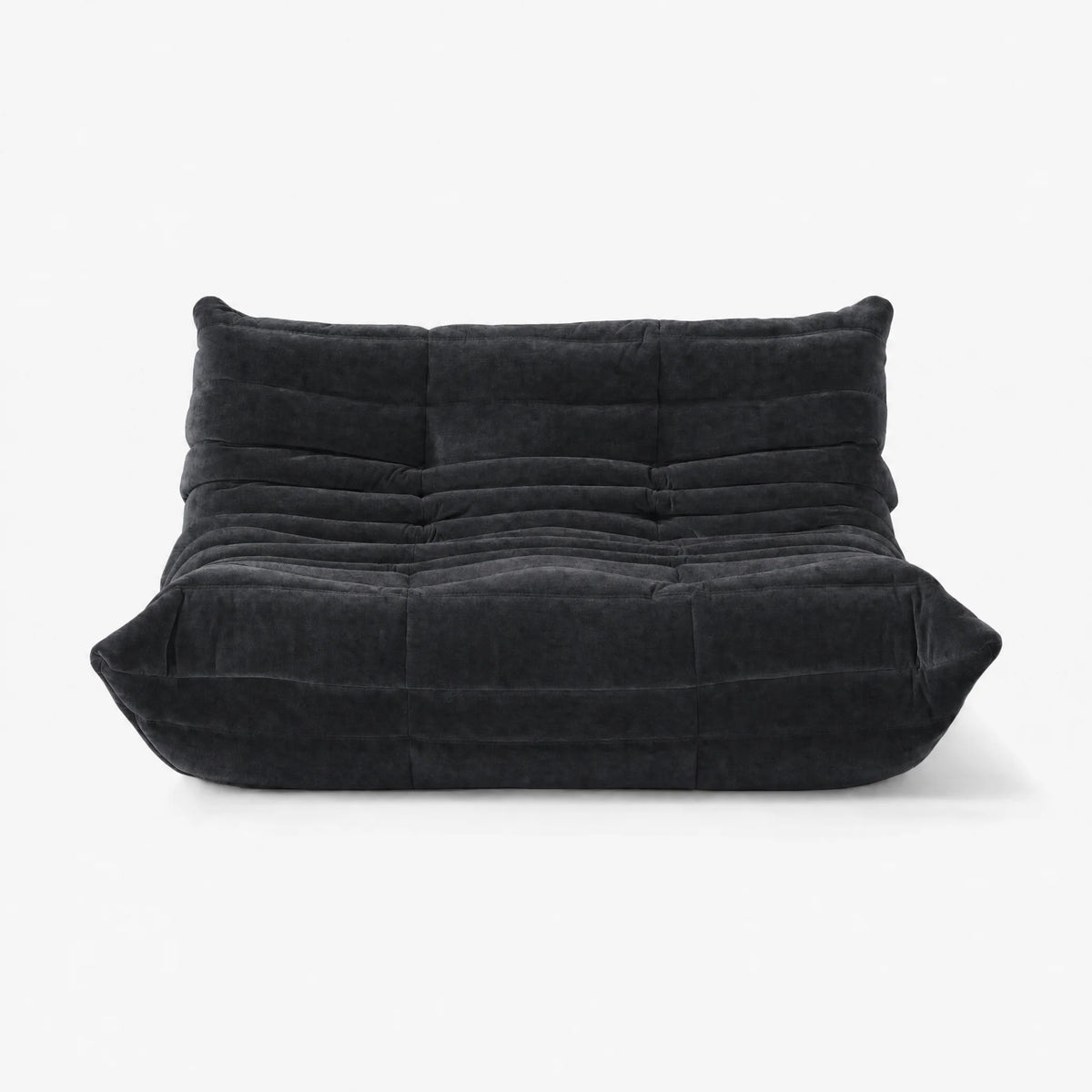
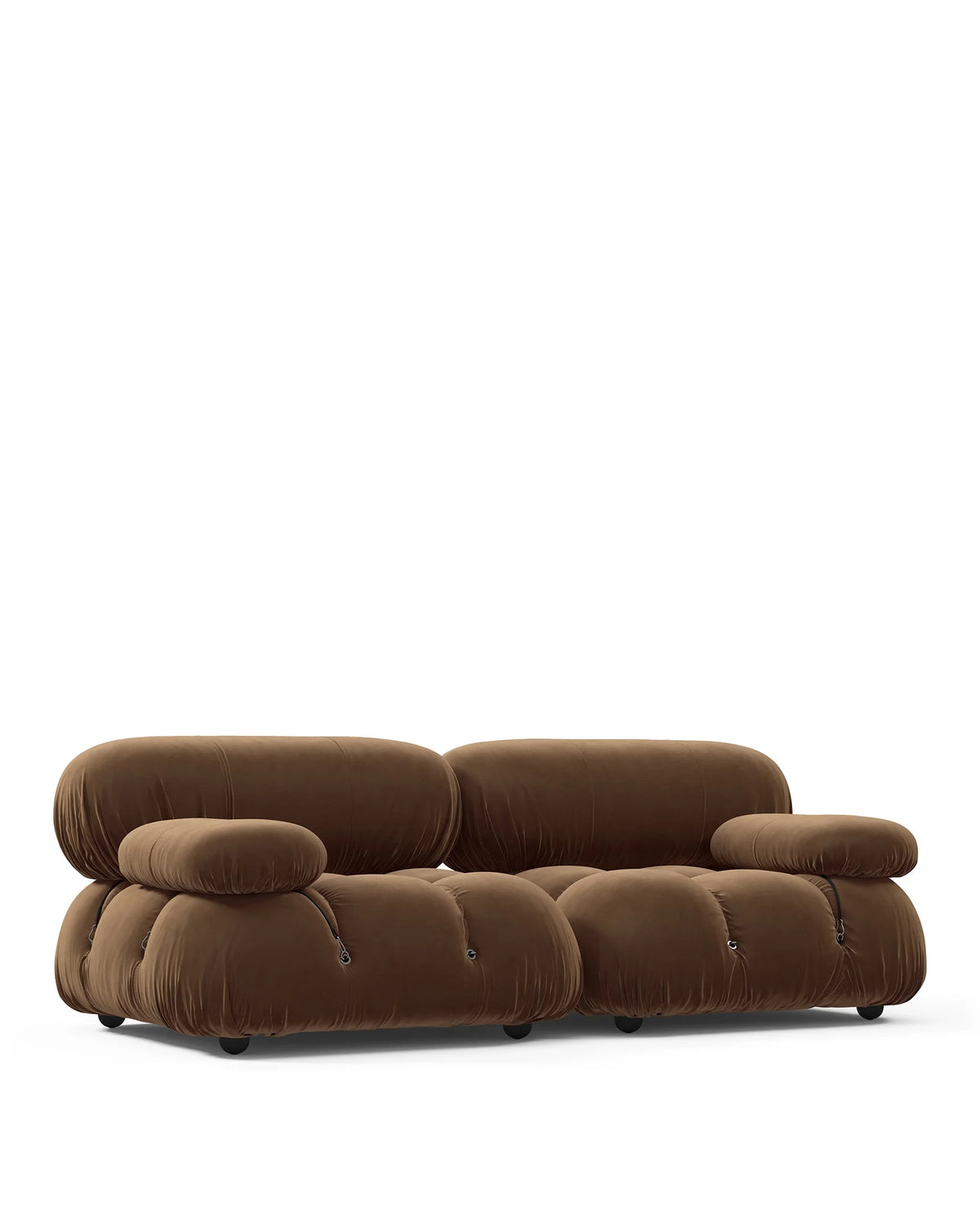
Some chairs announce their frame through timber rails or exposed metal. Sculptural upholstered seating can do the opposite: the outer surface becomes the first thing you read, and the support disappears beneath a continuous-looking volume. Pierre Paulin’s Mushroom and Ribbon designs are useful references for understanding that change.
Looking at these forms is not simply a matter of choosing a rounded chair. Pay attention to the outline, the space inside it, the transition between seat and back, and the way upholstery meets the floor or base. Those relationships explain why a seat can read as an object in the room before anyone sits down.
Two Paulin designs show different kinds of continuity
Artifort’s technical documentation identifies the Mushroom design by Pierre Paulin as 1960 and the Ribbon as 1966. They share an interest in expressive upholstered form, but they do not achieve the same outline.
The Mushroom reads as an enveloping rounded volume, while the Ribbon invites the eye to follow a folded, band-like path. One emphasizes enclosure; the other emphasizes the movement of a shape through space. Neither can be understood completely from a straight-on front photograph.
Follow the outline around the whole chair
Look at the profile from the side and the back. Where does the mass broaden? Where does it narrow? Is there an opening or recess that changes the silhouette? A chair with a quiet front can have a much more expressive rear view.
These are ways of reading form, not claims that every upholstered surface is structurally seamless. Seams, fabric tension, foam and internal supports all contribute to the finished piece. A smooth-looking outer surface does not prove that fabric alone supports the sitter.
Hidden structure still matters
Artifort’s Mushroom specification describes a steel insert frame covered with foam and a multiplex floor plate. Its Ribbon specification describes a metal frame with webbing and cut foam, together with a multiplex foot. Those are specifications for Artifort’s listed products, not a universal construction recipe for every similarly shaped chair.
This distinction corrects a common shortcut: “The shape looks like a Paulin reference, therefore the internal materials must be the same.” Current independent products can use different frames, upholstery and bases. Describe those materials accurately rather than calling a visual resemblance equivalent manufacture.
Do not judge structure from textile appearance
Soft upholstery can cover metal, wood, composite materials or several materials together. A photo of a rounded seat does not establish foam density, frame design, load capacity or expected lifespan. Ask for the current product specification where those details matter.
Equally, a visible seam is not automatically evidence of poor construction. Seam placement depends on the fabric, pattern and form. Look for an accurate account of the actual piece rather than insisting that every interpretation must be made without visible seams.

Use current products to explore form without confusing provenance
The Fungo 60 beige-gray chenille lounge chair illustrates the rounded, enveloping direction. Its listing specifies fiberglass construction and chenille upholstery, with an overall width of 35.4 inches, depth of 33.5 inches and height of 26.4 inches. The listed seat height is 15.7 inches.
Those details belong to the Fungo. They should not be presented as the materials or dimensions of an original Mushroom edition. The historical reference helps explain the visual idea; the current listing tells you what the independently made product actually is.
A band-like chair creates a different composition
The Riban 66 plush velvet chair offers a different sculptural reading. Its listing describes fiberglass, a polished stainless-steel base and velvet upholstery. It is 30.3 inches wide, 39.4 inches deep and 28.3 inches high, with a listed seat height of 15.7 inches.
Equal seat heights do not make these two chairs equivalent in footprint or sitting experience. Their overall depth, back form and support arrangement differ. Compare the full geometry rather than choosing from the height alone.

Texture changes how a sculptural surface reads
Directional velvet can create light and dark areas across a curve. A more textured upholstery can make the surface appear quieter from a distance while providing close-up detail. Neither effect proves the softness of the underlying cushion or the durability of the fabric.
Judge the material on the form, not just as a flat color square. Look at the seat edge, inner curves and transitions around the back. The same color can appear different across those areas because of texture and light.
Compare actual upholstery, not a style stereotype
A sculptural chair does not have to be brightly colored, and a pale chair does not have to belong in a minimal room. Decide whether the form or the color should lead. If both are expressive, give the surrounding surfaces a clearer hierarchy.
Our bouclé-versus-velvet comparison explains how to separate texture from composition, care and performance claims. The same distinction is useful when choosing upholstery for a lounge chair.
Place the chair where its form and function can both work
A sculptural seat can contribute from several viewpoints: the entrance, the sofa and the route behind it. It does not always need to sit in the center of an empty room. A corner can work if the chair has usable access and its important silhouette remains visible.
Tape out the full footprint, then add a reachable side surface and suitable reading light if that is the seat’s purpose. Do not let a broad curve or projecting base invade the walking route simply because the front view looks balanced.
Pair strong forms with a quieter anchor
A plain sofa can provide a useful horizontal background for a more expressive lounge chair. Repeat a material or undertone rather than trying to make every object equally sculptural. Check the combination from seated height as well as the doorway.
For the room-wide plan, see our guide to arranging living-room seating around daily use. It begins with circulation and activity, so the sculptural object does not become an obstacle.
What to take from Paulin’s design language
Notice the relationship between outline, enclosed space and upholstered surface. Then distinguish the visible idea from hidden structure and current manufacture. That gives you a more precise vocabulary than describing every soft, rounded chair as the same kind of organic seating.
When exploring seating inspired by Paulin’s sculptural forms, read the current materials and measurements independently of the historical reference. The design context can enrich the choice without turning an inspired product into an original edition.
Sculptural upholstered seating: common questions
Does continuous-looking upholstery support the chair by itself?
Not necessarily. Internal frames, foam and other supports still matter. A visual effect should not be mistaken for a complete construction specification.
Are fiberglass and metal-framed interpretations identical?
No. A related outline does not establish the same materials or manufacture. Describe each product from its own specification.
Must a sculptural chair stand away from every wall?
No. Give it practical access and consider which viewpoints matter in the room. The right placement depends on the footprint, route and use.
Can two chairs at the same seat height feel different?
Yes. Seat depth, back angle, width, cushion feel and the surrounding form also influence sitting. Height alone is not a comfort verdict.
Read more

Plan circulation, seating and material relationships before choosing decorative details for a room that works every day.

Compare actual chaise footprints, access sides and sofa orientations before deciding where a reclining seat belongs.