




How to Plan a Reading Corner with a Lounge Chair and Ottoman

Written by Charlotte Bruno
Design Editor at Madorne
A reading corner works when you can settle into the chair, put your feet up, reach a drink and leave the seat without rearranging the room. A beautiful chair in the wrong position rarely becomes the place you actually use.
For a lounge chair with an ottoman, plan the pair as one seating zone, then protect a route around it. The ottoman is not spare floor space: it is part of the chair’s usable footprint. This guide walks through a tape-measure layout, light placement and material choices before you commit to a corner.
Start with how you will use your reading corner
Picture an ordinary evening rather than a room photograph. Will you read a paperback, hold a tablet or listen to music? Do you want your feet supported every time, or will the ottoman move aside when someone joins you? Is this a quiet retreat or another seat in the main conversation area?
A fixed, relaxed lounge position suits time away from a dining or work surface. It is not interchangeable with an upright desk chair. If you frequently read at a table, keep that activity separate instead of expecting one low chair to perform both roles.
Choose a position that offers the right relationship to the room. Beside a sofa, turn the chair slightly inward so it can join conversation. In a bedroom or study, face it toward the room rather than pushing it into a corner simply because that is where furniture happens to fit.
Measure the lounge chair and ottoman as a pair
Collect the overall width and depth of both pieces from the selected product specifications. Overall depth describes the floor footprint; seat depth describes the space your body occupies. Confusing the two can leave an ottoman projecting into a doorway.
For a concrete example, the Standard Marlow Lounge Chair & Ottoman is listed with the measurements below. These figures describe Marlow, not every Eames-inspired chair or a licensed original. The Tall configuration has different chair proportions.
| Piece | Width | Depth | Height |
|---|---|---|---|
| Chair | 33 in | 35.4 in | 33 in |
| Ottoman | 24.8 in | 22 in | 18 in |
The listed chair seat height is 15.7 inches. An ottoman’s overall height is not the same measurement as a compressed cushion height under someone’s legs; do not interpret the difference as an automatic fit problem or a guarantee of comfort.
Use painter’s tape before moving the furniture
- Mark the chair’s overall footprint on the floor, then mark the ottoman separately.
- Add a trial gap between them. For a layout exercise, a 12-inch gap gives a combined front-to-back depth of 69.4 inches: 35.4 + 12 + 22. That is a planning example, not a required gap or a comfort specification.
- Mark the side table and the lamp base, including any part that projects beyond the tabletop or shade.
- Open nearby doors, drawers and curtains fully. Walk the usual route through the room.
- Test entry to the chair from the side. If you have to step over the ottoman outline, adjust the layout.
Even this simple calculation explains why a chair-only measurement can be misleading. An angled arrangement changes the enclosing footprint again, so rotate both tape outlines rather than using the straight layout’s dimensions unchanged.

Keep a clear route beside the reading chair
There is no single clearance that makes every reading corner work. A quiet bedroom corner, a main hallway and a route used with a mobility aid have different needs. Start with the passage you already rely on, and keep the new seating zone out of it. Where accessibility or building requirements apply, check those requirements rather than relying on a styling rule.
Look beyond the obvious doorway. A chair can block a radiator, prevent a window from opening or make a cabinet awkward to use even when you can walk past it. A swivel chair also needs room for its moving outline, not just its position in a photograph.
Marlow’s listing specifies a 360-degree swivel and a fixed 15-degree relaxed seating angle. The angle is not adjustable. During your layout test, leave space for the back and arms to turn without contacting the side table, wall or curtain. Do not assume that “swivel” means “recliner.”
Three placements worth testing
- Beside a window: place the chair so daylight arrives from the side, with enough room to operate the curtains. Avoid making direct sunlight on the upholstery the defining feature of the layout.
- At the end of a sofa: angle the chair toward the sofa while keeping the ottoman out of the route between seats. This makes the corner useful for conversation as well as reading.
- Along a bookshelf wall: offset the chair from the shelves so books and lower cabinets remain accessible. Keep the ottoman in the seating zone rather than against the shelves.
If the pair still interrupts circulation, compare the actual footprints of other lounge chairs. A narrower-looking silhouette is not necessarily a smaller footprint; use measurements rather than appearance.
Position a reading lamp for the page, not the photograph
Test lighting while seated in the position you intend to use. The page should be illuminated without putting the brightest part of the lamp directly in your line of sight. An opaque or adjustable shade can make it easier to direct the light, but its performance depends on the particular lamp.
With a paperback, try the light to one side and slightly behind your shoulder. Move it until your hand does not cast an inconvenient shadow over the page. For a tablet, check the screen for reflections in the evening as well as during daylight.
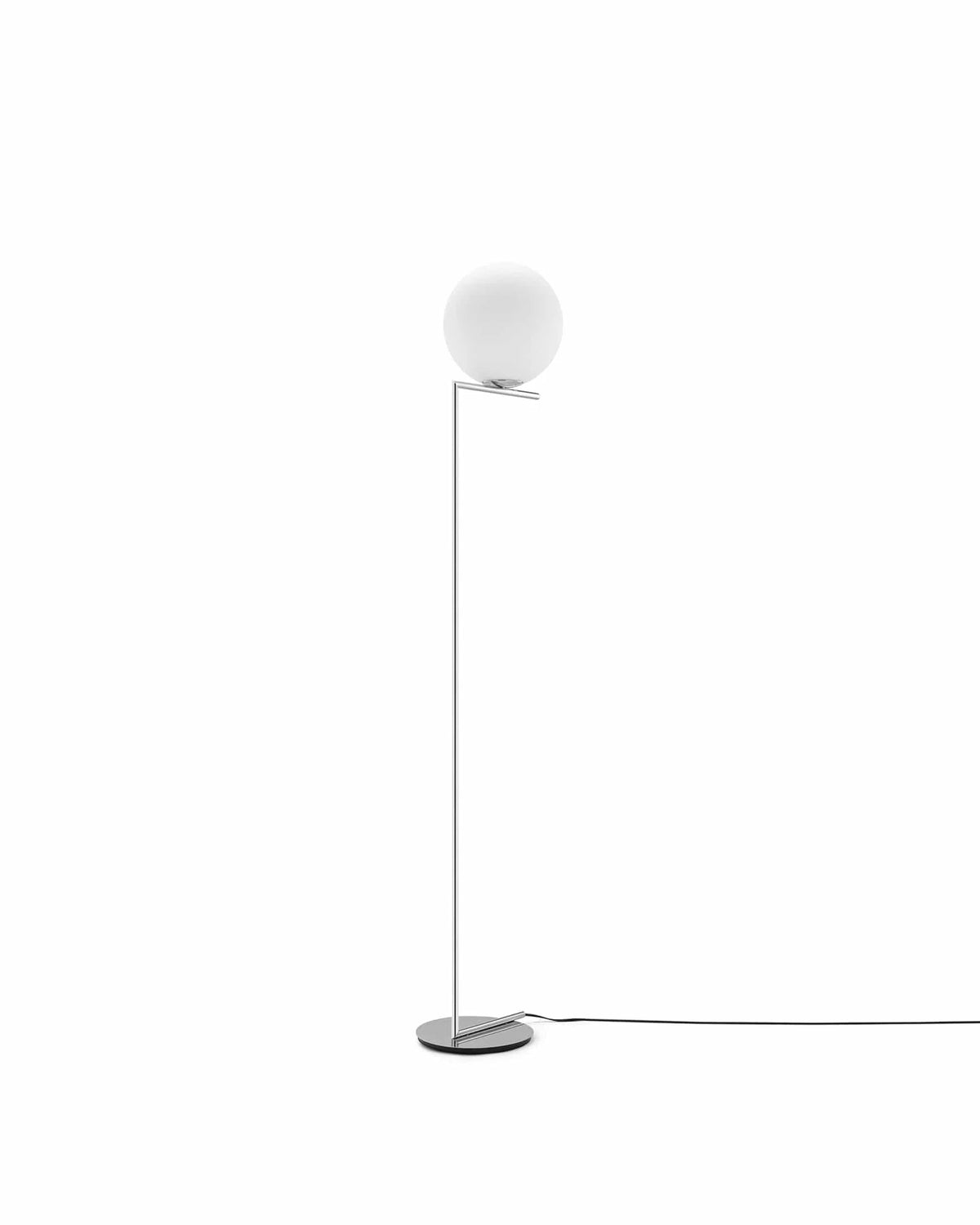
A floor lamp can free the side table for a drink or a book, but its base still occupies floor space. Route the cord along the edge of the room where practical; do not create a loose cable across the path into the chair. Follow the lamp’s installation and safety instructions.
Choose a side table you can reach from a reclined seat
A table that looks aligned with the chair’s arm can still be awkward to reach. Test a temporary surface from your seated position, with your feet on the ottoman. You should be able to set down a book or cup without leaning across the aisle or placing it on an unstable edge.
Check three things together: the tabletop height, the distance from your hand and the table’s footprint. A broad tabletop on a narrow base may project into the chair’s swivel space. A low table can work for books but feel inconvenient for a drink you use repeatedly.
Start with the task, then choose among side tables that fit that position. More furniture is not automatically more useful: a small reachable surface often does more for a reading corner than a large decorative one.
Use leather, wood and a rug to connect the corner to the room

The leather-and-molded-wood lounge chair has a recognizable design history. Charles and Ray Eames introduced their original lounge chair and ottoman in 1956; Herman Miller’s design overview provides that historical context. Marlow is an independently manufactured Madorne interpretation, not an original or licensed Eames edition.
In a contemporary room, let those materials do some of the work. Repeat a wood tone in one nearby element rather than buying a fully matching suite. When a material label is unclear, our guide to understanding leather and veneer finishes separates surface appearance from the written specification. Bring in a textile with enough contrast to distinguish the seating area from the floor.
A rug should connect the chair and ottoman visually without leaving an edge where your feet repeatedly cross. Test its outline with tape alongside the furniture. If the room already has a larger rug, first try placing the corner within that arrangement instead of adding a second small rug.
For the wider composition, our guide to planning a mid-century living room explores the relationship between seating, materials and the rest of the space. Keep leather away from avoidable heat and strong direct sunlight, and use the leather furniture care guide alongside the upholstery supplier’s instructions.
Reading corner layout: questions to settle before ordering
Can a chair and ottoman work in a small room?
Yes, if their combined footprint leaves the room’s existing routes and functions intact. Tape out both pieces, the gap between them and nearby furniture. A room can fit the chair but not the complete reading arrangement.
How far should the ottoman sit from the chair?
Use an adjustable trial position rather than a universal number. The right gap depends on the chair’s angle, the ottoman’s dimensions and the person using them. Move it until your feet rest comfortably, then recheck the passage alongside it.
Does a matching ottoman remove the need to check dimensions?
No. A matching set addresses the design pairing, not your room size or personal seating preference. Check what the offer includes and measure the complete arrangement.
What should I do first if the corner feels crowded?
Remove the decorative extras, move the side table closer to its actual working position and retest the ottoman. If circulation is still compromised, change the furniture footprint rather than sacrificing the route through the room.
