




Leather and Wood Veneer Lounge Chairs: How to Read the Finishes

Written by Charlotte Bruno
Design Editor at Madorne
Two lounge chairs can look almost identical in a small product image and still bring very different surfaces into a room. The leather’s finish changes how light falls across a cushion; the wood veneer changes the tone and grain you see from behind. Understanding those descriptions is more useful than treating “premium leather” or “wood finish” as a complete specification.
This guide focuses on the upholstery and exposed wood of a leather-and-veneer lounge chair. It explains which details you can compare from a listing, what a photograph cannot prove and which questions are worth asking before choosing a finish. Room dimensions and placement are covered separately in our chair-and-ottoman reading corner layout guide.
Leather grade and leather finish describe different things
A leather grade describes aspects of the hide and how its grain surface has been processed. A finish describes what has been applied to that surface. They are related, but they are not interchangeable labels.
“Full-grain” does not, by itself, tell you whether a cushion is lightly finished, pigmented, glossy or matte. Nor does a country-of-origin description answer those questions. If a particular surface appearance matters to you, ask for the upholstery’s finish description as well as its grade.
What aniline, semi-aniline and pigmented mean
The Leather Working Group’s terminology guide distinguishes these surface treatments. Aniline leather has a visible natural grain with no surface coating or a non-pigmented coating. Semi-aniline leather has a finish containing a small amount of pigment while retaining visible natural grain. A pigmented finish conceals the natural grain or surface.
These labels help you understand appearance; they are not a universal ranking of which upholstery is best for every household. Ask about the care instructions and intended use of the particular leather rather than assuming that a familiar label guarantees stain resistance or a specific lifespan.
Why a close-up is useful, but not proof of grade
A detailed photograph can show seam placement, surface sheen and the visible character of a cushion. It cannot establish the underlying leather grade, tanning process or performance under repeated use. A printed or embossed texture can resemble a natural grain at a glance.
Use images to decide which appearance you prefer, then use written specifications to understand what is being offered. Avoid drawing a manufacturing conclusion from the size or regularity of the grain alone.

Wood veneer is not the same as a printed wood-effect finish
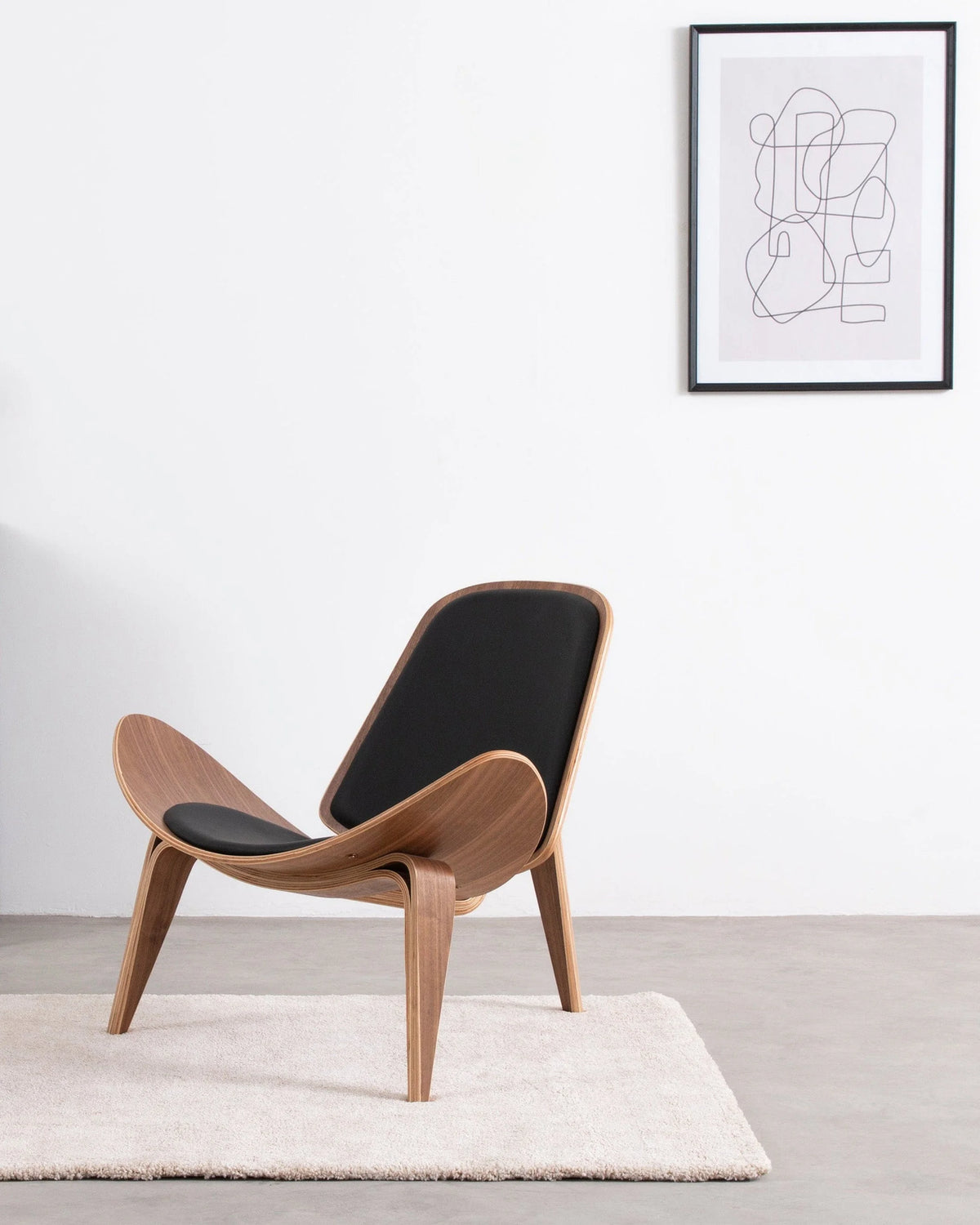
A wood veneer is a thin layer of wood used as a facing over a supporting structure. In a molded-shell chair, the visible wood surface and the laminated shell beneath it have different roles: the facing provides the grain you see, while the shell supplies the form.
A printed wood-effect surface is a different material description. Neither “walnut color” nor “wood finish” necessarily establishes that the outer surface is walnut veneer. Look for wording that identifies the surface material and, separately, the shell construction.
The distinction is not simply “solid wood good, plywood bad.” A curved laminated shell is a deliberate construction approach, not a solid timber board. When evaluating one, the useful questions concern the actual materials, connections and finish, rather than whether the entire chair can be described with one reassuring word.
What a ply count does and does not tell you
A published layer count is one piece of construction information. It does not establish adhesive quality, manufacturing control, load testing or durability on its own. Two products described as seven-ply do not automatically have the same construction or performance.
Read the specification as a whole. Does it distinguish the veneer from the shell? Does it describe the supports and mounts? Is there a clear explanation of the chair’s function? Specific details are useful; an unsupported promise that a layer count guarantees decades of use is not.
Compare leather color and veneer in your room’s light
Start with the large surfaces already present: flooring, walls and the sofa. Then compare the chair’s leather and veneer together. The same black cushion can feel more graphic against a light wall and quieter beside darker furniture.
If samples are available, look at them in the room during daylight and under the lights you use at night. A sample held vertically can appear different from one lying on a table because the light reaches it differently. Compare more than one orientation instead of choosing from a single photograph.
When samples are not available, request a clear daylight image of the selected combination and a close-up of the veneer. Screen settings, lighting and photographic processing can affect color, so treat those images as guidance rather than an exact color standard.
Black or darker leather: compare sheen as well as color
A darker upholstery can connect with other dark details in the room, but the surface sheen influences how prominent it feels. A glossy highlight makes a cushion read differently from a quieter matte surface, even when both are labeled black.
Do not assume that darker leather removes the need for care. Dust, rubbing and marks may remain visible depending on the surface and lighting. Let the actual care instructions inform the choice alongside the color.
Lighter leather: check the everyday context
A lighter cushion can separate a chair from a dark wood floor or bookshelf. Think about how the chair will be used, including clothing, nearby food and drink, and the cleaning products permitted for that upholstery.
Rather than assuming that all light leather stains easily or all dark leather is practical, ask what protection the selected finish provides and how marks should be addressed. Our leather furniture maintenance guide explains why the surface type matters before you choose a cleaner.
Read the complete material description: a Marlow example
The Marlow lounge chair and matching ottoman listing identifies full-grain Italian leather, seven-ply laminated molded veneer shells, high-density memory foam, rubber shock mounts and die-cast aluminum supports. Those are the published product descriptions, not a third-party certification or a basis for declaring equivalence to another manufacturer’s chair.
The available upholstery colors are Black, Chocolate, Cornsilk and White, with Walnut, Palisander and Rosewood veneer options. Check the selected combination on the product page. A finish name does not guarantee that every wood element elsewhere in your home bearing the same name will match it.
The listing identifies the leather grade but does not explicitly identify an aniline or semi-aniline treatment in that description. Do not add that distinction yourself. Ask for confirmation if it affects your preference or care routine.

Marlow references the leather-and-molded-wood lounge-chair tradition associated with the Eames Lounge Chair. It is an independently manufactured Madorne interpretation, not an original or licensed Eames edition. The available offer and specifications belong to Marlow.
Make a finish decision with four clear checks
- Identify the surfaces: confirm the upholstery material and grade, the outer wood facing and the supporting shell construction.
- Compare the combination: look at leather and veneer together, not as two isolated color selections.
- Check what is still unknown: ask about the leather finish, care requirements or any material description that remains vague.
- Check the selected offer: confirm the size, finish combination and included pieces before ordering. Keep a record of the specifications you relied on.
If your wider room includes a sofa, compare the finish relationships rather than matching everything precisely. One repeated wood tone and a related upholstery color can create continuity while leaving each piece distinct. Use the broader selection of Eames-inspired furniture to understand the different seating families, not as a substitute for each product’s material description.
Leather and veneer lounge chairs: common questions
Is full-grain leather always aniline?
No. A grain description and a surface-finish description are different pieces of information. Ask for the finish if the listing gives only the leather grade.
Does “walnut finish” mean walnut veneer?
Not necessarily. It may describe color rather than the surface material. Look for an explicit veneer description and ask for clarification when the wording is ambiguous.
Will the chair’s veneer match my existing walnut furniture?
Not exactly by name alone. Grain, surface treatment, lighting and the individual pieces can differ. Compare a sample or a representative image beside your furniture if available.
Can product photos prove that a chair is well made?
They can help you inspect visible details, but they cannot prove hidden construction, testing or long-term performance. Combine images with clear specifications and direct answers to any unresolved questions.
Read more

Choose compatible dining chairs, protect walking routes and coordinate materials without relying on a matching set.
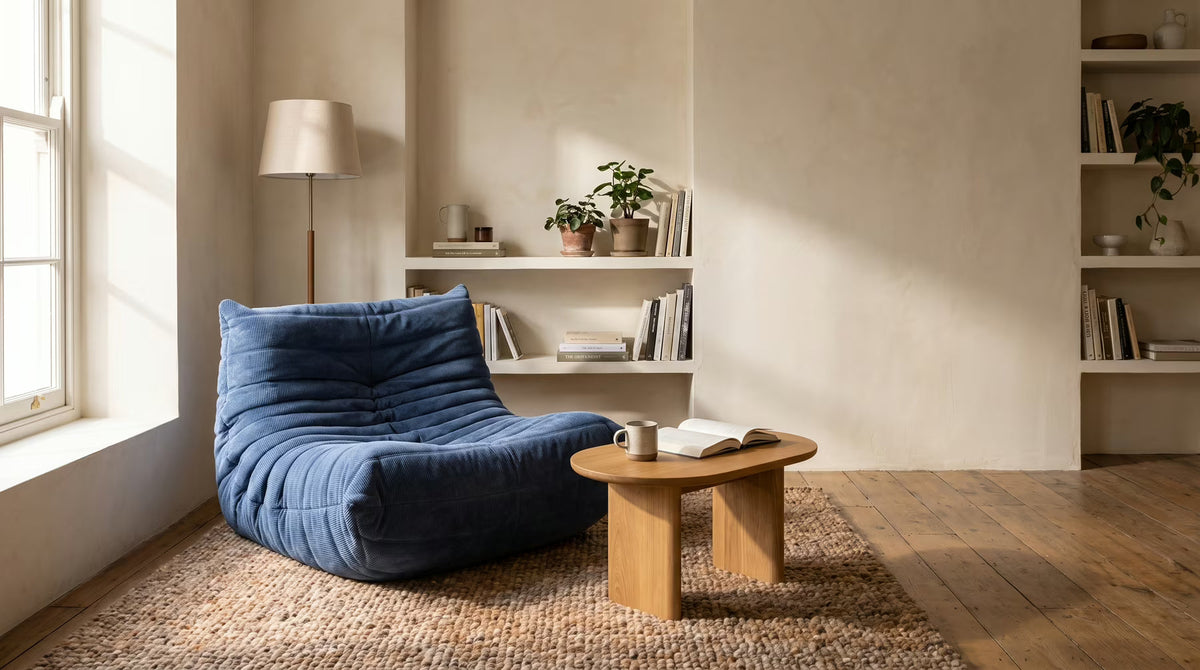
Plan a small reading corner around a deep, low chair. Check the footprint, angled placement, footrest depth, table reach and walking routes before choosing the furniture.