



How to Check Sofa Delivery Access: Doors, Stairs and Turns

Written by Charlotte Bruno
Design Editor at Madorne
A sofa can fit beautifully in your living room and still be difficult to deliver there. The problem is often not the final footprint, but the route: a narrow entrance, a stair landing, an elevator interior or a turn immediately after a doorway.
Check that route before ordering. Start with the dimensions and handling requirements of the actual delivery packages, then measure every restriction between the unloading point and the intended room. Product dimensions alone are not a delivery-access guarantee.
Ask for packaged dimensions before measuring the route
Request the number of packages, each package’s length, width, height and weight, and the permitted delivery orientation. Confirm what arrives assembled, what may be removed and whether any assembly happens in the room. Do not assume legs, backs or arms can be detached because they look separate in a photograph.
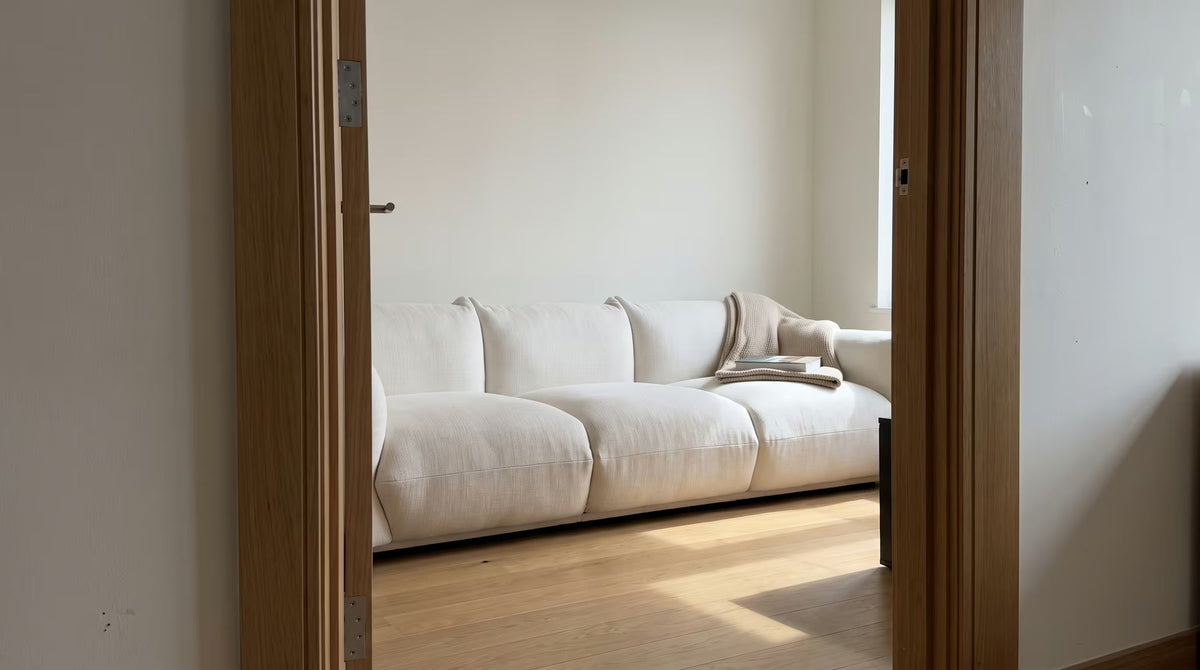
The Maren 70 Ivory Linen three-seater, for example, is listed at 105 inches wide, 39.4 inches deep and 27.6 inches high, with no assembly required. These are useful overall furniture dimensions. They do not establish carton dimensions, packaging thickness, permitted orientations or whether components can be removed for access.
Keep a separate column for confirmed delivery information. If it is missing, record it as a question rather than calculating a hypothetical package from the sofa’s outline.

Map the entire sofa delivery route
Write the route in order: unloading area, building entrance, shared corridor, elevator or stairs, apartment entrance, internal hallway and living-room doorway. Include any gates, basement entrances or steps used by the planned delivery service.
Photograph the approach to each restriction as well as the restriction itself. A doorway may be wide enough, but the corridor leading to it may prevent the package from aligning with the opening. A short description such as “90-degree turn directly after the apartment door” can be more informative than a door width in isolation.
Check building access rules, elevator reservations and any required arrangements with the delivery team before choosing a date. Those logistical requirements are separate from physical fit. Do not assume a delivery service can use an alternate route without confirming that route with them.
Measure the clear opening, not the door leaf
Measure the usable width and height of the opening with the door in the position available during delivery. Door stops, handles, hinges, trim and nearby walls can reduce that space. A nominal door size is not the same as the unobstructed opening.
Also record the space before and after the doorway. Note whether the door can open fully or hits a wall, cabinet or radiator. If opening the door limits the approach, show that in the route photographs.
Do not plan around removing a door or altering a fixture unless the responsible people have confirmed what is allowed and who will perform the work. Record an unresolved obstruction as unresolved; the existence of a possible modification is not proof of access.
Check hallway turns and stair landings in three dimensions
For a turn, measure both corridor widths, the corner geometry, nearby obstructions and the available height. A long package needs space to change orientation. It cannot be evaluated from the narrowest width alone.
For stairs, record clear width, overhead clearance, handrails, the shape of the flight and the dimensions of each landing. Pay particular attention to low ceilings over a landing and railings that restrict a turn. Photographs from both ends help the delivery team understand the route.
A doorway’s diagonal is not a reliable yes-or-no test for this sequence of movements. A package might align with an opening but have no room to rotate into it. Conversely, a permitted orientation might change the relevant dimensions. Leave the handling assessment to the supplier or delivery professionals with the actual package information.

Measure the elevator interior as well as its entrance
Record the elevator’s clear door opening, usable interior width, depth and height. Include any handrails or other projections. A package that passes the entrance must still fit inside in an approved orientation, with the doors able to close.
Check the building’s elevator capacity and delivery rules with the building manager and delivery team. A large sofa’s product weight is not the total shipment weight or a complete loading plan. Avoid treating one published weight as permission to use an elevator.
If the elevator is unsuitable, do not assume stairs will solve the problem. Assess the stair route separately. An alternate route may require a different service or may not be available at all.
Send a route brief rather than asking “will it fit?”
A useful brief includes the exact sofa and variant, confirmed package information, a numbered route, measurements at each restriction and photographs showing the approaches and turns. Mark any measurement you could not obtain.
Ask the supplier or delivery team to assess the route and explain any limitations before ordering. Their answer should be based on the shipment that will actually arrive, not a similar model or a smaller sofa previously delivered to the building.
If the route is unsuitable, compare smaller pieces or a different configuration only after checking their actual shipment details. Our guide to choosing a modular sofa for a changing room addresses configuration decisions; “modular” does not automatically mean every package is small enough for your route.
Keep room fit and delivery fit as separate approvals
Once access has been assessed, tape out the furniture’s overall footprint in the room. Check circulation, doors and nearby seating. Delivery access answers how the sofa gets inside; the room plan answers how you will live around it.
Use the dimensions in our sofa range to shortlist suitable footprints, then request the delivery specification for the exact finalist. Keeping those two checks separate is a more reliable approach than making a purchase from either a room photograph or one doorway measurement.
Read more
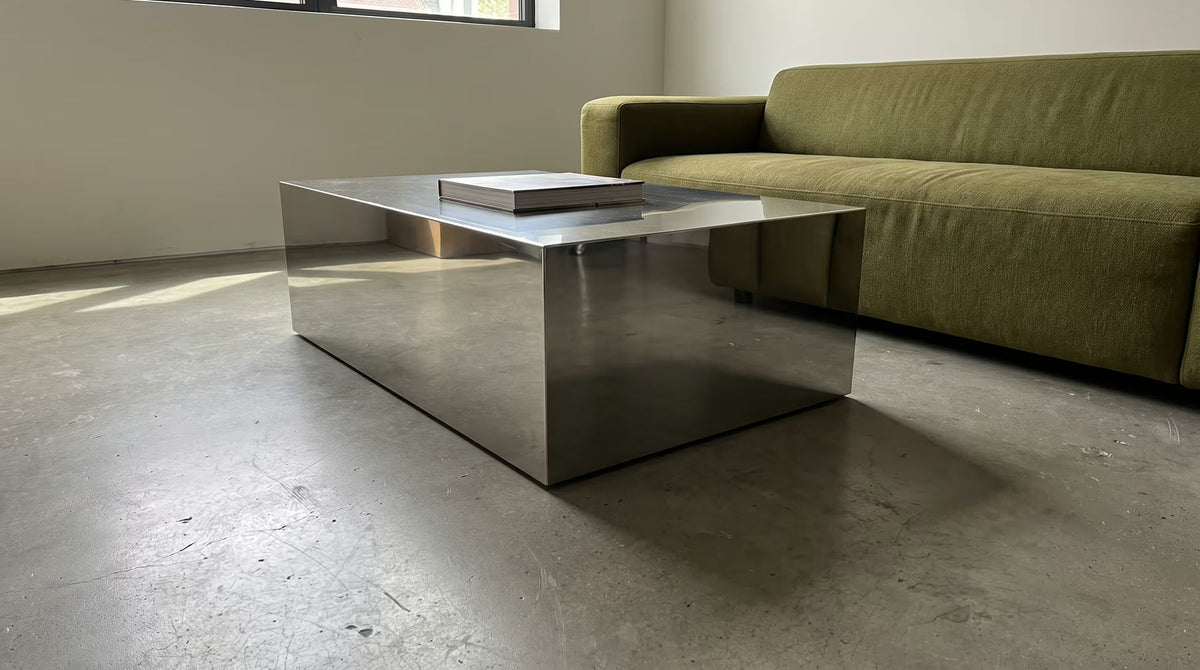
Compare the seat and table planes, then test the reach and task rather than following a universal height rule.
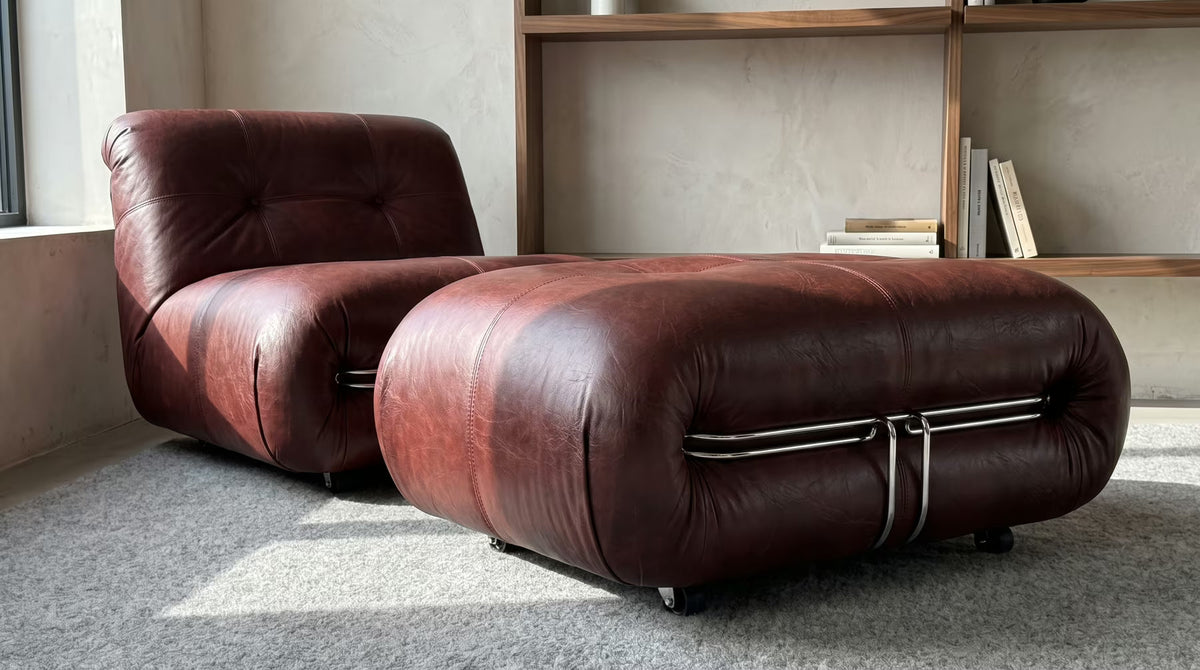
Check height, distance, material and access before pairing a lounge chair with a footrest.