

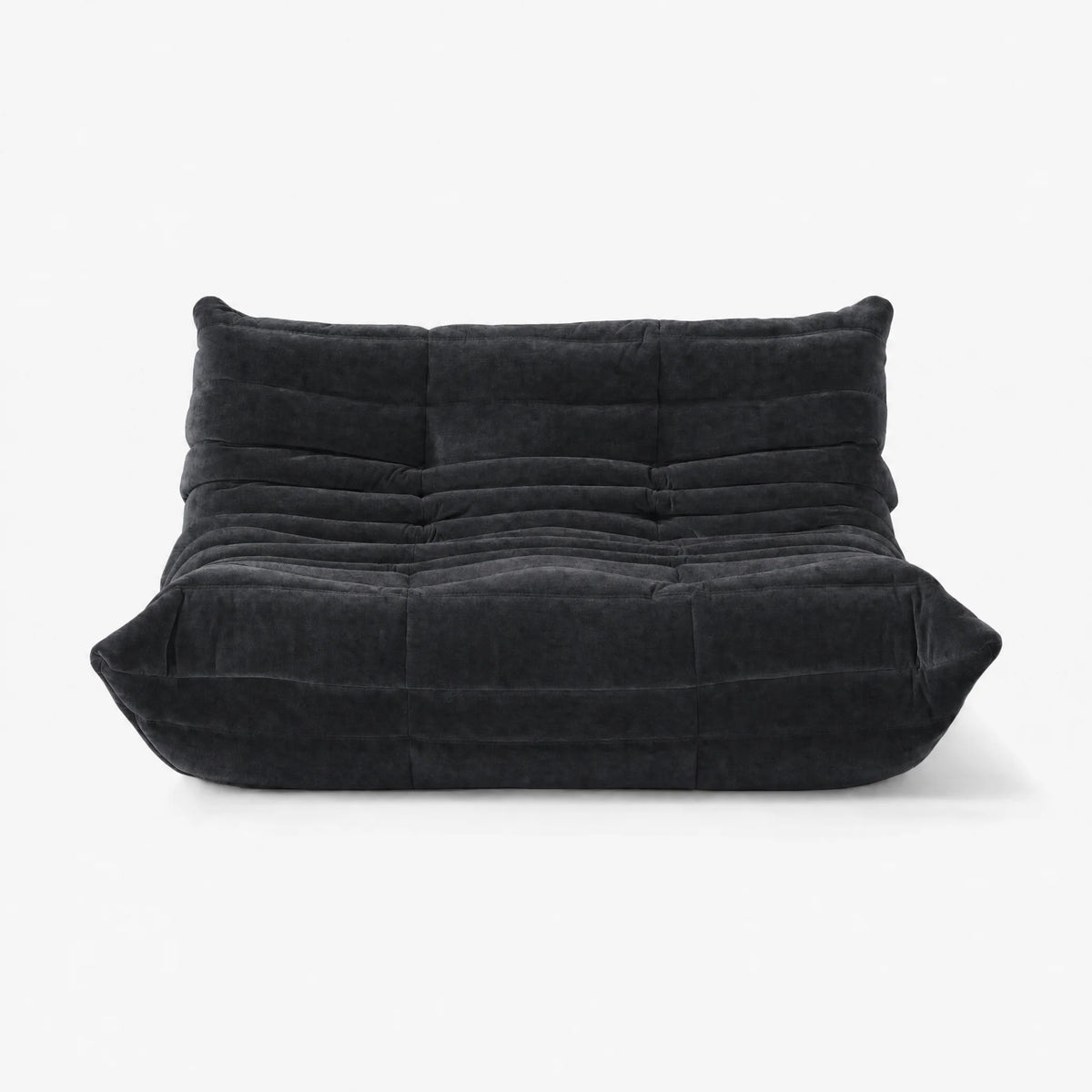
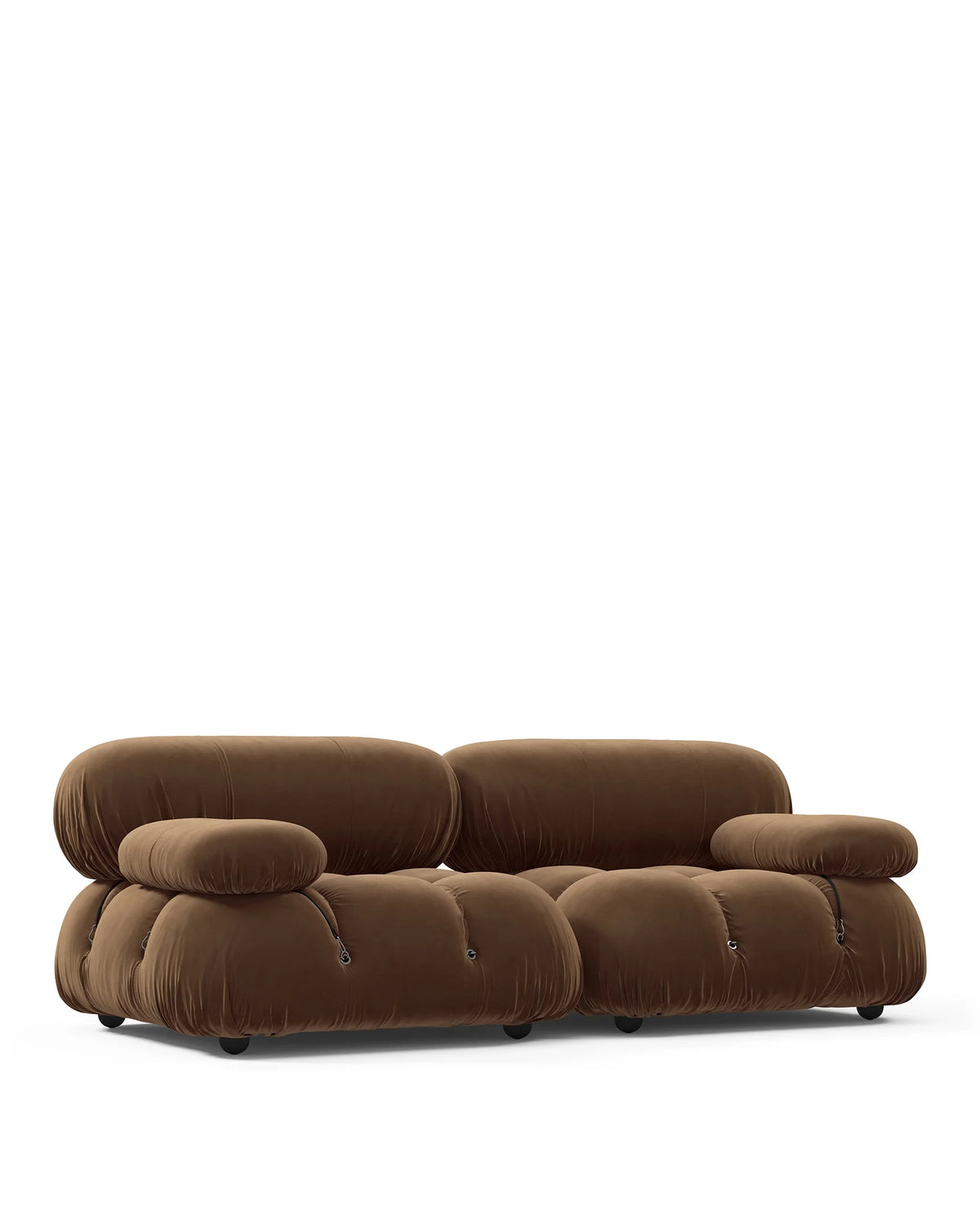


How High Should a Coffee Table Be Next to a Low Sofa?

Written by Charlotte Bruno
Design Editor at Madorne
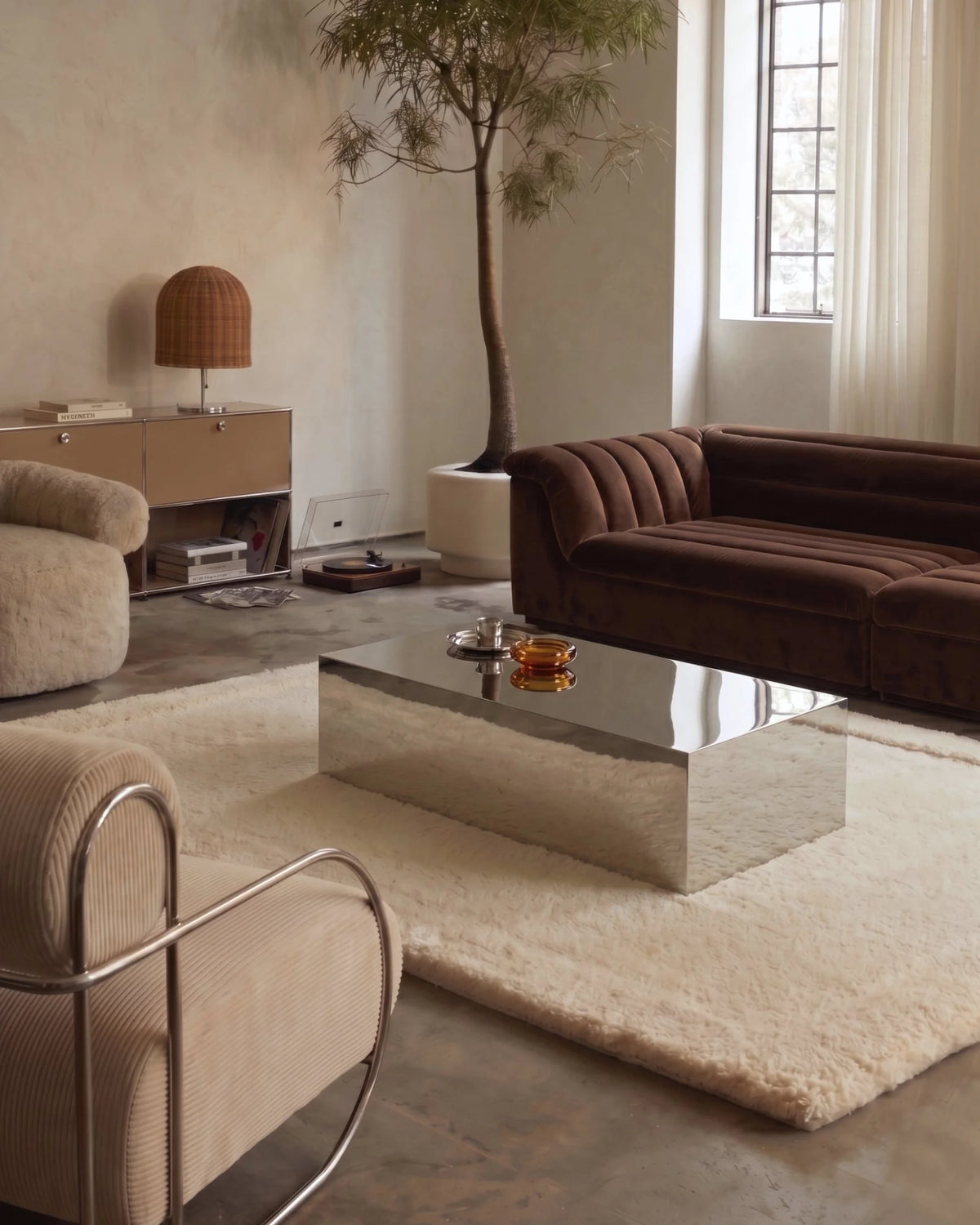
A coffee table can look beautifully low and still be awkward for the person using it. Beside a low sofa, the practical question is how far you need to reach down and forward to set down a cup, pick up a book or use the surface.
Start with the sofa’s seat height and the table’s finished top height. Compare those measurements, then test the intended distance and task. There is no one height difference that guarantees comfort for every low seating arrangement.
Measure the seat plane and the table top separately
Read the sofa’s listed seat height, not its overall back height. For an existing sofa, measure from the floor to the seat surface at the position you actually use. Soft cushions can change under weight, so notice how the seat behaves when occupied rather than assuming the unoccupied figure fully describes the experience.
For the table, measure floor to the usable top. Include the actual flooring or rug under each piece. A table on a thick rug and a sofa on bare flooring do not share exactly the same starting plane.
Write the difference down
Subtract table height from seat height to describe their relationship. A positive result means the table is lower. This is a comparison, not an ergonomic prescription. The distance to the table and your sitting position remain just as important.

Use real product examples to understand the numbers
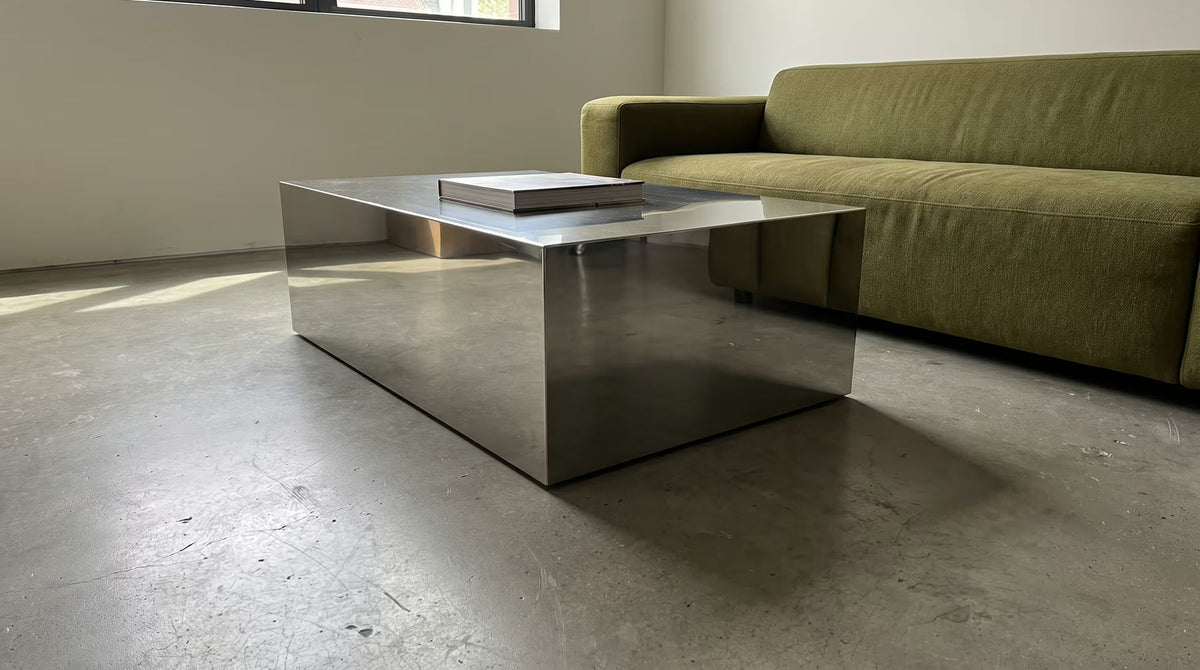
The Plyn 01 coffee table lists a height of 11.8 inches. The Le Mur two-seater lists a seat height of 15.7 inches. The nominal difference is therefore 3.9 inches.
That does not prove the pairing is comfortable for everyone. It tells you what relationship to test. The sofa’s cushion compression, your reach and the table’s position can change the experience.
Do not borrow another variant’s dimensions
Check the exact table and sofa configuration. A similar name or shape does not establish the same height. If a product does not list its height, request it rather than estimating from a lifestyle photograph.
A larger table can change reach even when its height is similar
The Plyn Grande lists a height of 11 inches, with a width of 53.9 inches and depth of 29.9 inches. Beside the same nominal 15.7-inch seat, the height difference would be 4.7 inches. Its broader footprint is a separate consideration.

A broad top can put frequently used objects farther away unless they are kept near the seat. A narrow table can still be awkward if it is placed too far forward. Consider the nearest usable surface, not just the center of the tabletop.
Plan from the seat you actually use
If several people use the sofa, check the main positions. The table may be convenient for the center seat and less accessible from an end. A side table can solve that problem more clearly than moving a broad coffee table into the route around the sofa.
Test the movement with a safe temporary surface
Use an existing stable surface at a comparable height, or a secure mock-up that will not tip. Do not build a precarious stack or use it to hold a hot drink. Sit in your normal position and simulate placing and retrieving a lightweight object.
Notice whether you need to lean far forward, lift yourself out of the back cushion or reach down awkwardly. Repeat the movement from the other regularly used seats. You are testing a real task, not merely looking at the proportions.
Move the surface before changing the height
A small position change may improve reach, but check what it does to access. The nearest edge should not trap the person between sofa and table or block a route. A visually generous gap and a useful reach are sometimes competing needs.
Our living room planning guide establishes the circulation route first. Keep that route protected while testing the coffee table.
Separate display, drinks and work
A low coffee table can be appropriate for books and display objects without being a comfortable desk or dining surface. If you expect to work with a laptop, eat regularly or write at the table, test those tasks explicitly and consider a surface designed for them.
Do not add an improvised riser or sit on a decorative table to change its role. Follow the product’s intended use and load guidance. A monolithic appearance does not make a coffee table a seat.
Choose a supporting side surface when necessary
A reachable side table can hold a drink while the low coffee table remains a quieter central object. That is often more useful than insisting one table serve every seat and activity. Check the side table’s base and footprint too.
Check material care after the geometry works
Once height and position are suitable, assess the selected finish. A marble surface and a steel surface have different care requirements even on the same form. Table proportions cannot tell you whether the finish fits your daily use.
For a natural-marble variant, our guide to cleaning a marble coffee table covers the finish-specific questions. Use that information alongside the geometry, not as a substitute for measuring.
When comparing coffee tables, record height, footprint and intended task separately. The best-looking low profile is only useful when you can use the surface comfortably and move around it.
Low coffee table height questions
Must the table match the sofa’s seat height?
No. A lower surface may work for the intended task, but test the reach. Equal height is not a universal requirement or a comfort guarantee.
Should I use the sofa’s back height?
No. Compare the seat surface with the table top. The overall back height answers a different room-planning question.
Can a very low table work with a deep sofa?
Possibly, but deep seating can increase forward reach. Test the actual position and consider a separate side surface for frequently used objects.
What matters beyond the height difference?
Distance, occupied seat position, cushion behavior, tabletop depth and the task you want the table to serve.
Read more
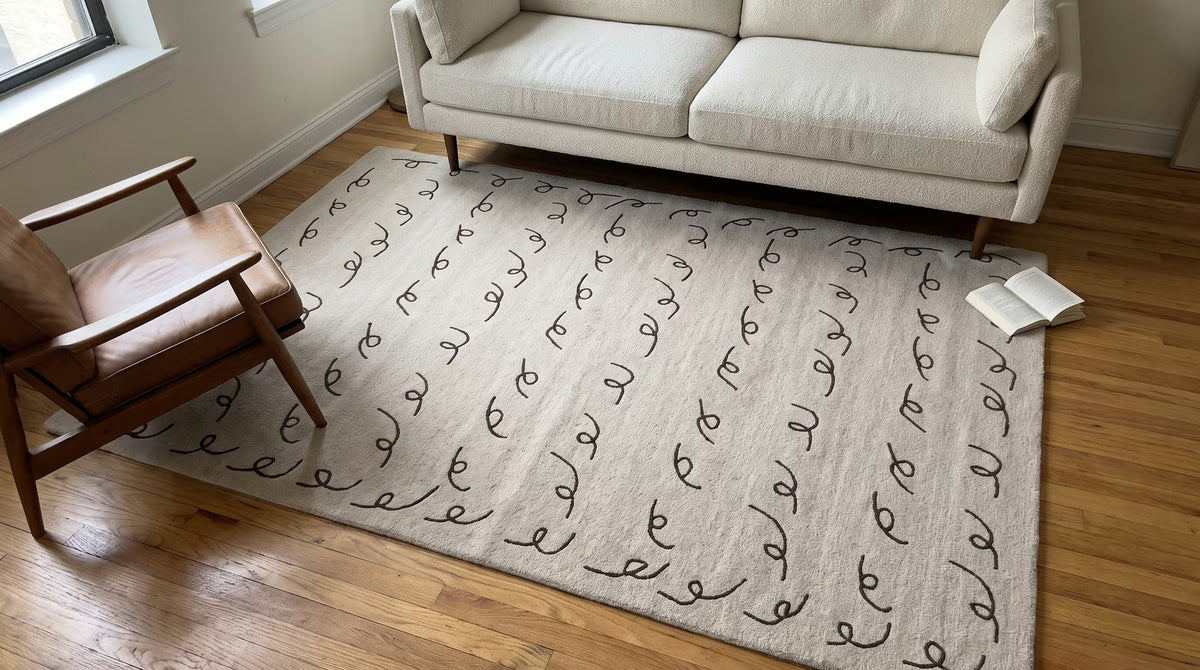
Map furniture contact points, compare rug orientation and test a full-size outline before ordering.
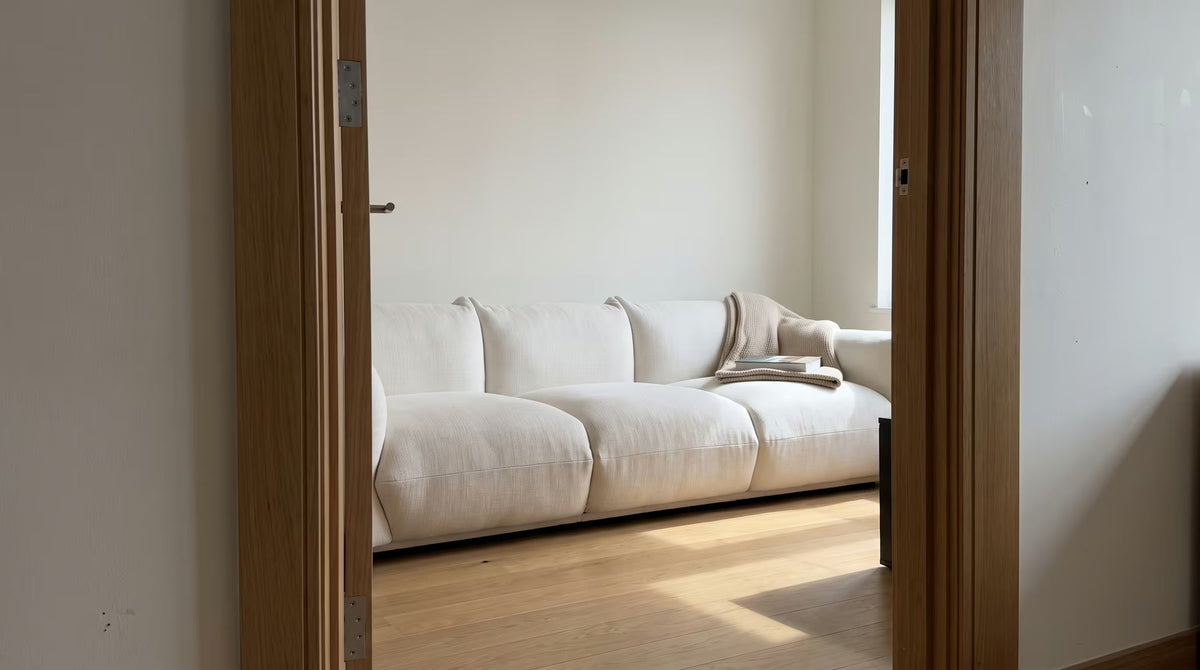
Measure the full delivery route, distinguish sofa dimensions from package dimensions and prepare a useful access brief before ordering.