



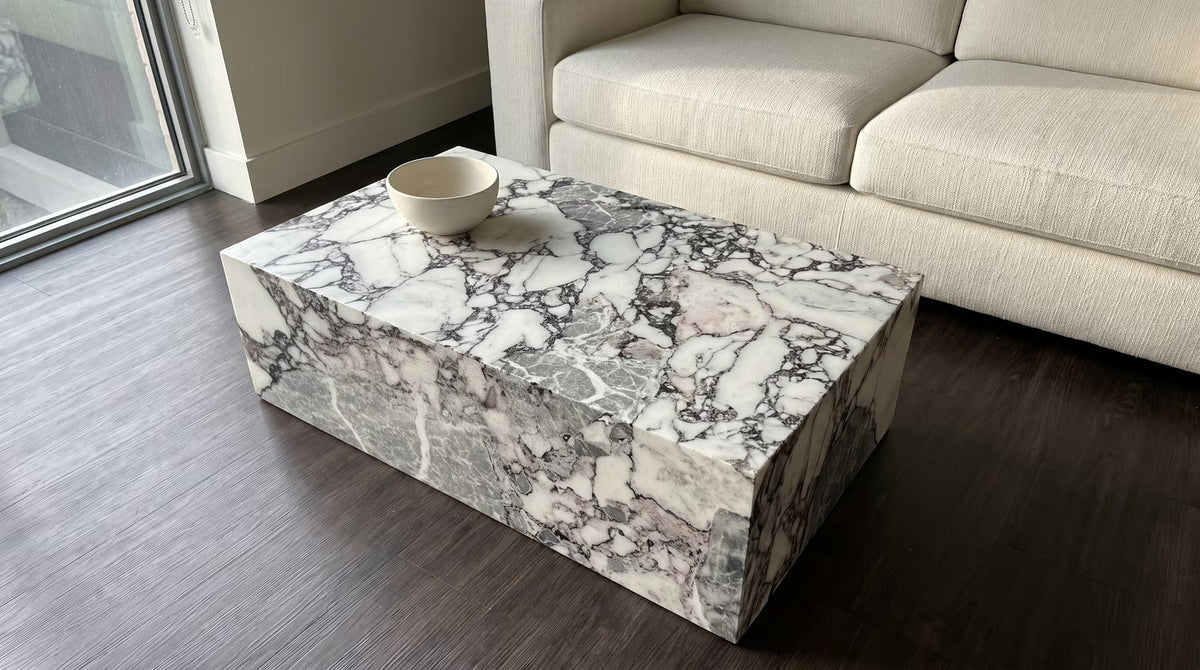
Natural Marble or Stone-Effect Concrete? How to Read a Table’s Material Description

Written by Charlotte Bruno
Design Editor at Madorne
A table described as “marble,” “marble effect” or “stone finish” may have a similar photograph while being made very differently. Read the material as a set of layers and treatments: what forms the surface, what supports it, and what gives it its final appearance.
This distinction is more useful than trying to judge authenticity from veining alone. Natural stone over a core is not the same construction as a solid block, and a stone-effect finish is not a statement that the underlying object is marble.
Separate material, construction and appearance
Material identifies what something is made from. Construction describes how those materials are assembled. Appearance describes the visual result. A clear product specification answers all three questions instead of letting one attractive finish name do the work of the others.
For example, “natural marble surface” identifies a material at the outer layer. It does not specify what is underneath. “Marble over a composite core” describes a layered construction. “Marble effect” describes an appearance without proving that natural marble forms the surface.
A block-like outline is not proof of a solid block
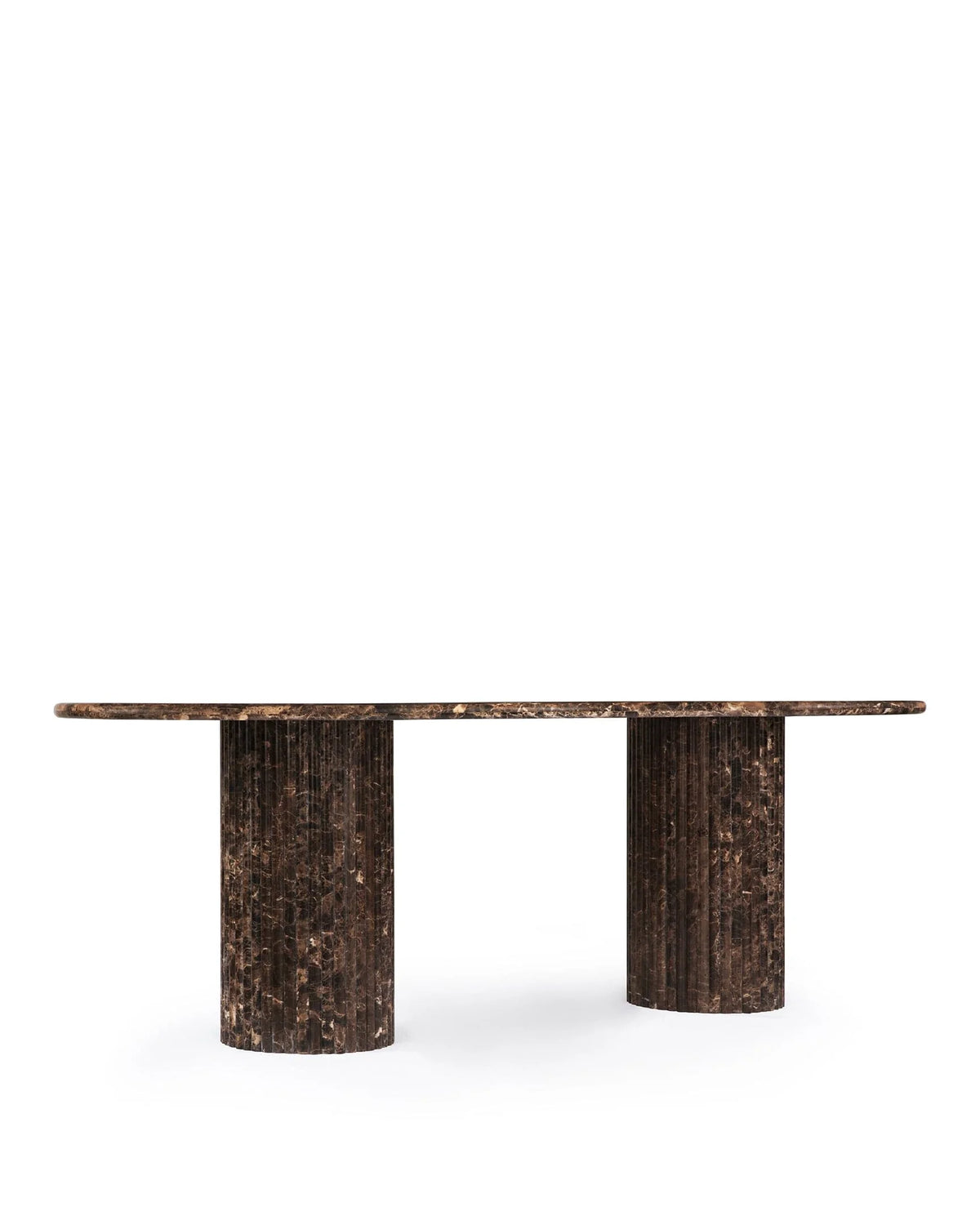
A monolithic shape can be produced with several constructions. Photographing the table from the front does not reveal its core or establish whether the side planes are formed from one piece. Ask for the construction rather than interpreting uninterrupted geometry as uninterrupted material.

Read natural-marble listings at the selected-variant level
The Plyn 01 coffee table offers steel and natural-marble surfaces. Its current listing states that stone composition and core construction vary by the selected finish. That is a reason to ask which construction applies to your choice, not to assume every variant is made the same way.
The Plyn Grande listing describes 0.7-inch marble over a composite stone core. This is a different kind of information from simply saying the table has a mineral appearance. Confirm the description for the exact selected finish where the available options include several material names.
Do not treat a stone name as a complete care sheet
The finish, treatment and construction still affect maintenance. Ask whether the outer surface is polished, honed, coated or sealed, and which cleaning method is approved. A natural material does not automatically have an untreated surface.
Our marble coffee table care guide addresses those maintenance questions separately. This article concerns reading the composition; it does not transfer marble-care instructions to a stone-effect table.
Understand what a stone-effect concrete description promises
The Plyn Concrete coffee table is described as cast concrete with the selected stone-effect finish. The effect is part of its visual character. It should not be rewritten as a natural-marble block because one available finish name refers to a marble color or pattern.

If a listing mixes “marble” with “marble effect,” ask which term identifies the outer material and which identifies the decorative finish. The answer should be specific to the selected variant rather than a general statement about the family.
Appearance does not establish performance
A stone-like pattern does not prove heat resistance, stain resistance, scratch resistance or outdoor suitability. Nor does a natural-stone description establish every one of those properties. Ask for the actual product guidance where a specific use matters.
Do not conduct an improvised heat, scratch or acid test to classify a purchased table. A material specification is a better starting point than damaging the surface to see how it behaves.
Use a three-question checklist when descriptions are ambiguous
| Question | What a useful answer identifies | What it does not prove alone |
|---|---|---|
| What is the outer surface? | Natural stone, steel, coating or another specified material. | The composition of the whole block. |
| What is the core or support? | The supporting material and assembly where relevant. | The finish or approved care of the surface. |
| What creates the appearance? | Natural variation, a coating, texture or decorative effect. | Durability or suitability for a particular task. |
Keep these answers with the order. If the supplier cannot clarify an important construction detail, do not silently replace the missing answer with the interpretation you prefer.
Check the image and specification together
A selected image can help you understand color, pattern and shape. It cannot show every layer or predict the exact pattern of an individually supplied piece. Ask what variation is expected and whether the image represents the selected finish.
Likewise, one image in a gallery may belong to another variant. A steel packshot should not illustrate a claim about natural marble, and a stone-effect finish should not be captioned as a natural-stone surface without confirmation.
Choose by the properties you need, not a material hierarchy
A natural-marble surface may appeal through its pattern and material character. A stone-effect concrete table may appeal through its shape and selected finish. Neither becomes the right choice simply because it sounds more “premium” in a short label.
List the practical requirements: footprint, height, approved use, handling guidance and maintenance. Compare the products against that list. Weight should be taken from the actual specification, not guessed from the apparent solidity of a photograph.
Geometry remains a separate decision
Two tables with different materials can share a low profile, but their dimensions may differ. Our guide to coffee table height beside low seating treats the table plane and reach separately from the finish.
When exploring concrete coffee tables, read the underlying material and selected surface together. A clear description should help you understand what you are choosing without relying on a marble-like photograph.
Table material description questions
Does “marble effect” mean natural marble?
No. It describes an appearance. Confirm the outer material and supporting construction.
Is marble over a core the same as solid marble?
No. It is a layered construction and should be described as such. That distinction does not by itself establish which product suits your needs.
Can veining in a photo prove the material?
No. Patterns can appear in different materials and finishes. Use the selected variant’s specification.
What should I ask if the listing uses mixed terms?
Ask what forms the surface, what forms the core and which term describes the visual effect. Keep the answers specific to the variant you intend to order.
Read more
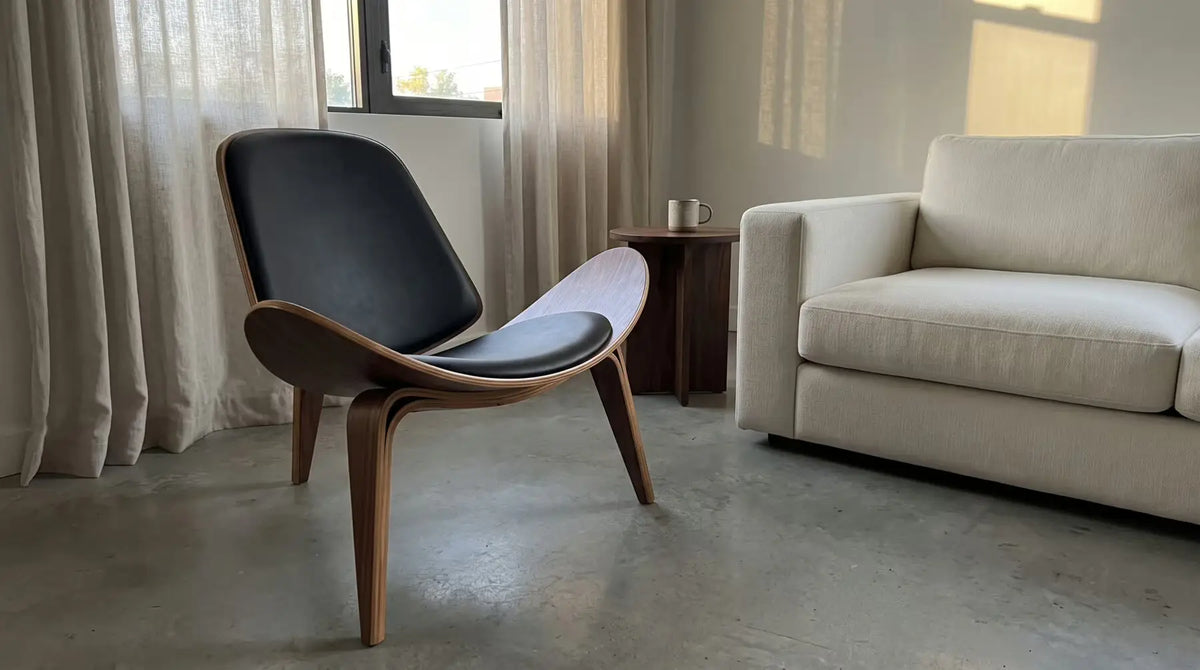
Balance a sculptural chair and a linear sofa through silhouettes, one material connection, actual footprints and everyday viewpoints.
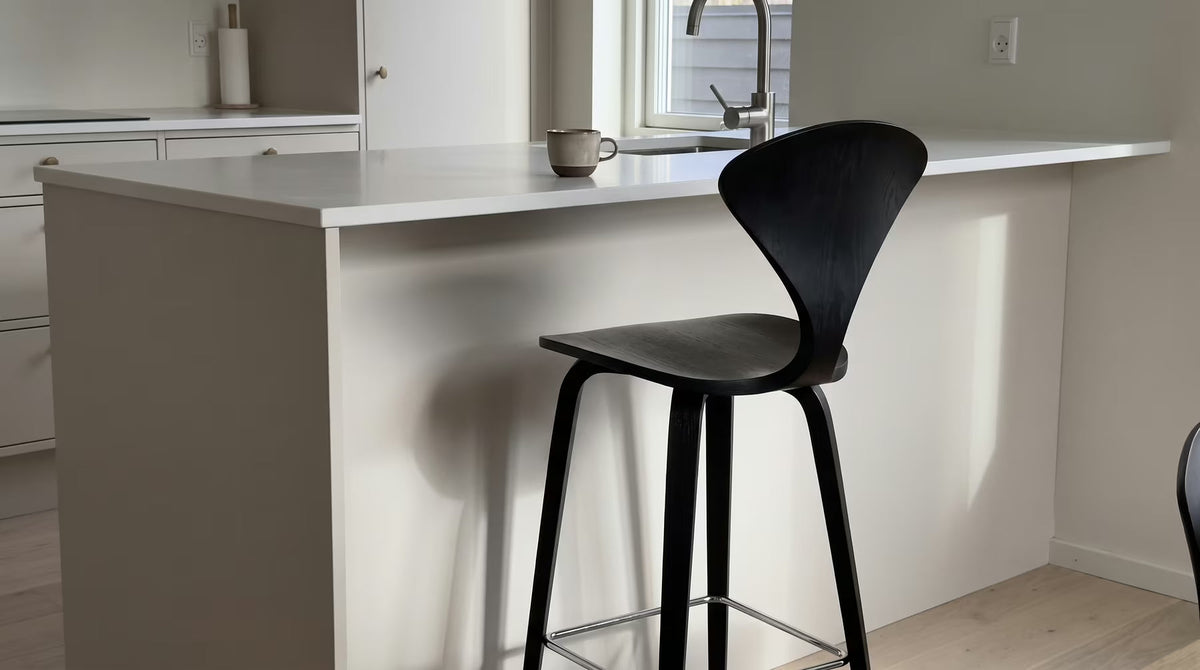
Measure the top, underside, overhang and occupied circulation before choosing island stool height and quantity.