



How to Mix a Sculptural Lounge Chair with a Straight Sofa

Written by Charlotte Bruno
Design Editor at Madorne
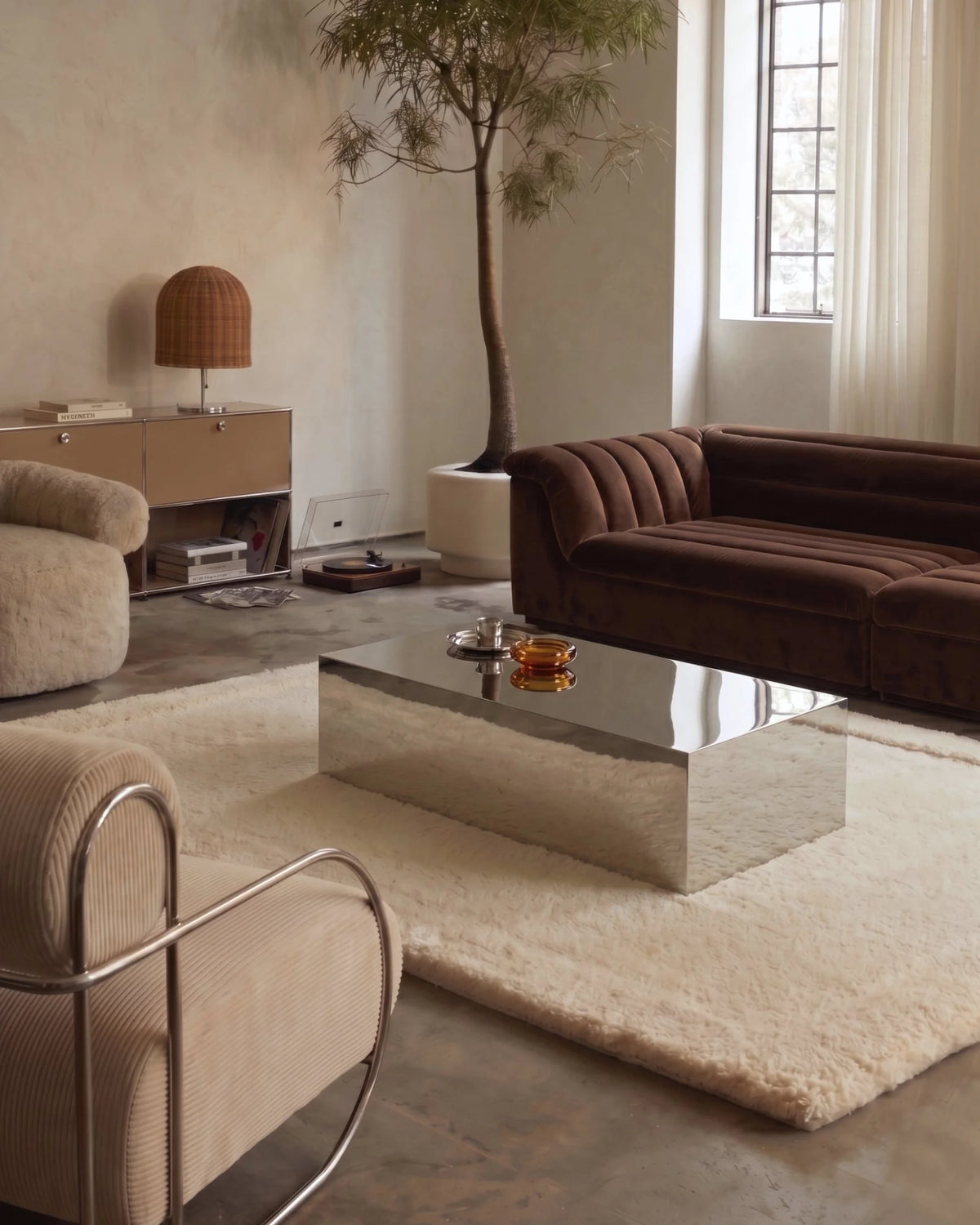
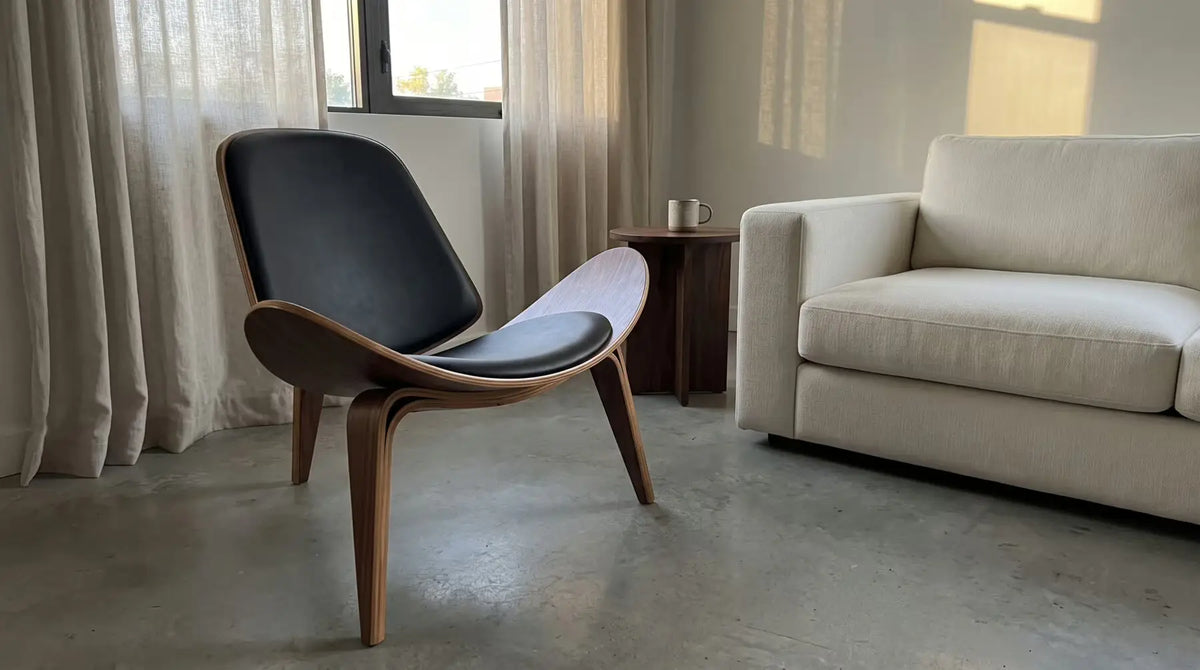
A sculptural lounge chair and a straight sofa do not need to come from the same furniture family to feel coherent. The sofa can establish a calm seating line while the chair adds a more expressive outline. What matters is how those shapes relate from the positions where you actually see and use them.
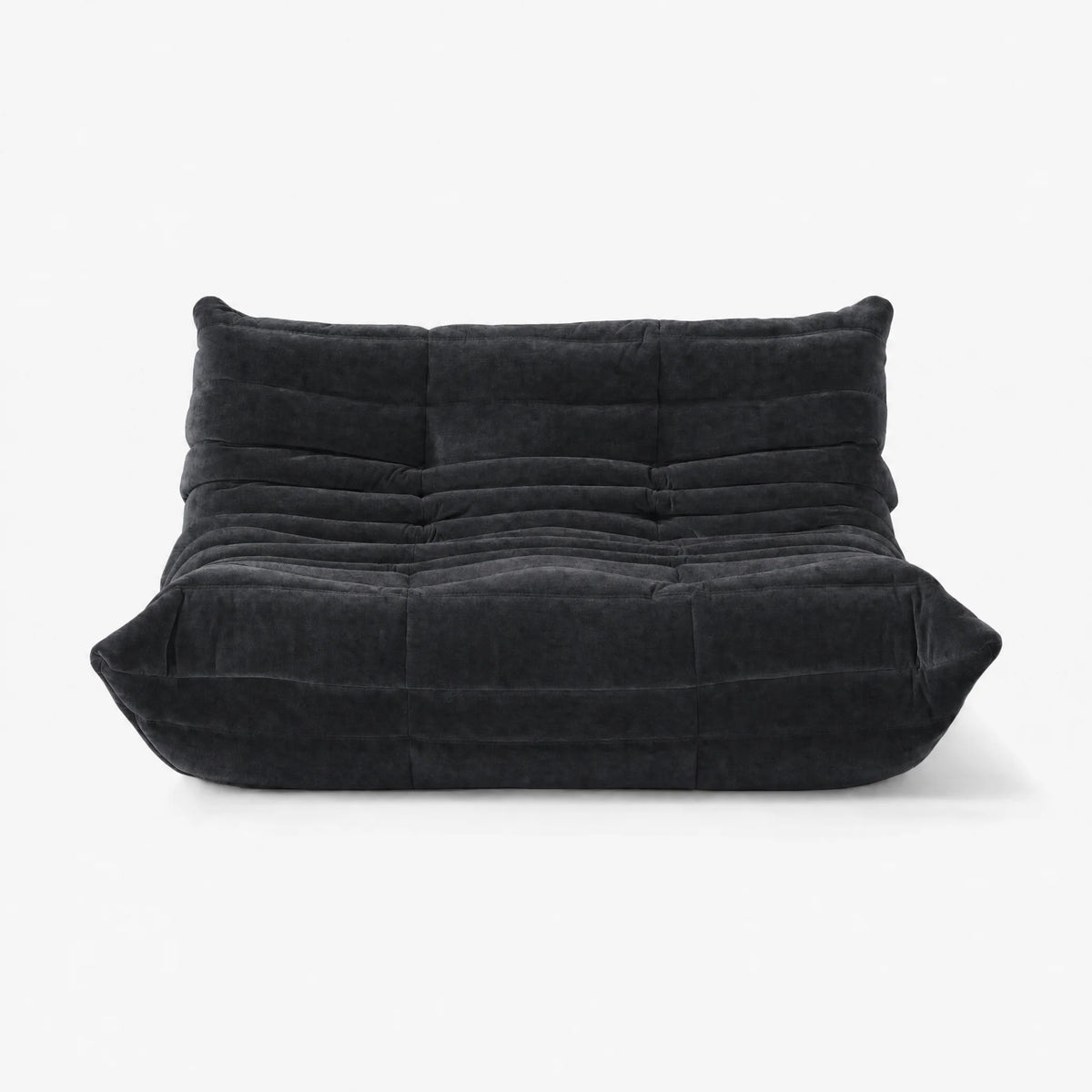
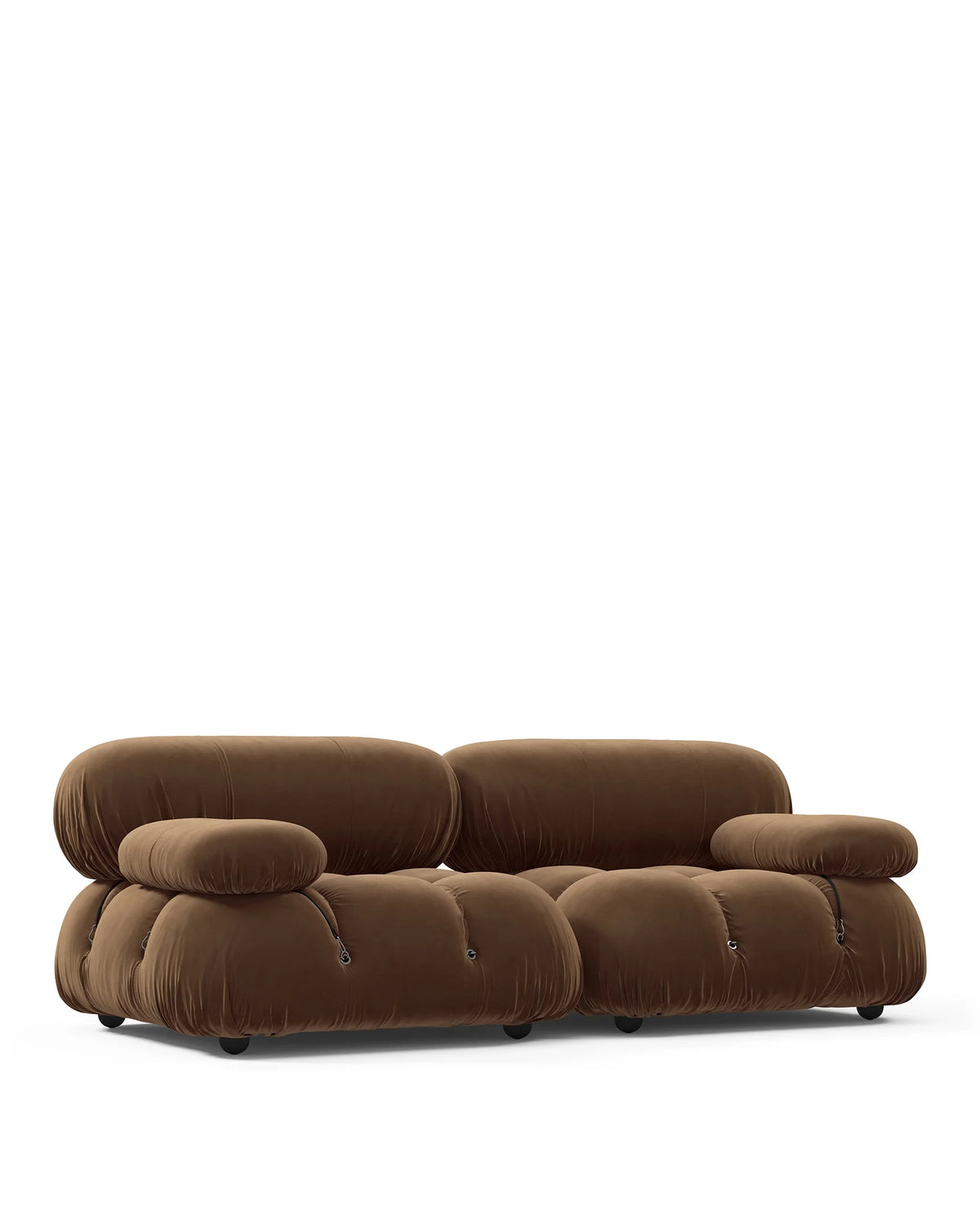
Here, “straight sofa” means a linear seating arrangement rather than a curved or corner configuration. It does not mean the sofa needs sharp cushions or rigid edges. A soft, rounded three-seater can still provide the visual anchor for a chair with a sweeping shell, visible frame or unusual stance.
Choose which silhouette should lead
Start by deciding whether the chair or the sofa is the main visual event. If the chair has an expressive back and exposed legs, let the sofa’s longer outline provide continuity. If the sofa already has a strong shape or intense color, a quieter chair finish may make the pairing easier to read.
This is not a rule that only one object may be interesting. It is a way to avoid giving every piece the same level of emphasis. When the sofa, chair, table, rug and light all demand attention through different shapes and colors, the relationship between the main seats can become less clear.
Take a photograph from the entrance to your room and another from the sofa. Identify which outline catches your eye first in each view. The chair’s back can be more visually important than its front if you mostly see it from the doorway.
Compare outlines, not just matching colors
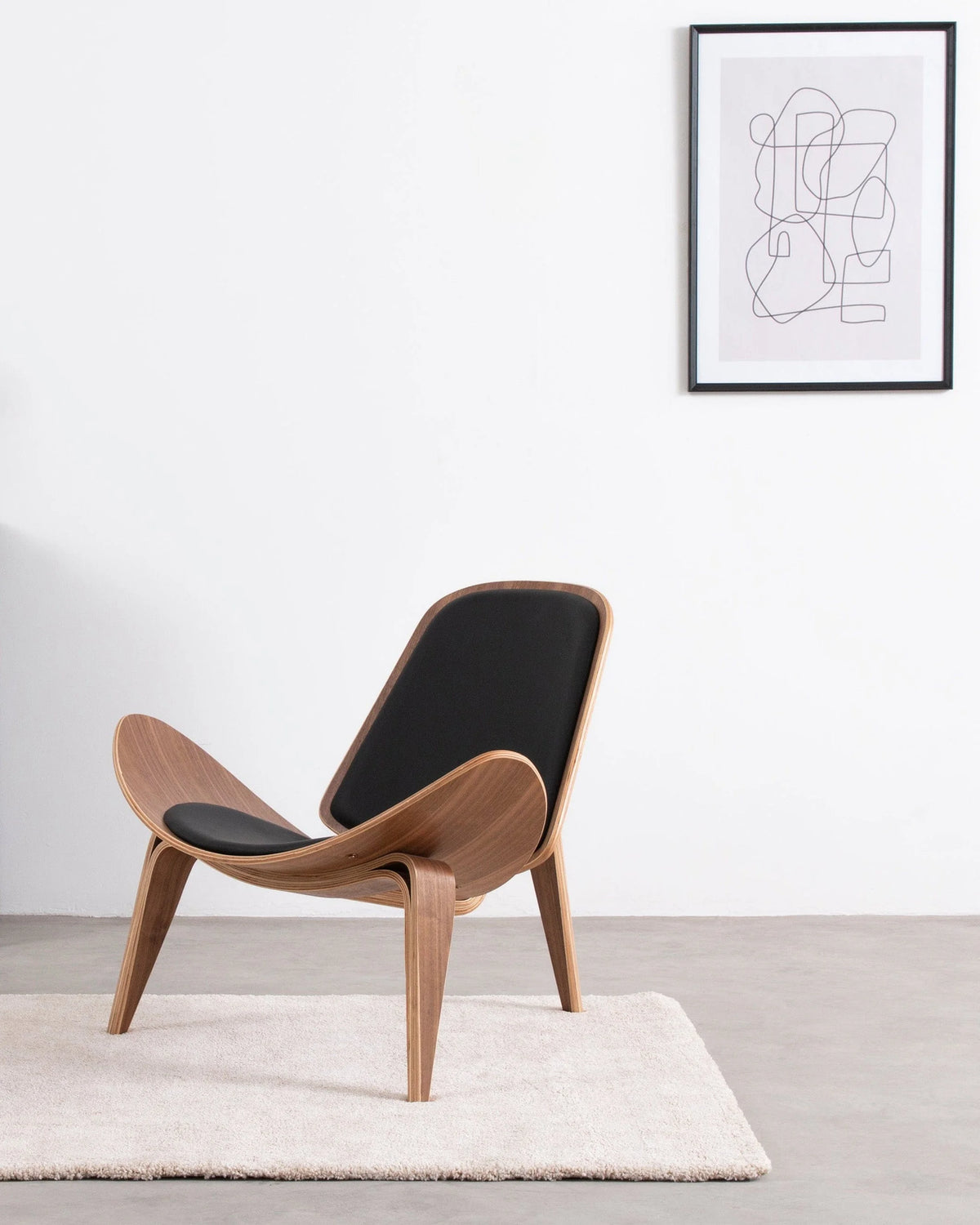
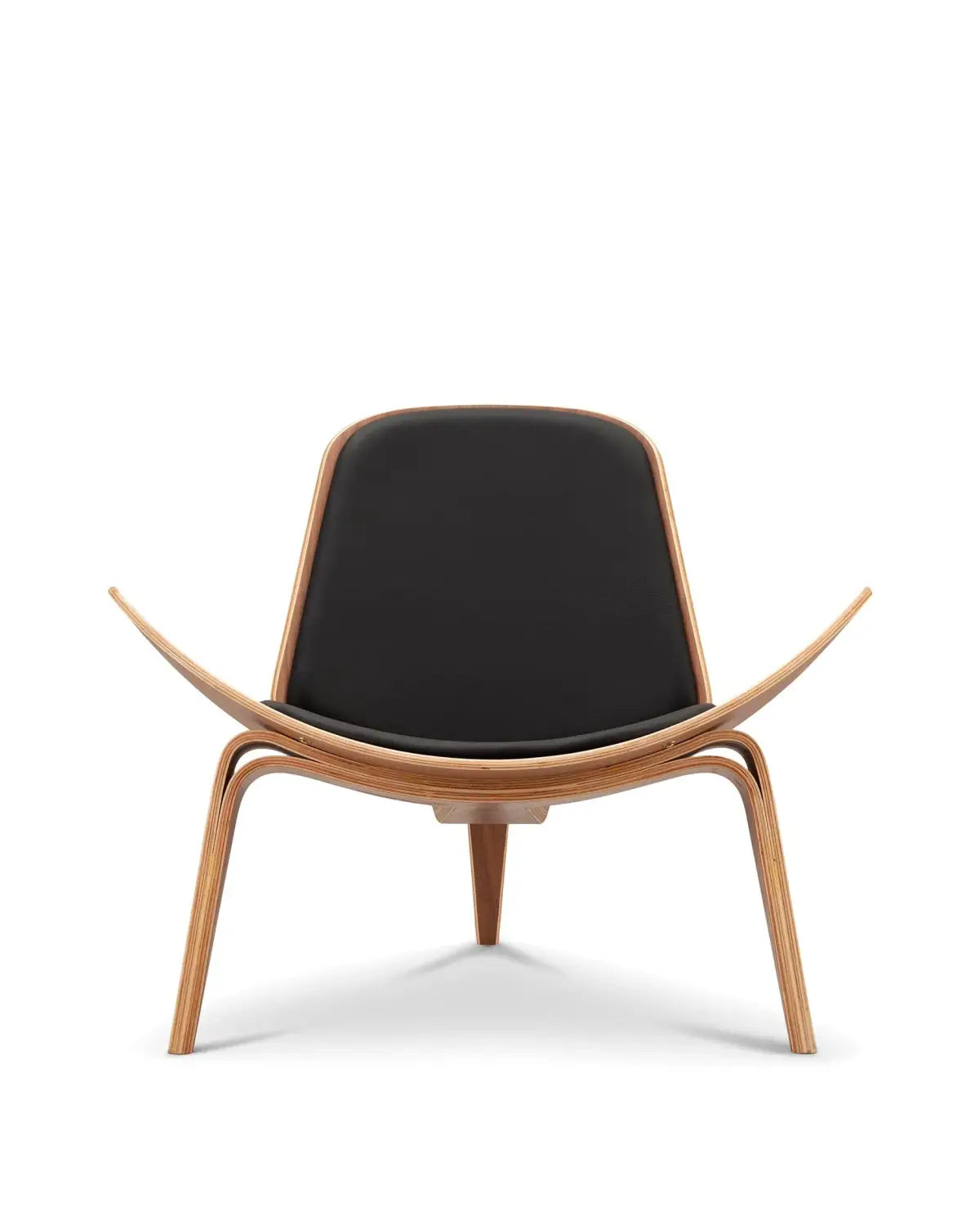
The Arc 07 shell lounge chair combines a curved laminated-walnut form with leather upholstery and a low lounge stance. Beside a linear sofa, its visible wood and separated seat and back create a different rhythm from a continuous upholstered mass.
That contrast can be useful. Instead of finding a sofa with the same curves, look for one whose overall seating line gives the chair room to remain distinct. Repeating every feature can produce a set-like appearance without necessarily improving comfort or layout.
Arc is a lounge chair, not a dining chair. Its listed 14.6-inch seat height belongs to this relaxed seating arrangement; it should not be treated as a substitute for a dining chair around a standard dining table.
Use one material connection instead of matching everything
A coherent pairing can share one restrained connection: a similar warm undertone, a dark upholstery note or a wood finish that relates to another existing piece. The rest of the composition can remain deliberately different.
For example, black leather can connect to a dark lamp or a small accent elsewhere in the room, while the sofa remains light. Walnut-toned wood can relate to a cabinet without requiring every table and seat to use identical wood. Avoid adding several unrelated accents just to make the chair look “styled.”
Do not rely on a finish name alone. Two walnut-labeled surfaces can have different species, stains or sheen. Compare samples in the room; our guide to why walnut finishes look different explains why a shared name is not proof of a shared appearance.
Check scale with actual dimensions
Arc’s listed overall dimensions are 35.4 inches wide, 31.5 inches deep and 29.5 inches high. The Maren 70 Ivory Linen three-seater is listed at 105 inches wide, 39.4 inches deep and 27.6 inches high, with a 16.5-inch seat height.
The sofa’s broad upholstered volumes establish a long line, while the chair introduces a more open frame. The difference between their listed seat heights is 1.9 inches. That arithmetic describes the specifications; it does not prove that both seats will feel equally comfortable to a particular person.
Tape out the actual footprints before judging the combination. A chair that looks light because of its exposed legs can still occupy substantial floor space. Conversely, a substantial sofa in a light fabric can appear quieter than its dimensions suggest.

Angle the chair for conversation, then recheck its footprint
Try the chair facing the sofa and then slightly turned toward the shared seating area. Evaluate both the conversation direction and the profile visible from the entrance. There is no universal angle that works in every room.
After turning the chair, recheck the space it occupies and the route behind it. The listed width and depth describe the furniture in its normal orientation, not the exact bounding footprint after rotation. Do not assume the same taped rectangle proves clearance at every angle.
Keep the chair out of door swings and everyday paths. If you need a fuller circulation plan, use our living-room layout guide. This silhouette comparison should sit within that practical plan, not replace it.
Let secondary pieces support the pairing
A coffee table can connect the seats without copying the chair’s shape. Consider whether its outline creates another strong visual gesture or gives the main furniture a calmer center. Also test whether people can reach it comfortably from both seats.
Keep decorative objects modest while evaluating the arrangement. A crowded table or oversized plant can obscure the chair’s outline and make it harder to judge the furniture itself. Add accessories after the main seats work together.
For the separate questions of table height and floor coverage, see coffee-table height beside a low sofa and rug placement under a sofa and lounge chairs. Those measurements deserve their own checks rather than being inferred from a coordinated photograph.
Review the composition from your everyday viewpoints
Before finalizing the pairing, look from the entrance, sofa, adjoining room and any frequently used walkway. Check whether the chair still has a readable outline, whether the sofa remains the intended anchor and whether the repeated material feels intentional rather than forced.
Then sit down and test the arrangement as a seating area. A successful composition must work for conversation and movement as well as a photograph. Compare the shapes in our lounge chair range against your existing sofa’s actual proportions, using one clear connection and enough contrast to let each piece keep its identity.
Read more
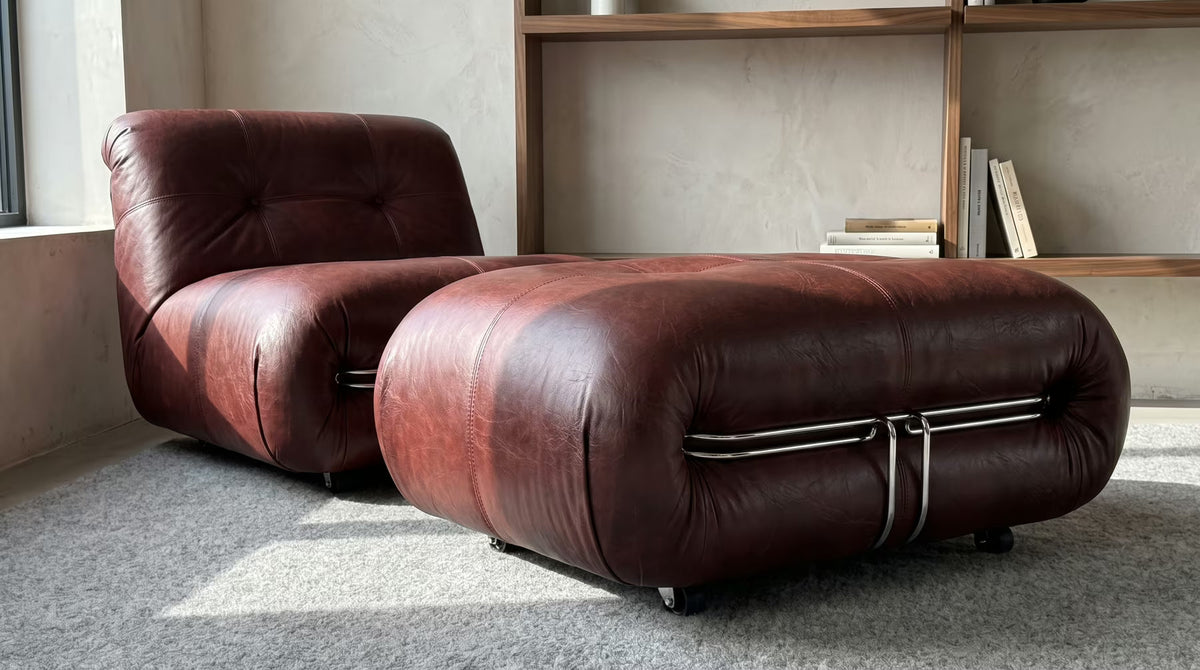
Check height, distance, material and access before pairing a lounge chair with a footrest.
Check height, distance, material and access before pairing a lounge chair with a footrest.